53° and Clear



Image
James C. Johnston Jr.
''Have Yourself a Merry Little Christmas, but Don’t Lose Your Head!”
With my 80th Christmas coming up, I am reminded that there is nobody now left alive who can get me what I genuinely like for the holiday. So, after I get everybody else’s gifts, I set out to get myself some treasures. Now at my age, how many Christmases do I have left? I am sure that the answer to that is not many more than twenty! Well maybe a few more if I add a few dozen more pills to what I already take. After all I do believe in better health through chemistry!
Now I also know that like all compulsive collectors of antiques and other things I find to be of interest, I must be just a tad mad. But I must confess such madness, especially seasonal madness, is fun! So, I went out this week and surprised myself with 17 pieces of “Cornucopia” patterned Sandwich Glass, an over-lay Sandwich glass lamp, and a period quarter-columned, broken-arch-and-pediment mahogany cased grandfather clock. I guarantee you that on Christmas morning I will be so surprised with Santa’s largesse that I will rejoice and sing hallelujahs!
Back in the early 1930s, a young film writer who thought that he had a great career before him was given his first film writing and directing assignment. It was to be a movie starring the Marx Brothers. He was nervous about writing for these crazies who were the terror to everyone on the set, because there was nothing they would not do on or off camera to get a laugh. These crazy siblings once invaded Louis B. Mayer’s office when he was off somewhere else, and they got naked, started a fire in the middle of the room and squatted there cooking hot-dogs when Mayer got back. He was not amused.
The young director knew that nobody anywhere near this, his first production, was safe from the zany nutters. So flustered by the prospect of dealing with Groucho, Chico, Harpo Marx, and Zeppo, the poor young writer-director sought out Louis B. Mayer to ask The Great Man for his advice in dealing with the crazy foursome. Approaching Mayer, the poor man asked with trepidation, “Mr. Mayer as I write this film what's my motivation.”
Mayer looked at him with perplexed demeanor then yelled out, “Motivation! You are dealing with three morons who as a hobby collect spit!”
There is an old expression that I suppose is true, '' It takes all kinds''. That is even true of crazy people who collect spit! We collectors all suffer from a fine madness. God knows I do. But, this is not at all a bad thing. The major factor in collecting is to know what you are doing. It is always the same in this crazy world of collecting. A collector must be informed and read the literature of his respective hobby. I grew up with Hobbies Magazine, Linn's Stamp News, The Numismatist, and the magazine, Antiques. I also had a lot of other publications to study when I was a child. The most basic books found in collector libraries in those days were Red Book, the Bible of American coin collectors and Scott's Postage Stamp Catalog for serious and not so serious collectors of stamps, and lots of books on antiques like titles by Ormesby and the great Wallace Nutting. Back in those days, the Scott Catalog was only a single three-inch-thick volume and covered the whole world. For a quarter, fifty cents, or a dollar, a collector of stamps of the U.S. And Canada could buy a stamp catalog from H. E. Harris and Company of Boston. I also drove all of my adult friends crazy by insisting on looking through their change and cash boxes for coins missing from my little Blue Whitman coin folders.
I collected and do collect everything that is ''Good''. I know that ''Good'' is a rather subjective concept, but I will share with you the awful truth that I am a committed obsessive-compulsive personality as are most over-the-top collectors!
I love and collect: coins, period furniture, silver, pewter, glass, rare books, prints, early iron, brass, and copper items, folk art, paintings, porcelain, pottery, textiles, stamps, and just about everything else which can be found in your favorite museums. In short, I love it all if it is museum worthy.
I will admit that some collectors do go a bit overboard when it comes to their passion to ''get stuff''! Yes, it is unfortunate but true. Take the case of the mad book lover who traveled all over the country breaking into libraries and rare book collections to stuff his inherited family homestead with some of the rarest books in the land. He developed a set of amazing skills in scaling walls, disarming alarm systems, picking locks, becoming invisible, and developing the strength to cart off tons of treasure. When the long arm of the law caught up with him, his ''collection'' of illegally acquired books was so vast that it could not be determined where these rare pieces had all come from.
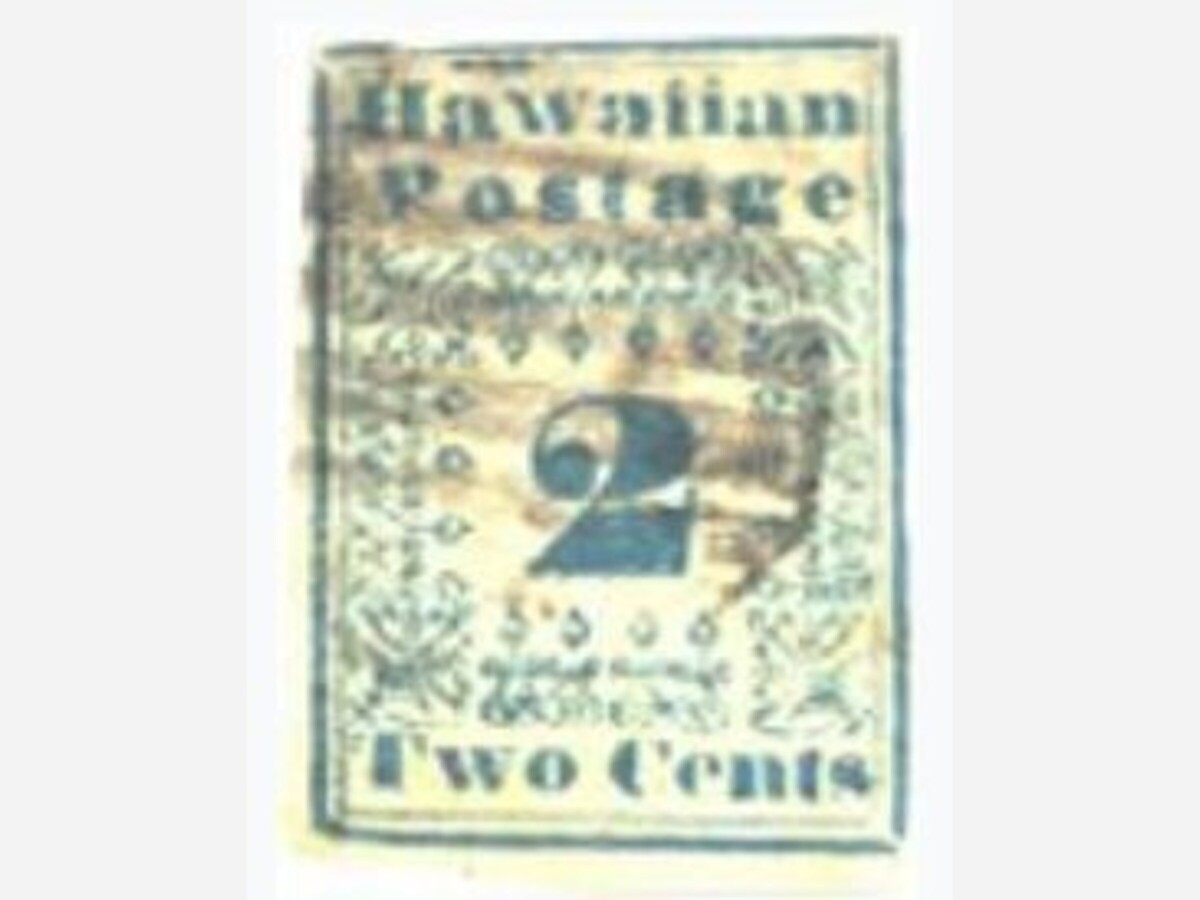
In the late 19th Century, there was a collector of stamps in Paris who coveted a rare Hawaiian Two Cent Missionary Postage Stamp belonging to a fellow member of a prominent stamp club. This collector became so obsessed with the idea of owning the treasure for himself that he was willing to spend thousands of francs to secure it. But alas, the owner would not sell it. Invited to the home of the possessor of the stamp one evening for a friendly snifter of brandy and philatelic conversation, the obsessed collector asked to view the treasure. The very sight of it was too much for him, and he fatally struck his host over the head with a heavy object found in the room then made off with his Hawaiian prize.
The police inspector investigating the crime was also a stamp collector. His fellow officers were
puzzled by the murder, because to their eye nothing of value seemed to have been taken. An expensive gold watch and chain had been left conspicuously on the murdered man’s desk, and a large amount of money was to be seen in a half-opened drawer of the self-same desk. But the motive for the crime became obvious to our philatelic-hero-inspector when he saw an opened album of stamps on the desk top. The leather-bound album was opened to The Kingdom of Hawaii, and an empty space clearly indicated where the rare ''Missionary'' Two Cent blue stamp of 1851 had been lovingly mounted.
The first stamps of Hawaii were known as ''Missionaries'' because the New England missionaries who went to Hawaii on their “Holy Mission” had indirectly caused them to be printed when they introduced the concept of modern postage by pre-paid adhesive stamps to pay for postage. Knowing that the thief could never show or exhibit his newly acquired treasure, the detective could sense the frustration of the killer. There is nothing that a dedicated collector loves better to do than show off his treasures. To a serious collector, a collection is like “the trophy room” of a big game hunter. To a numismatist, the well filled coin cabinet is his pride as are stamp albums to the philatelist. The collectors’ love and passion has been lavished on his collection, and he has a compulsive need to show it off. He might try to feign modesty, but you, I, and the detective all know better. Modesty really has nothing to do with it.
Following his instincts, the detective went to the one place where a collector of rare stamps might be, namely the most important stamp club in Paris where men of great means would gather and share their passion. The policeman, well attired, entered the club as a guest of a friend, and fellow collector, and let it be known that he was an important collector of Hawaiian stamps. He also let it be known that he had all the stamps of Hawaii, including many blocks, sheets, essays, proofs and covers except for the evasive issues, the Two-Cent-Missionary. He also said that he did not mind because he was sure that not one copy of the Two-Cent-Blue-Printed-Missionary was to be found in any collection in Paris.
The killer took the bait. He walked up to the inspector and informed him, in a low and confidential voice, that he was also a collector of the stamps of Hawaii. He then asked the inspector if was free the following evening to pay a visit to his home to spend the evening poring over his collection of Hawaiian stamps. The inspector said that he would be free and would be delighted to view a collection of Hawaiian stamps which he had heard was of as possessing a very high degree of quality. The collector smiled and said that he was most honored by these kind words.
The next evening at eight, the inspector presented himself at home of his new philatelic acquaintance and was shown into the library by a servant. There, behind a large mahogany well-lit desk piled high with beautiful Morocco bound albums, sat the beaming collector of Hawaiian stamps. For several hours, the collector showed off his fabulous world collection of the stamps. This holding included very choice stamps of the Americas, Australian States, and the Pacific area. The police inspector had no trouble showing real enthusiasm. He was seeing things that he had never hoped to see in his lifetime.
The great collector beamed with pride as the inspector greedily turned the pages of one album after another. At last, the inspector of detectives all but gushed, '' Please monsieur, I must see the Hawaiians. They are my chief interest in the world. I have given my life to these stamps, and I cannot believe that anyone in Paris would have a better collection of them than my own.''
With an almost sweet smile of kindness and pity playing about his lips the host collector responded, '' My dear Sir, you must see and judge for yourself. I hope that you are not too disappointed that I may have bested you in the formation of this collection.''
He pushed the album of Hawaiian Stamps over the desk to the detective-collector. Slowly the inspector opened the album and turned the first leaf exposing the first page on which was mounted the two cent Hawaiian Missionary stamp. He sat for a moment motionless and in awe of what he saw. Then he slowly looked up and fixed the collector with his eyes. '' I think that we both know the provenance of this stamp. Such a stamp was taken from the album of Monsieur Albert after he was murdered, and I am sure that its unique appearance would make it easy to identify by the dealer who sold it to him, and I am sure that more than a dozen members of your own club, to whom Monsieur Albert had also shown it would also confirm its origins. I am afraid that in addition to being a collector of stamps I am also a police detective. I regret that I shall have to take you into custody for murder and the robbery of this Hawaiian Missionary stamp...''
The collector almost expressed relief at being exposed, and he exhibited real remorse for his crime. His trial caused a great stir in Paris, because of the murderous collector’s social standing, and the fact that he had killed for a stamp! The non-collectors had a hard time understanding a rabid passion that would drive a man to commit such a crime, but collectors of “all things good” understood such passion only too well. In this sad case, this particular passion led to the guillotine where the “passionate collector” paid with his head.
Had the stamp been a rare coin, and if there were a collector who coveted it who had matched their numismatic lust to their, the result could have been the same. There are two specimens of the 1804 dollar which I have seen in two different famous collections. One had actually been stolen and retrieved and again is on display. Nothing so exciting as murder was attached to the events of that story, but the possibility exists I suppose. Many plays, books, and films have been made based on this theme all because real life mirrors fiction so closely.
So, my friends have yourself a Merry Little Christmas, but don’t lose your head!

Patchy rain nearby, with a high of 66 and low of 47 degrees. Partly Cloudy for the morning, sunny in the afternoon, clear during the evening, patchy rain nearby overnight.