Medway TM Approves $1.25 M for Historic Jacob Ide House Repairs

Image

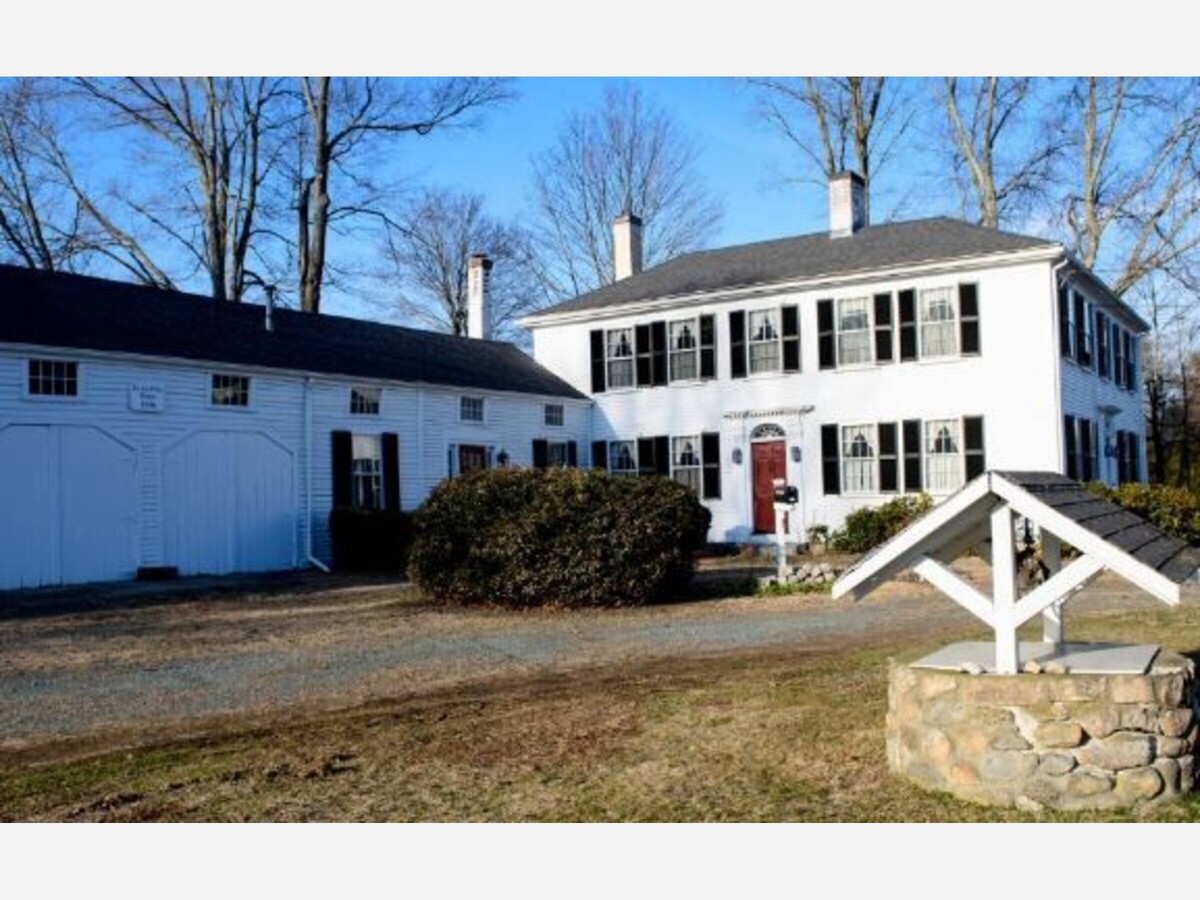
The Medway Historical Society is pleased, to say the least , with the passage of Article 20, which dedicates $1,250,000 of Community Presesrvation funds for the  badly needed repair of the historic Jacob Ide House.

The Society's email, reproduced below, provides a good explanation of why this decision is being celebrated:

The Medway Historical Society would like to thank everyone who voted at Town Meeting on Monday, in support of having the required upgrades and structural work done on the historic Jacob Ide House. This will allow us to reopen the museum in the future, restart engaging historic discussions and presentations from the past history of the Town of Medway. We will also have an educational space for those who would like to do research and those who would like to learn more about the people and lives that started this town.

Thank you for all your continued support!

Click for our Website!

Pictured is the first meeting house in the “West Precinct” which is Medway as we know it today. It was built in 1750 at the corner of Main and Evergreen Streets directly across from the Jacob Ide House. It served the town until the Second Congregational Church (Community Church) was completed in 1816. Boards from this meeting house were used to build the “Parish House” that still stands at 199 Main St.

Pictured, is Medway’s first Town Hall. Built in 1876, this building burned in 1911. Our current Medway Town Hall, “Sanford Hall” was re-built as a brick structure and for more than 100 years now- still serves us today.

Early meeting houses were sites for both worship and business. As the town grew town meetings were held in churches and schools. Many places of worship and denominations came to Medway over the years including, Methodist, Catholic, Congregational, Baptist, Episcopal and Universalist. Medway also had two synagogues.

About the Jacob Ide House

158 Main St at the corner of Main and Winthrop

The Ide house was built by Malachi Bullard in 1814—1815. Malachi Bullard also built the Community Church which was originally known as the Second Church of Christ. He built the Parish House at 199 Main Street and the ell to house his workers on the home at the corner of Main St. and Slocumb Place. He built his own home at 165 Lovering St.

Remarkably, most of the original features of the house and barn remain intact. Behind the wood door on the brick oven are hooks that were used to hang and cure meat. The very large metal vat with the wooden cover below the wood door was used for washing laundry. The original floorboards in the pantry area are worn from the footsteps of hundreds of years of use.

The staircase in the front hall with an ivory button in the newel post was said to signify at the time that the mortgage on the house had been paid off. The manual front door bell pull still works.

Dr. Ide’s office remains much the same as when he occupied it for over 60 years. His desk is among the cherished artifacts in the society’s collection. The room is the only one in the home with an interior door lock.

The house was purchased by the Town of Medway in 2018 with funds exclusively dedicated for historic preservation.

Reverend Dr. Jacob Ide

March 29, 1785 — January 5, 1880

Dr. Ide was born in Attleboro Massachusetts and was the son of a farmer. He graduated from Brown University in 1809 and was valedictorian of his class. He served at Park Street Church in Boston, MA as an assistant to Dr. Griffin.

In 1815 Dr. Ide married Mary Emmons the youngest daughter of Dr. Nathaniel Emmons, of Franklin, MA [That town's longest serving minister and first 'librarian' of the Franklin books - Ed.]. All of their 11 children were born in the “birthing room” in their home. Five of their children died before the age of two. George Homer Ide was their youngest son. He along with along with Herman Sparrow enlisted on May 25, 1861 to serve from Medway as privates in the Civil War, in Company E of the 2nd Infantry Regiment. Both were killed on August 9, 1862 and are buried on the battlefield at Cedar Mountain, Virginia.

Jacob Ide lived at 158 Main St. until his death at 95 years in January of 1880. His wife Mary passed away June 30th only months later at age 89. He is buried in Evergreen Cemetery. His headstone is in the form of a pulpit.

Dr. Ide was a “friend of the slave.” Daughter Mary Ide Torrey married Charles Torrey, who was a student of Dr. Ide’s. Torrey became an active and avid abolitionist. He was arrested while helping slaves to flee north. He died of illness in a Maryland prison. The Massachusetts Abolition Society built the adjacent house at 160 Main Street for Mary and her two children.

Dr. Ide served as the third pastor of the “Second Church” for 51 years. He was the first to serve at the “Church on Rabbit Hill. He trained more than 40 men for the ministry which was very significant at that time in our country’s development because these were the men that were required to settle other towns.

I'm interested
I disagree with this
This is unverified
Spam
Offensive