64° and Clear



Image
By Alan R. Earls
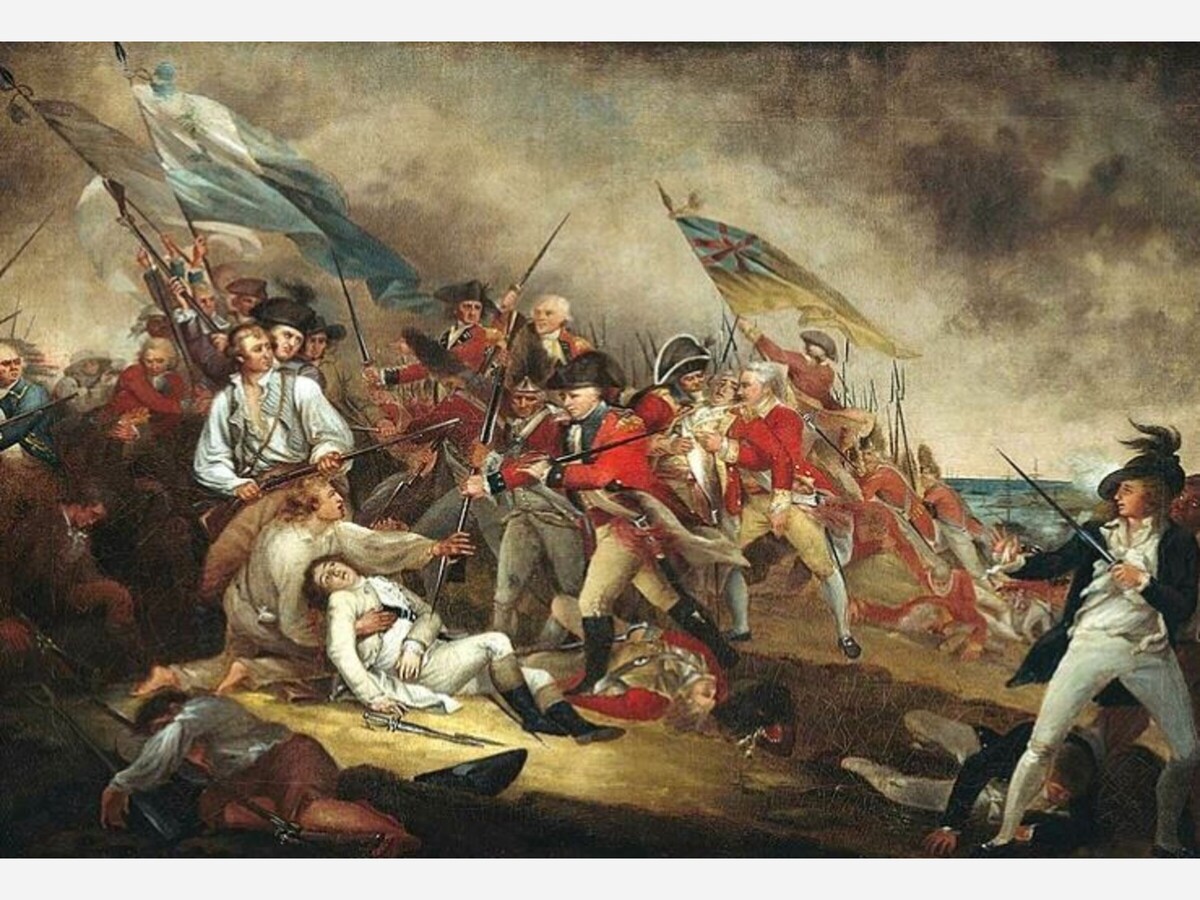
As the 250th anniversary of the Battle of Bunker Hill approaches this June, it’s time to reconsider how we refer to one of Boston’s most iconic landmarks: the Leonard P. Zakim Bunker Hill Memorial Bridge. While widely celebrated for its elegant cable-stayed design and its powerful symbolism of unity, the bridge is almost universally referred to as “The Zakim.” In doing so, we risk overlooking half of its intended commemoration—the legacy of the Battle of Bunker Hill, a defining and costly moment in the American Revolution. The upcoming semiquincentennial of the battle offers a timely opportunity to restore that historical balance in the public consciousness.
The bridge was named to honor both Leonard P. Zakim, a civil rights activist who championed community and interfaith cooperation, and the Battle of Bunker Hill, whose nearby monument anchors Charlestown as a birthplace of American resistance. Indeed, its familiar towers were designed to closely mimic the shape and scale of the Bunker Hill Monument, with which they share the skyline.
 |
The dual naming of the bridge was intentional: to unify past and present, war and peace, sacrifice and solidarity. Yet, the practical reality is that “The Zakim” has eclipsed the revolutionary reference almost entirely in everyday speech, signage, and media. For a generation growing up in Boston, the “Bunker Hill” portion of the name might seem like a vague historical footnote rather than a central part of the bridge’s identity.
To redress this imbalance without diminishing Zakim’s well-earned legacy, a practical solution would be to adopt a dual naming convention: the southbound span could remain the Leonard P. Zakim Bridge, while the northbound lanes (where motorists can see the monument off to the right) could be formally designated the Bunker Hill Battle Bridge. This approach mirrors the bridge’s dual dedication and reinforces the idea that remembrance and civic progress can—and should—share the same space. It would be a subtle, elegant way to honor both namesakes while reintroducing historical awareness into the daily rhythm of modern city life.
Such a change would not require massive structural rebranding. Even modest updates—new signage, GPS labels, and public outreach—could elevate historical awareness without creating confusion. It would also set a powerful precedent for how modern infrastructure can serve as a living link between past and present, reminding commuters and visitors alike that Boston is not just a city of innovation, but also a city of memory.
With the 250th anniversary just weeks away, this is more than a symbolic gesture. It’s a chance to reaffirm our connection to the values and sacrifices that shaped this country—and to ensure that the name “Bunker Hill” continues to stand, quite literally, on firm ground.
Alan R. Earls is editor of Franklin Observer, chair of his town’s historical commission, and co-author, with Dr. Robert Krim, of “Boston Made: From Revolution to Robotics, Innovations that Changed the World.”
This article was previously published in Contrarian Boston.


Sunny, with a high of 92 and low of 64 degrees. Sunny during the morning, partly cloudy during the afternoon and evening, clear overnight.