25° and Clear



Image
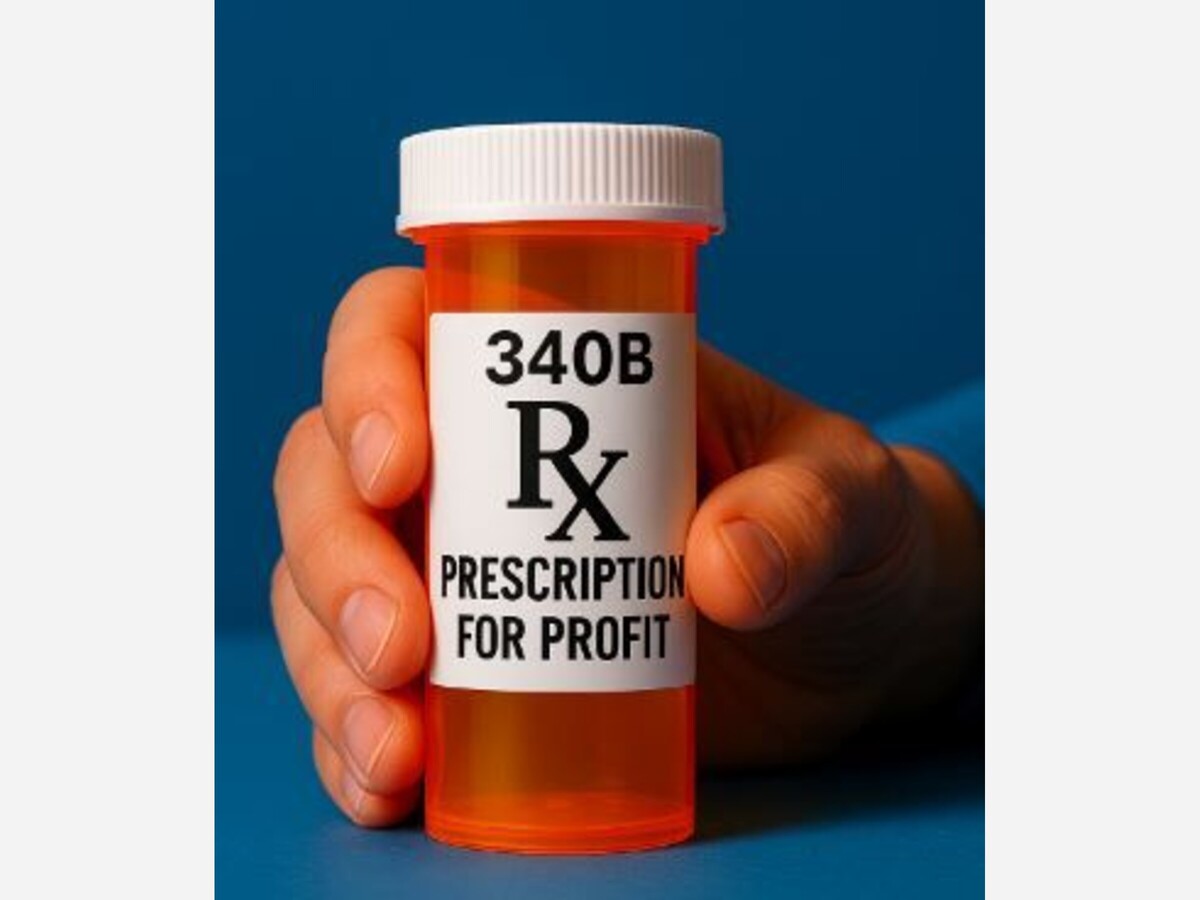
Re: H 1107, H 1296, H 785, S 779, S 819
Testimony by William S. Smith, PhD, Senior Fellow, Pioneer Institute, 185 Devonshire Street, Suite 1101, Boston, MA 02110, 617-273-2277
Chairs Murphy and Feeney, and Members of the Joint Committee,
Thank you for the opportunity to testify. I don’t come here to represent an interest group, but asa public policy analyst.
In this regard, I have a very nuanced view of the 340B program. I know there are federally qualified health centers, Ryan White clinics and community and rural hospitals who depend heavily on the discounts that the 340B program provides. Against all odds, these admirable institutions deliver free and discounted care to indigent patients. However, I also know that many large hospitals, large for-profit pharmacy chains and PBMs and other large businesses are securing vast profits from the 340B program and giving very little back to the communities theyserve.
Consider the 5 largest hospitals in Massachusetts: Only the Boston Medical Center provides charity care above the national average to the surrounding community – and they should be commended. MassGeneral, The Brigham, UMass Memorial and Beth Israel all provide charity care at levels below the national average. I have no axe to grind against these hospitals; my youngest daughter was born at the Brigham, and I was impressed with the quality of care they provided to my wife and new daughter. However, I do not believe that all hospitals are using 340B resources in the proper way.
Besides hospitals, PBMs and large pharmacy chains are profiting handsomely from 340B. Forprofit entities such as CVS Caremark (the PBM) and Walgreens (the for-profit pharmacy chain) have the largest number of 340B contracts in Massachusetts.
Why is this profiteering sometimes happening 340B? It goes back to the way this program operates. 340B hospitals can “arbitrage” the discounts. What does this mean? This means they can buy medicines at deep discounts and be reimbursed from health plans at much higher prices – and then pocket the spread. So, for example, the average new oncology drug has a list price of $200,000. If a hospital can buy that drug at the 340B discount – say, $100,000 – and then resell the drug for a Medicare patient or a Harvard Pilgrim patient at $200,000, they can pocket a profit of $100,000 on one prescription. Such arbitrage creates very generous reimbursements for 340B contract pharmacies and others. And it also creates perverse incentives for 340B institutions to serve wealthier patients with good insurance, and to locate physician offices, pharmacies and other hospital satellites in wealthier areas. Most 340B pharmacies in Massachusetts (61%), for example, are located in high-income areas.
Just this week, the President of the NAACP in California wrote in the Sacramento Bee that, “The 340B program is increasingly leaving marginalized communities behind.” I don’t believe 340B institutions are doing this intentionally, but the incentives in the program are all wrong. We probably can all agree, for example, that 340B discounts should get passed to uninsured patients at the pharmacy counter.
The five 340B bills that the Committee is considering today would do little to restore the program to its original mission of serving low-income and underinsured patients. These bills would not spur large hospitals to provide more charity care, nor would these bills incentivize hospitals to pass 340B discounts to low-income patients. Instead, these bills would simply provide corporate welfare to for-profit PBMs, and chain pharmacies, and this legislation would protect their enormous 340B profits while many vulnerable communities continue to be underserved.
What to do? First, do no harm. Do not damage those institutions that are doing the right things and depend upon this program. So, I would not recommend cutting the 340B program.
However, a good first step would be simple transparency. How much revenue do 340B hospitals secure from the program and exactly where do they spend it? The state could require 340B hospitals to disclose this information to the state. Current state law requires Massachusetts’ hospitals to file all manner of financial information with the Commonwealth’s Department of Revenue; 340B revenue and spending could simply be added to those requirements. (I would not recommend that this transparency requirement be extended to clinics as they have significant paperwork requirements already, and fewer staff.) Better yet, the state could require hospitals to deposit 340B revenue in a separate account so that revenue could be audited and the Legislature could see where exactly 340B funds were being spent. With this information, policy makers would learn which institutions were admirably serving their communities and which were not.
* * * * *
Pioneer Institute is a free-market think tank based in Boston, Massachusetts. The organization was founded in 1988 by Lovett C. Peters. Pioneer's stated mission is "to develop and communicate dynamic ideas that advance prosperity and a vibrant civic life in Massachusetts and beyond."


Light snow, with a high of 33 and low of 20 degrees. Light snow in the morning, moderate snow in the afternoon, clear in the evening, light freezing rain overnight.