

Image

Colin A. Young | SHNS
The state's emergency assistance shelter system is still not capable of meeting all current and projected demand, Housing Secretary Ed Augustus determined earlier this month as he extended his authority to impose a six-month stay limit and other limitations.
There are 3,348 families enrolled in the EA shelter system as of Thursday, July 17, the Executive Office of Housing and Livable Communities said. When they infused another $425 million into the overburdened system in February, lawmakers also imposed a series of reforms, including a 4,000-family cap on shelters for calendar year 2026 and a six-month stay limit, meant to rein in the state's shelter expenses.
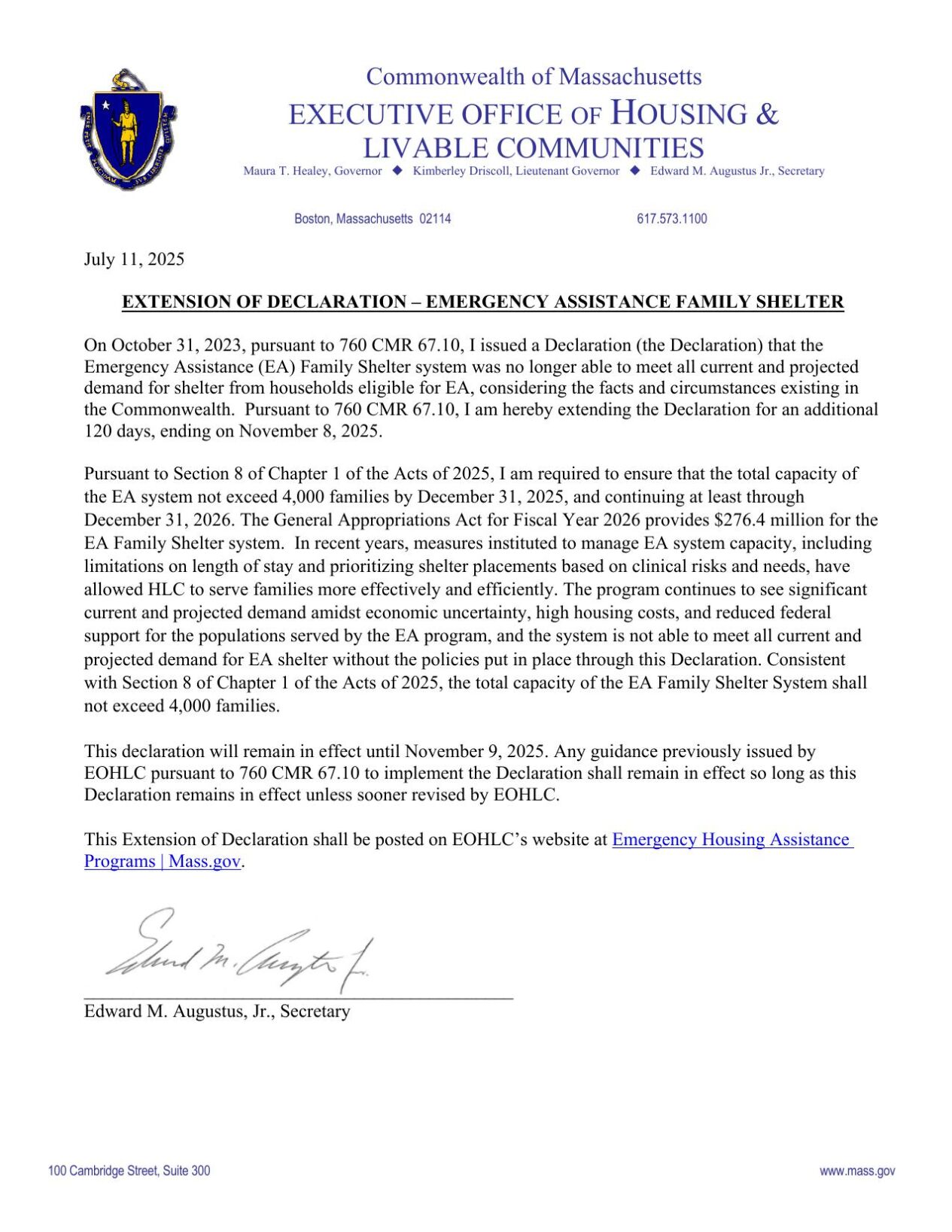
Augustus said Friday that limits on the length of shelter stays and the ability to prioritize shelter placements based on clinical risks and needs has "allowed HLC to serve families more effectively and efficiently," but that the administration still needs the emergency powers it carved out in his original Oct. 31, 2023 regulatory declaration that the system was maxed out.
"The program continues to see significant current and projected demand amidst economic uncertainty, high housing costs, and reduced federal support for the populations served by the EA program, and the system is not able to meet all current and projected demand for EA shelter without the policies put in place through this Declaration," Augustus wrote.
The secretary extended his 2023 declaration for another 120 days, until Nov. 8, 2025. When he issued the original, Augustus said he had "determine[d] that the maximum capacity of the Emergency Assistance program is approximately 7,500 families," more than double its current caseload.
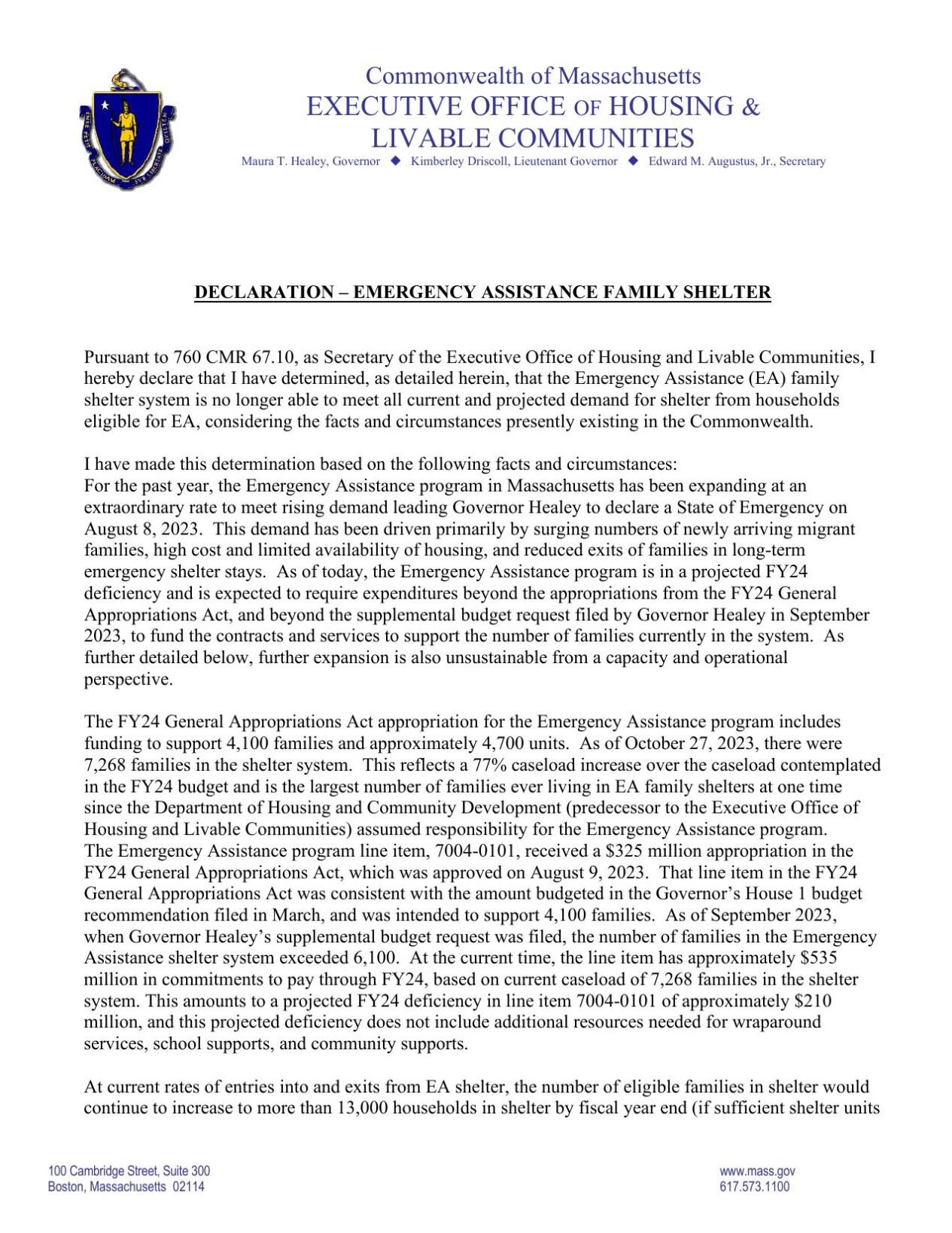
State regulations allow Augustus to set a maximum shelter system capacity if he "determines that, in light of legislative appropriations, the shelter system is no longer able to meet all current and projected demand for shelter from eligible families."
The secretary cited both the 4,000-family cap and the $276.4 million appropriated for the EA system in the fiscal 2026 budget in his latest declaration.
"We funded it adequately, and it shouldn't be a problem," House Speaker Ronald Mariano said Wednesday.
The state has spent about $1 billion annually on the EA system for the last two years, but Democrats say the more restrictive measures they imposed to control enrollment and curb costs are working and will prevent the need for significant additional funding. In those years, Democrats underfunded the system in the annual budget, requiring the administration to seek additional funding partway through the year to keep services running.


Light snow, with a high of 33 and low of 20 degrees. Light snow during the morning, clear during the afternoon and evening, light freezing rain overnight.