25° and Clear



Image
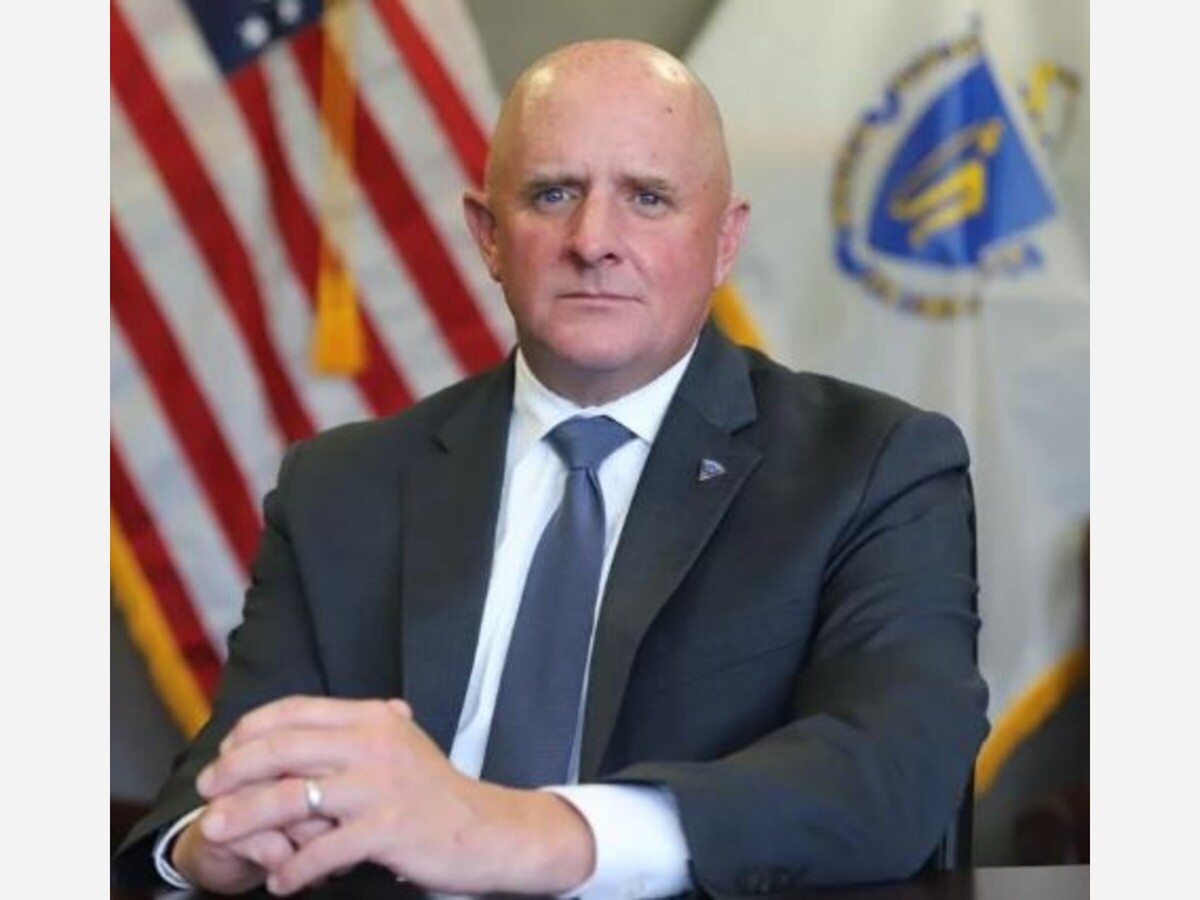
State Police Colonel Geoffrey Noble sits at MSP headquarters in Framingham in July 2025.
Ella Adams / SHNS
Ten months into his post atop the Massachusetts State Police, Col. Geoffrey Noble, the first outsider to hold the agency's highest ranking, is talking.
Noble, 51, spent 27 years with the New Jersey State Police, during which he reached the rank of lieutenant colonel, created an Office of Employee Relations and Community Outreach, managed the New Jersey state crime laboratories, and became commander of the team responsible for investigating the use of deadly force by police.
Originally from Rhode Island, Noble has ties to Massachusetts — not just family, but a couple of years spent early in his career as a summer police officer on Nantucket. Noble came out of retirement from law enforcement and relocated from New Jersey to take the helm of the Massachusetts State Police, an agency that has been entrenched in scandals in recent years and faced a crisis of public confidence.
In early July, Noble released what he has dubbed the "Excellence Initiative," a plan he's been crafting since his start in October to improve agency operations, health, accountability, public outreach, and crime and violence reduction.
In one of his first sit-down interviews since being sworn-in, Noble told the News Service about internal reforms at the agency, public perception of policing in Massachusetts, and the philosophy behind his leadership style.
This conversation has been edited and condensed for clarity and length.
A: I acknowledge, very respectfully, that I am the first outside colonel and superintendent for the Massachusetts State Police. I was a state trooper in New Jersey for 27 years, and during that time, I had multiple times where I got to work collaboratively with the Massachusetts State Police, and always found its members to be troopers and detectives of the utmost character. I also respect the moment, and understand the moment, that the Massachusetts State Police has found itself in after going through several high-profile scandals. There's, rightfully so, a lot of attention being put on the Massachusetts State Police, to understand how they were operating, and more importantly, what the Massachusetts State Police was doing to move forward. I respect and agree that in that moment, bringing in an outside perspective and a new perspective can often be very beneficial.
A: In New Jersey, our founding colonel was Col. Norman Schwarzkopf, badge number one of the New Jersey State Police — his son was Stormin' Norman of the Gulf War. The original Col. Schwarzkopf founded the State Police on some core principles that he learned as a graduate of West Point Academy. First and foremost, Col. Schwarzkopf centered the foundation of what a law enforcement leader looked like based on the principles of servant leadership. I've taken that to my core. What I mean by that, is that I, our staff, our troopers — we are here to serve through leadership. We're here to lead from the front, but the core foundation of why we are here, it's to serve the public. I hold the rank of colonel and I understand that there's a leadership responsibility there, but I believe that the spirit of service is what makes the law enforcement profession righteous. I think that that's a reminder that we as a department have to subscribe to, should subscribe to, and folks like Col. Schwarzkopf instilled that.
I will [also] point to former Police Commissioner [Charles] Ramsey from the Philadelphia Police Department. He led the Philadelphia Police Department through multiple times of crisis. I've gotten the chance to meet him, to hear him speak. He's written some books. He also subscribes to the servant type of leadership that I mentioned, and he would be another one of the mentors that I've looked up to.
A: The biggest challenge for me is, in order to drive this agency forward, the first thing I had to do was understand the culture of the department. You don't understand the culture of any organization until you live it and breathe it and feel it. And that's what I've been doing since I got here. I have tried to take every opportunity I can to speak with troopers of all ranks, from our youngest troopers to our senior troopers and our command staff [and] former troopers. I ask the troopers a series of questions when I meet with them. What do you like about this job? What do you not like about this job? How do you define yourself as a state trooper? Just to get an understanding of where this department is, culturally speaking.
As I approach my one-year anniversary, I feel that I have a good understanding and a good appreciation for the culture of the Massachusetts State Police. The goal is to ensure that our operations are aligned with the national best practices. We're a human agency. Mistakes are going to happen. The key as a management team is, have we done everything we can to prevent issues from occurring when they do occur? Do we have a robust management structure to identify areas of non-performance or poor performance, or even discipline? And then, do we have the mechanisms in place to immediately respond to the particular issues, address the issues and then learn from it and then make ourselves better? I believe that that culture aligns with the culture of a high-functioning professional modern-day police force.
A: Absolutely. I think that for the MSP, my assessment right now is, number one, I really believe that the Mass. State Police understand and recognize that to be effective in this moment, we need to be adaptive. We need to continue to learn from the past, educate ourselves and take a step forward. And absolutely where adjustments are needed — whether it's the culture, whether it's training issues, whether it's internal accountability measures — we need to make thoughtful and strategic changes. That idea is what led us to the implementation and the development of what I'll call "phase one" of this Excellence Initiative.
A: In order to really be effective, we need to make sure that the Mass. State Police is as healthy internally as we can be. When I got here, I did an assessment of our internal health of the organization — things like morale, wellness. But one of the things that stood out to me initially was the assignment of the captain's ranks within the department. I recognized that there was an opportunity to redistribute our captain's ranks internally. We have a set number of captains within the State Police, so my job was to look at the manner in which we deploy these captains. I wanted to make sure that we had a balanced, fair distribution of our command staff across the board. We now have our captains equally distributed across the department. I now can say that the manner in which our troopers out in Springfield are [operating is] consistent with and up to the same standards as the troopers out on the Cape or in the Boston area. The public should know that based on this restructuring, we have more accountability. I have the ability to ensure that none of our units are operating without a sufficient amount of oversight and command. Accountability measures are implemented, really, through these captains. The captain's job is to ensure that our operations are running in accordance with our best practices.
A: To be a well-functioning police agency and to align with the national best practices, we have to constantly measure and evaluate ourselves. I think this comes down to a conversation, a little more generically, which talks about, do we have the ability to police ourselves? Are we looking for opportunities to improve our operations? The body-worn cameras relate specifically to our patrol troopers that are out interacting with the public. We expect all of our troopers to engage in every interaction with the public to [our] standards. This is a small measure for us, and a vehicle in which we can measure our own performance. But to be clear, this measure is not designed as a "gotcha" or to catch our troopers — we have our process. When there's misconduct, we handle that.
[Measuring our operations and our performance] is a process for us to constantly be evaluating how we're doing out there. Where appropriate, we set up a mechanism on the job through our training capabilities to ensure that where we see opportunities to improve, we'll look at that as a training issue and constantly be allowing that process to work. Where we're doing well, we'll build on it and enhance it. Equally, if not more importantly, where we can do better, we'll address that, too. I believe that if we approach that through our accountability efforts that we've included in the Excellence Initiative, our body-worn camera initiatives that we've mentioned here, that the manner in which we do business will improve our overall operations and will give all of us a higher degree of confidence that our troopers, consistently and at scale, are operating the highest standards.
A: Let me make sure I'm clear on one point. Policing a police agency is a role for multiple levels. We are a public agency. We are open, we are transparent. As long as I'm here, we are accountable to the public, by definition. We have mechanisms in play that police the police that are not internal. I'll cite to the inspector general, who has a dedicated role that's defined and codified through legislation. They have insights into everything we do, they come in and we meet with them periodically. We have now the POST certification process, which regulates how police officers and troopers are licensed here in Massachusetts.
When I say I believe that we have to play our part in the policing of the police, I don't mean to say that we should ever exclusively police ourselves. Just the opposite. Enhancing our ability to police ourselves — there's always opportunity for improvement there. When I refer to policing ourselves, that's a strategy that's done in concert with the other entities that rightfully so are policing, not just the State Police, but all police agencies here in Massachusetts. At the end of the day, the concept for me comes down to this: recognizing great behavior when we see it, and best operations and best practices, and building from it, and also catching deficiencies before they become discipline issues or scandals. That's what a good police department should be doing. We owe our troopers that responsibility to ensure that we are out there, that we are giving them the mentorship, the training, and where needed, we're giving them enhancements or instructions or tailoring changes that are needed to ensure that we do not have a series of misconduct problems. That really is what I mean by the ability to police ourselves. We're putting the structures in place to get that done.
A: This very tragic death of Trooper Enrique Delgado Garcia, that occurred pretty much around the transition of my arrival here. It's devastating to a department. We all have a collective desire to understand what happened and where we can improve. This incident challenged us. Gov. Healey instructed an outside review to be done, which I fully supported. We want the same answers that the public wants. We have an obligation. We put out a request for an outside, independent review. We followed our procurement procedures, and ultimately, through that process, we landed on a team from the International Association of Chiefs of Police. They are in the process now of monitoring and assessing and conducting their review.
We have a class now, and we have another class starting very shortly, and we have been meeting with the IACP so that we're prepared to even make changes midstream. If they come in and say, "Hey, this is a best practice that maybe we're falling short on," or maybe, "We should add this training curriculum" — we're prepared. At some point, the IACP will issue a final report. I don't have an exact date. They are boots on the ground. We've invited them to be there, whether it's [to] watch the training or [to review] curriculum. We won't stop until our training academy is aligned with national best practices.
A: The first class since I've been the colonel, the 91st class, just started about two months ago, so it's too soon yet for me to weigh in [on] what the trend is. But that retention metric that you're referring to is very important to us. That is part of the assessment, to not just understand what the numbers are, but to provide meaning and context. We don't just want to understand why people might leave. An equal part of this conversation is to also understand why people stay. When we do this investigation, [we ask], "Why did that 2023 number spike? What were the causal factors there?" But also to the group that stayed, "What equally compelled you to stay?" It's important to remember that when people don't make the final process, for whatever reason, there's a lot of factors between [that and] step one — and the academy training is only a portion of that. Maybe there was improper preparation before, maybe there were false expectations, maybe there was a messaging [issue], maybe our minimum requirements aren't aligned with what we do for a living. The answer is, I don't know. What I do know is, this is a complicated question, and I've brought in a team of experts, and we're going to get to the bottom of it, and where we can make appropriate changes to increase our attrition rates, we certainly will.
A: This is not something I've developed since I got here and said, "As the colonel of Mass. State Police, I'm going to believe in community outreach." Over my 30-year career in law enforcement, I have consistently subscribed to and acted on the belief that you can't have effective police work without community engagement. The police have to be part of the community, not just patrolling from the highways, and people encountering troopers at their worst moment. To your point about public trust and the image that's out there, my job is to bridge that gap, identify what the barriers are, what's causing that gap in certain areas, why there is an erosion of public trust. I believe that connecting our troopers with the communities we serve — we understand them, they understand us.
But we have to get through that. And so since I've been here, I've added and built out our community engagement efforts. I've added some staff. I track it. I meet with our command staff all the time. I don't have all the answers. My job is to be a quarterback of sorts. When we sit at the executive table, we have diversity at the table — diversity of thought, diversity of background. It's not just lieutenant colonels and [troopers] sitting around our table. We've opened up formal [public] communication to listen and to be aware. I think being self-aware as an agency is so crucial as we devise our strategy moving forward. I want the troopers to be out there listening, and I don't just mean the positive conversations where people tell us we're doing a great job. I want our troopers, myself included, to hear what the concerns are. I also want the community to meet our troopers. I think that there is a perception on both sides of this issue. When we can get past the perception and we can actually engage in reality, we can all focus on the issues that need to be done.
A: We as a police force, internally, have to ensure that our department is healthy — that our troopers have the tools and resources to ensure that they are healthy, to do the hard things that we need to do to de-escalate situations, to operate and wear so many different hats that all police officers and troopers have to at all times. So we're investing in the health of our troopers through wellness programs, through training, through some internal accountability features and some tools that we're giving them, too. When it relates to dealing with the public, particularly in times when we're dealing with individuals who may be going through a mental health crisis or considering self-harm, I believe that the Massachusetts State Police right now is doing that very well. They have been trained on de-escalation, we're doing things like the blue envelope program, which is absolutely phenomenal.
This goes back to my overarching management theme — I reject the status quo. We can always do better. You'll always hear me say that, and that's not a negative. I hope that that's not interpreted as a negative. I believe that that's what an effective police commander does, is challenge the department across the board to say, how are we doing today? How can we do better tomorrow? We are having a lot of discussions right now about our training down in the academy, and part of that training is additional awareness training for individuals going through mental health crisis, de-escalation training, utilizing empathy in certain moments when it's appropriate in law enforcement to show — and as we should — and how we can make that part of our operational readiness. So the answer is, I believe we're doing it well, but understanding how law enforcement deals with folks going through mental health crisis is so pivotal right now, and it has my attention.


Light snow, with a high of 33 and low of 20 degrees. Light snow in the morning, moderate snow in the afternoon, clear in the evening, light freezing rain overnight.