38° and Mist



Image

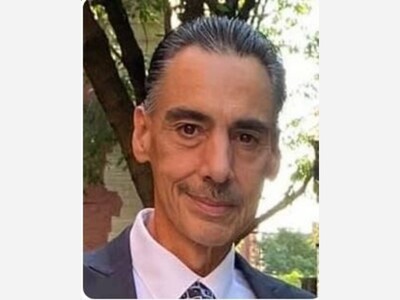
John Camp (universally known simply as "Camp") is the Head of Teaching & Learning at the New England Innovation Academy (NEIA). He is also a humanities teacher himself at the relatively new, private school.
NEIA was founded in 2021 at a former Verizon call center on Locke Drive in Marlborough. The school launched with 75 students, the oldest of whom were 10th graders and who would go on to become its first graduating class in 2024. The school since has expanded its footprint, across middle and high school.
Camp and his family have called Franklin home for the past several years.
We asked him to share a bit about himself and NEIA....
To take on the position at the new, startup school New England Innovation Academy, my family and I had to move out of campus housing at St. Mark’s School, where we had lived for 13 years. We were fortunate that our realtor identified Franklin as an ideal location for our family in spring of 2021. Our 17-year old daughter, Joss, is entering junior year at Franklin High School, where she plays varsity field hockey, and is a captain as a junior for varsity indoor track in the fall and varsity outdoor track in the spring. We have a 13-year old entering 8th grade at Franklin Middle School.
NEIA has three founders: Jane Du of Hangzhou, China, Jean Jones of Acton, and Raymond Chang of Brookline. NEIA is privately funded as we steer toward non-profit status. Jane is the founder and President of the Board of Trustees of Wahaha Bilingual School and Wahaha International School, and she had a vision to open an innovative, progressive school in the United States. The school launched during the pandemic, a time when traditional schools were not able to immediately flex to the reality of hybrid and virtual learning, and within our first we were able to see how effectively our students responded and thrived in the academic environment we created.
Human-centered design means putting people at the heart of the problem-solving process. It’s not just about creating solutions; it’s about deeply understanding the needs, perspectives, and experiences of others. NEIA students use empathy, research, and iterative thinking to design meaningful solutions to real-world challenges. Whether they’re developing a product, launching a social initiative, or crafting a story, they’re taught to ask: Who is this for? What do they need? How can we make their experience better? It’s a mindset that fosters curiosity, compassion, and impact.
Our goal is to help learners realize their passion and teach real-world problem-solving skills that prepare them for wherever they go next.
NEIA operates within a standard structure: grade levels and college-preparatory graduation requirements. Although many of our electives are mixed-grade, a large part of our program is grade-level centered.
Throughout my career, I’ve been a progressive educator, and I credit this mindset to the outstanding teachers and professors that I had in my journey. I believe the overarching educational system is archaic and needs fresh perspectives and approaches, such as Universal Design for Learning and competency-based assessment.
Absolutely not—at NEIA, our emphasis on innovation and entrepreneurship is designed to enhance a well-rounded education, not limit it. Students engage deeply with the arts, humanities, and languages, and these disciplines are integral to our interdisciplinary approach. We believe creativity, cultural understanding, and critical thinking are essential to shaping future innovators, so you'll find just as much energy in our collaborative learning labs and maker spaces designed for hands-on learning.
We teach and believe in an entrepreneurial mindset that can be applied to all endeavors.
NEIA offers both day and boarding options—so not all students are boarders—but our boarding program is a vibrant part of the community. We proudly draw students not only from the Greater Boston and New England region, but also from across the U.S. and around the world. Our international students bring incredible global perspectives that enrich our learning environment every day.
As we enter year five, we have had two graduating classes with excellent college outcomes, thus we lean on that proof of concept for those parents and guardians who might worry about straying from the traditional path. For students, I stress how we put the student at the center of decisions–and that includes the individual student: part of my job as Head of Teaching and Learning is creating flexible pathways so that students can pursue their journeys of purpose and passion rather than just falling in line with what the school has laid out for them. Our transcript looks like any school’s transcript: a list of courses and letter grades, but what the courses are and the pursuits and pathways students take tell their unique stories.



Partly Cloudy, with a high of 64 and low of 37 degrees. Sunny in the morning, clear for the afternoon and evening, partly cloudy overnight.