25° and Clear
Image
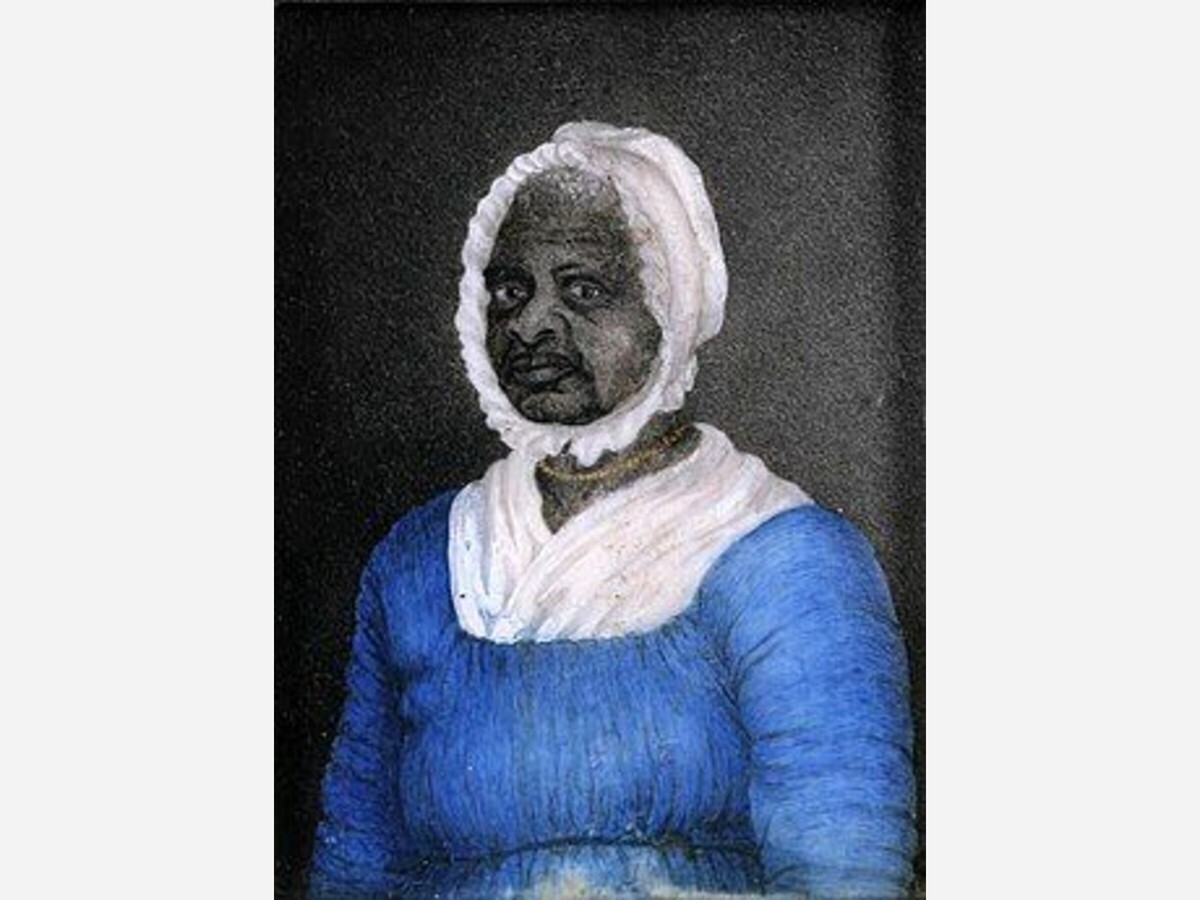



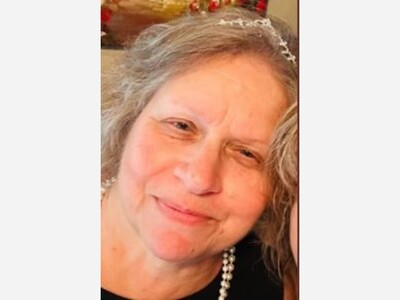
Above, Elizabeth Freeman, as she called herself in later life, an enslaved women in Western Massachusetts whose legal action helped end slavery in the state under its new constitution.
James C. Johnston Jr.
American History like all History contains some rather uncomfortable and inconvenient truths about our nation which we are ethically, morally, and intellectually obligated to know. We owe it to our young people to let them know the truth of how we came to be the possessors of not only the greatest nation on earth, but the world’s finest real estate. We must also face the fact that our getting of this fantastic country may not always have been done in the most honorable way.
If we are honest, we must relate that we dispossessed the First Americans of their land, because The Indigenous People, or Native Americans, saw that having land meant having the right to use the land and/or share the land and not having unique and exclusive ownership of the land that can only belong to “The Great Spirit” or God. To the First American Mind’s, mere humans could not own that which was so precious that it could only be God’s alone.
The First Americans believed that all of the land belonged to God and that its use was only on loan to humans on a basis of equity. These First, or Native, Americans, thought that extending the use of the land to Europeans was a courtesy and a manifestation of friendship by allowing these strangers to share it with them on a basis of equality. I am afraid that concept of sharing was far too sophisticated and honorable for our European ancestors to understand it in all of its subtlety.
Whole clans of “First” or “Native Americans” were wiped out of the Eastern part of what became the United States by the late 1830’s when most of their lands were seized by the new-comers, and the reality of the Trail of Tears all but ended the question of Native American settlements east of the Mississippi. Then for all practical purposes the same thing happened in the West by 1890 culminating with the Massacre at Wounded Knee.. Is this an uncomfortable fact of history for the young people of the United States to know?
This inconvenient history should be known to all Americans, but it is probably not. But the unvarnished truth is that this history happened, and our children, and all of us, nevertheless should know what happened. At an ethical level, I hope that young people might see that something better might have been worked out through effort and understanding, but intrinsic racial prejudice and greed overcame humanity and brotherhood. But the fact still remains that it is our history, and we should know the truth of it. We should not be apologists for the slave owners who were just trying to make a buck and live like their idea of English Country Gentry.
For example, between 1619 and 1865, the fact was that for more than half of our history slavery was a very real fact of life in this country. The whole economy of the Deep South, and some of the Border States, depended on the work of enslaved people. Massachusetts was not exempt from this moral scourge. Slavery was practiced here in Massachusetts too throughout all of our colonial history, even in what would become Franklin. Slavery existed here in the Commonwealth until after the Revolutionary War Period.
It was the Supreme Judicial Court of the Commonwealth of Massachusetts, using the principal of judicial review, which brought an end to slavery in the Commonwealth. The Court brought an end to the ugly institution that would ultimately rip the nation apart from 1861 to 1865. The Court brought an end to slavery and freed the slaves then in the Commonwealth once and for all in 1783.
The Abolitionist Movement was always strong in Massachusetts, led by brave men like William Lloyd Garrison, publisher of The Liberator, and Massachusetts leader in the fight to end slavery as a national practice protected by federal law. Slavery is an inconvenient truth of at least the 246 years of duration that existed here protected by law for the most part, and largely recognized by the Constitution which actually went so far as to count a slave as two-thirds-of-a-person for purposes of establishing the number of representatives a state could have serving as delegates in the House of Representatives.
It is also an ugly fact of life that these slaves, these “human chattel” were treated like live-stock and breeding stock by the masters who owned them without regard to their humanity. Was this a disgusting part of our history? Yes it was. There was nothing socially redeeming about slavery. Some modern apologists for “The Peculiar Institution of the South”, as slave-owning Southerners called slavery, have stated only recently that slaves were benefitted by slavery, because slavery gave them such a good education in the skilled trades. No less a person than the present Governor of Florida, Ron Desantis, has articulated this opinion. This is hogwash. The vast majority of slaves were educated for exclusively picking crops, and that was it. It was even against the law in the slave-states to teach slaves to read and write! Was slavery a national disgrace? Yes it was, and we should learn all about how our ancestors engaged in this evil practice by the study of history in our schools.
The ugly and horrible treatment of Black Americans in this nation even after the Civil War and up through the wretched days of desegregation down to the present day, in many instances, is also something that merits national discussion. The institution known as tenant farming tied former slaves and poor whites to the land by former slave owners who took a large percentage from the tenant farmer’s proceeds from the sale of his crops while the tenant farmer had the burden of buying seed and the other necessities of farming. By doing this, the farmer became enslaved by chronic debt to the former slave masters. This huge debt was in most cases never paid off thus binding the tenant farmer to the land of his master like a serf of Medieval England or France in the Middle Ages.
We must always aspire to be a better people and willing to make this country a better place to live for all our citizens on a basis of full equality. Up until a short while ago, I thought that we had made real progress since 1953 and that the United States Supreme Court Decision in the Case of Brown vs, The School Board of Topeka, Kansas legally ended segregation forever setting aside the Plessey vs. Ferguson 1896 decision which had stated that separate, but equal was the answer to all races of young people being educated together. That turned out not to be the case in 1896, because separate, but equal, by its nature, can never be an absolute reality.
As a free people, we must know our history in all of its magnificence, and with no eye closed to our mistakes which we made as a as a free people. To understand where we came from and how our national attitudes have historically evolved, no matter how painful the truth may be, should be embracing the mission of teaching our history. We can and indeed must understand our human behavior in the context of the historic period under study, but the truth must be told of how our nation came-about in all of its raw beauty. There is nothing wrong about feeling justly ashamed of our bad national behavior, especially if we have the mind and the will to changing it.
Was religious intolerance a part of our national history? Yes it was. Was fear of foreigners, or xenophobia, part of our history? Yes it was, and unfortunately still is. And that was true long before signs reading, “Irish Need Not Apply” appeared in the windows and on the walls of factories, shops, and windows of other businesses that refused to hire Catholics and the Irish in particular in the 1840’s. At various times of our history, in our beautiful home state of Colonial Massachusetts, you could not live here and also be a Quaker, or a Baptist, or a Methodist, or a Catholic without running the risk of: fines, imprisonment, beatings with a whip, being removed from the Commonwealth whipped by an official “At the Cart’s tail” in the center of every community one passed through until you arrived at the border of the Colony of Rhode Island which was the only colony to practice “Universal Toleration’’ of all individuals including: atheists, Jews, Baptists, and Catholics. Among the punishments further inflicted on non-conformist practitioners of proscribed religions were: physical mutilation, tongue splitting, and tongue piercing, nose slashing, and finally hanging. Should we know this about our Massachusetts History? Yes, we should as horrific as it is.
The Founding Fathers who penned the United States Constitution knew that the national state must be separated from an established religion if we wanted to be an open and free society in which all religion, or the practice of no religion, would be equally protected. Thus church and state must forever be separated from each other. This provision in our Constitution also did something else. It protected people who chose not to believe in any god or gods the freedom to follow their conscious in that direction without punishment. This in and of itself was a shocking and revolutionary concept. It took many years to refine the Constitution, which is that great document and instrument of government under which we live.
Sometimes it may take more than a century or two for some aspects of our Constitution to catch-up with the reality of life. Although the Bill of Rights went into effect in 1791, the Commonwealth of Massachusetts required all teachers of the public schools to sign a document stating that they “believed in God” as a condition of their employment. That law was still enforced in Franklin in 1966 when I was hired to teach in the Franklin Public School System, after it had ceased in Massachusetts towns and cities a couple of years before. My cousin’s husband had been fired from his teaching job for refusing to sign such a document just a few years before that.
I knew two things. First, that I was not signing that stupid paper, because it questioned my code of ethical private beliefs, and I considered it to be unconstitutional, and a violation of my basic rights, and secondly, I was not going to lose my job over this idiotic requirement either. I was also practicing fan of Gandhi’s strategy of passive resistance. I made sure that I just never got around to going over to the office of Superintendent of Schools to sign the idiotic document. I got a few reminders over the next few years from the Central Office, and I threw them away knowing that the Superintendent’s office was understaffed and that they didn’t have time to keep an eye on this small matter most especially if I, “Didn’t make a big thing out of it!” As it turned out, I was right. I eventually got tenure and nobody ever brought up the “religious belief thing” again.
Eventually the law caught up with my thinking on the matter, and signing such a document was deemed unconstitutional, and The Commonwealth of Massachusetts could no longer mandate that public school teachers had to be “True Believers.” Should we know that bit of our very real historic past as part of our social and intellectual history? Yes, and we should know about this historic infringement of our freedom of religion, or freedom from religion, which is one of our unalienable rights.
Historically we should know how intemperate-religious-zealotry resulted it the horror known as the Salem Witch Trials of 1692 and 1693 which resulted in hundreds of people being imprisoned for witchcraft and tried without benefit of legal counsel found guilty and hanged or pressed to death. It is an interesting fact that lawyers were forbidden to practice in Massachusetts courts at this time, because their defense of the “accused” interfered with true justice being carried out by preventing all the nasty accused people from being found guilty and punished the way they should be through legal trickery and obfuscation on the part of the wily lawyers!
And as a result, all of the unfortunate defendants in these Witch Trials were on their own. They had to face the awesome majesty of the court represented by Judges Hawthorne [in full disclosure a relative of mine] Judge Sewell, And Judge Corwain. Also as a result, the legal defenses of those changed as witches were not up to snuff, and the executions of twenty people for the commission of this crime of witchcraft, a crime which went against the teachings of the Puritan Religion and most form of Christianity, followed and became a fatal fact of our history. Hundreds of the accused also died in confinement in jail, or in whatever passed for a jail, which frequently consisted of an unheated barn in wintery Massachusetts during the period of history known as “The Little Ice Age”. Even out-houses became jails, because hundreds of people all over Eastern Massachusetts were accused as witches, and there was not prison space enough for all the accused to be housed. A lot of tradesmen and farmers were well paid to house the accused. When at last the “Witchcraft Delusion” ended, the surviving accused were released, that is if they could pay the costs of jailing them!
All of this is history, and it must be taught. Our kids must not be “Protected” from the truth of our past. If they become uncomfortable because the truth is frequently uncomfortable, that is the nature of the reality of life. We should not be so hypocritical as to think that our young people, who are exposed to every reality on a daily basis, are such delicate flowers that they will wilt if they become knowledgeable about the facts of slavery and racism! Give me a break.
Let’s face our history with courage and dare to live the truth of who we are. Even better let us benefit from a study of our mistakes and give ourselves the task of building a better future for all of us. We can correct our behavior. I have seen a great improvement in people as a whole over the last eighty years. I have seen generations of old bigots die off, and be replaced by their children and grandchildren who have the blessings of much more enlightened attitudes.
Most kids I have seen have very open and accepting attitudes regarding their schoolmates. I do not think that racial stereotypes enter too much into their thinking as it did that of their ancestors. I knew a lot of very nice people who were born in the 1850’s through the 1920’s who never even suspected how latently racist they were. Racism is a learned behavior. Little kids are not born racists. We have come a long way, but we still have a long way to go, and education is the key. We must learn our history and become better people. As I have observed, we are a lot better than we used to be as citizens of the world’s greatest democracy, but if we want to stay that way, we must be on guard against racist forces that might bring us down. Freedom is not free, nor is it guaranteed in perpetuity. Things did not always go well in the good old days, but I assure you, we can always do and be better.
Johnston is a retired Franklin educator, author, and historian.


Light snow, with a high of 33 and low of 20 degrees. Light snow in the morning, moderate snow in the afternoon, clear in the evening, light freezing rain overnight.