

Image
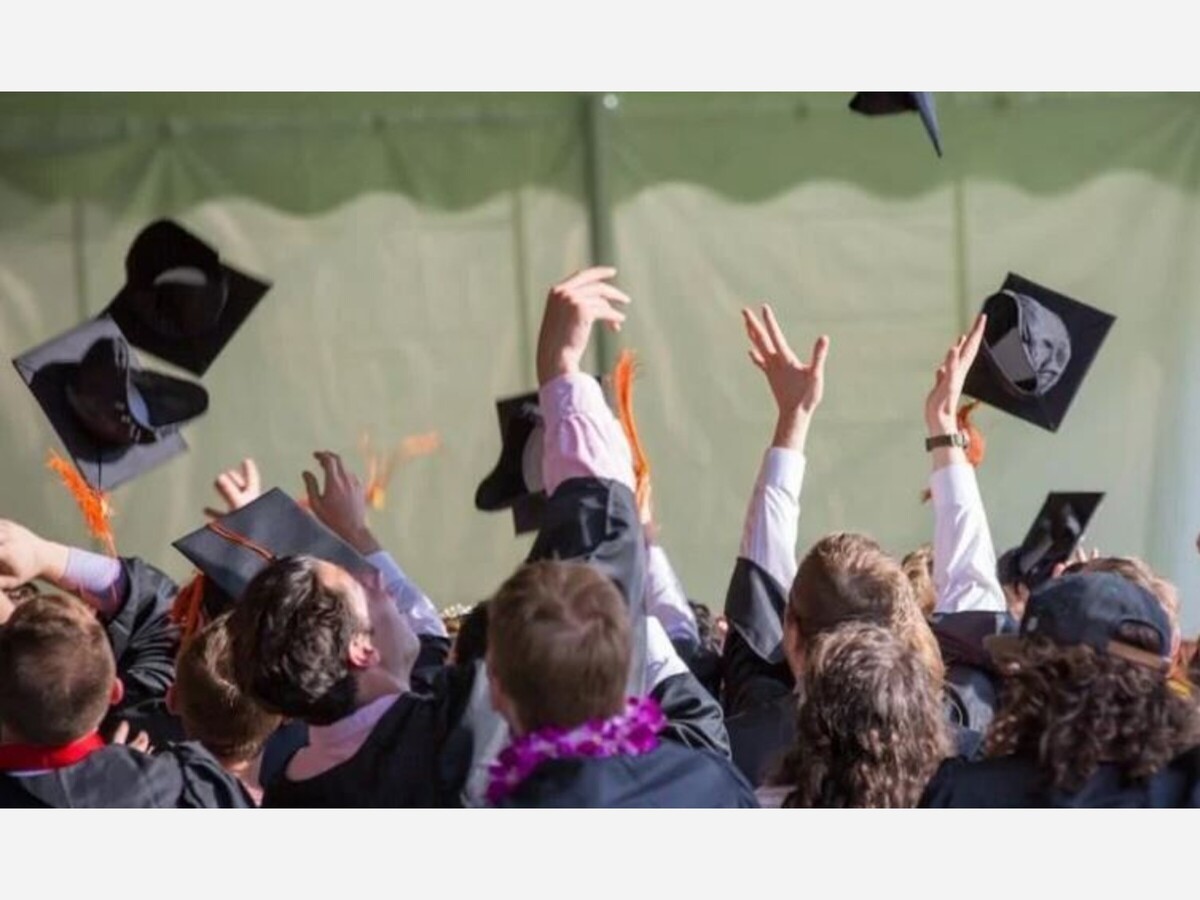
Most recent high schoolers agree that Massachusetts needs one uniform graduation standard rigorous enough to prepare graduates for either college or a career, according to a new poll that also took their temperature on the subjects taught in Bay State schools.
An online, text and telephone survey of 600 Massachusetts residents aged 18 to 29 found that 66% think the state should have one minimum graduation requirement for all high schools while 28% said high schools should each set individual standards. Regardless of how the standard is set, 74% said high school graduation requirements should match the minimum entrance requirements for state universities, the poll found.
The poll results were released Wednesday as the Statewide Graduation Council, convened by Gov. Maura Healey after voters last fall eliminated the use of the MCAS as a graduation requirement, gets closer to delivering a set of recommendations on new requirements for a diploma, due to the governor and Legislature by the end of the year. In the meantime, the Board of Elementary and Secondary Education has adopted interim graduation requirements, including that students complete specific coursework through grade 10.
Sixty-seven percent of the recent high schoolers surveyed agreed (33% strongly, 34% somewhat) with the statement posed by the pollsters that "lowering academic standards for a high school diploma will result in graduates being less prepared for the future."
The MassINC Polling Group conducted the poll from June 16 to June 27, and it was sponsored by MassPotential, a nonprofit founded this year by the former executive director of Democrats for Education Reform Massachusetts who was an opponent of changing the MCAS graduation requirement.
"Students themselves — based on their own experiences — are telling our policymakers that they value high expectations, and believe that uniform, statewide graduation standards are essential to prepare them for college and career," Mary Tamer, who founded and is executive director of MassPotential, said. "The MCAS will no longer be the objective measure of whether students are ready to graduate, but the Administration’s K-12 Statewide Graduation Council must develop new uniform, statewide curriculum standards, partnered with the right assessment, to prevent a hodgepodge of inadequate and unequal expectations that will lower the value of a Massachusetts diploma."
The recent graduates also shared their view of what kind of learning should be a required part of graduating high school here. Asked an open-ended question about the most important consideration in the creation of a new standard, students said "real life skills" like financial and digital literacy, civics, and interpersonal communication (17%); bringing back the MCAS or another standardized test (14%); "the basics" like reading, math, science and history (13%); and workforce and college preparation like internships or community service (13%).
Financial literacy came up a few times in the poll. Seventy-four percent of respondents said they think that completing courses on financial literacy should be part of a graduation requirement, and 82% said they wish their high school had offered more classes that teach students about how to deal with money.
A law that Gov. Charlie Baker signed in 2019 allowed state education officials to establish standards around financial literacy, which schools can incorporate into their existing curricula in subjects like math, business, and social sciences.
Most recent high school students also said they wish they had more programs available to them that prepare students to work in specific industries (69%), more vocational-technical courses that teach hands-on skills for specific trades (66%), and more digital literacy classes that teach young people how to find information and communicate online (56%).
There was not much the recent graduates said they want to do away with, though. Thirteen percent of respondents said they wish they had to take fewer humanities classes like English and history (compared to 61% who said they took the right amount), and 11% said they could have done with fewer math and science courses (66% said they took the right amount).
More than three-quarters of respondents, 77%, said they feel their Massachusetts high school education prepared them for life after graduation (29% very well, 48% somewhat well), the poll found. Most of the graduates polled, 55%, started college for a four-year degree the fall after their high school graduation, 23% started a job, and 14% started college for a two-year degree.
Of the 600 young people polled, 60% are now working full-time, 22% are working part-time, and 22% are currently in school (including some who are also working). Forty percent are living with their parents or other relatives, 31% are living with a partner or spouse, 15% are living with roommates, and 12% are living alone.


Sunny, with a high of 82 and low of 52 degrees. Sunny for the morning, clear overnight.