44° and Clear


Image
If you have any questions about this week's report, e-mail us at bob@beaconhillrollcall.com or call us at (617) 720-1562.
Beacon Hill Roll Call
Volume 50 - Report No. 36
September 1-5, 2025
Copyright © 2025 Beacon Hill Roll Call. All Rights Reserved.
By Bob Katzen
GET A FREE SUBSCRIPTION TO MASSTERLIST – Join more than 30,000 people, from movers and shakers to political junkies and interested citizens, who start their weekday and Saturday mornings with MASSterList—the popular newsletter that chronicles news and informed analysis about what’s going on up on Beacon Hill, in Massachusetts politics, policy, media and influence. The stories are drawn from major news organizations as well as specialized publications.
MASSterList will be e-mailed to you FREE every Monday through Saturday morning and will give you a leg up on what’s happening in the blood sport of Bay State politics. For more information and to get your free subscription, go to: www.massterlist.com
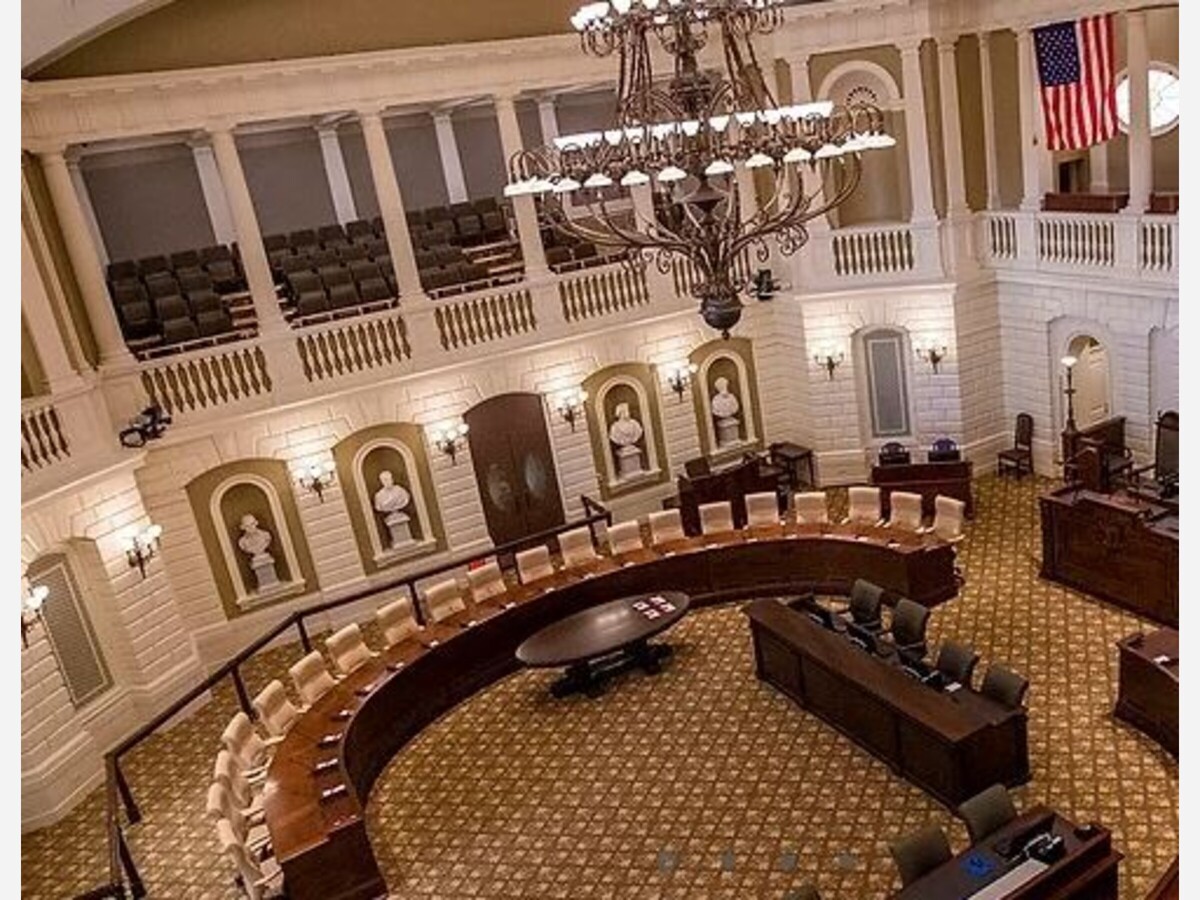
THE HOUSE AND SENATE: There were no roll calls in the House or Senate last week. This week, Beacon Hill Roll Call reports on the percentage of times local representatives voted with their party’s leadership so far in the 2025 session through September 5.
Beacon Hill Roll Call uses 72 votes from the 2025 House session as the basis for this report. This includes all roll calls that were not quorum calls or votes on local issues. Quorum calls are used to gather a majority of members onto the House floor to conduct business and members simply vote "present" in order to indicate their presence in the chamber.
The votes of the 2025 membership of 24 Republicans were compared with those of GOP House Minority Leader Brad Jones (R-North Reading). The votes of the 2025 membership of 133 Democrats were compared to those of House Speaker Ron Mariano (D-Quincy).
THE DEMOCRATS: A total of 123 (92.4 percent) of the 133 Democrats voted with Mariano 100 percent of the time. There were only ten Democratic representatives who voted differently than Mariano on any roll calls.
The Democratic representative who voted the highest percentage of time against Mariano was Rep. Colleen Garry (D-Dracut) who voted with Mariano only 75 percent of the time.
Rounding out the top five Democratic representatives who voted with Mariano the lowest percentage of times are Reps. David Robertson (D-Tewksbury) who voted with Mariano 87.5 percent of the time; Alan Silvia (D-Fall River) who voted with Mariano 92.6 percent of the time; Jeffrey Turco (D-Winthrop) who voted with Mariano 93 percent of the time; and Francisco Paulino (D-Methuen) who voted with Mariano 94.3 percent of the time.
THE REPUBLICANS: None of the 24 GOP members voted with Jones 100 percent of the time. The Republican representative who voted the lowest percentage of times against Jones is Rep. John Gaskey (R-Carver) who voted with Jones only 65.4 percent of the time.
Rounding out the top five GOP representatives who voted with Jones the least number of times are Reps. Nick Boldyga (R-Southwick) who voted with Jones 71.1 percent of the time; Marc Lombardo (R-Billerica) who voted with Jones 72.7 percent of the time; Justin Thurber (R-Somerset) who voted with Jones 76.5 percent of the time; and Alyson Sullivan-Almeida (R-Abington) who voted with Jones 82.7 percent of the time.
THE UNENROLLED: Rep. Susannah Whipps (U-Athol) is the only unenrolled House member and is not affiliated with either the Republican or Democratic party. We based her record on how many times she voted with Democratic House Speaker Ron Mariano. She voted with Mariano 100 percent of the time.
REPRESENTATIVES’ SUPPORT OF THEIR PARTY’S LEADERSHIP IN 2025 THROUGH SEPTEMBER 5TH
The percentage next to the representative’s name represents the percentage of times the representative supported his or her party’s leadership so far in 2025 through September 5th. The number in parentheses represents the number of times the representative opposed his or her party’s leadership.
Some representatives voted on all 72 roll call votes. Others missed one or more roll calls. The percentage for each representative is calculated based on the number of roll calls on which he or she voted.
Rep. Jeffrey Roy 100 percent (0)
ALSO UP ON BEACON HILL
POSSIBLE NOVEMBER 2026 BALLOT QUESTIONS ARE CERTIFIED – Attorney General Andrea Campbell announced that her office has certified 40 possible ballot questions that could appear on the November 2026 ballot. Campbell had until September 3 to certify the questions as eligible or reject them as ineligible. Three possible ballot questions did not pass muster and were not certified because they do not meet the requirements outlined in Article 48 of the Massachusetts Constitution.
The next goal that the initiative’s proponents must meet is the gathering and filing with the Secretary of the State the signatures of 74,574 registered voters by December 3. The proposal would then be sent to the Legislature and if not approved by May 6, 2026, proponents must gather another 12,429 signatures by July 1, 2026, in order for the question to appear on the November 2026 ballot.
Proposed laws that were certified include requiring voters to show identification at their polling places in order to be allowed to vote; overhauling or eliminating the financial stipends that legislative leaders award to many lawmakers for serving in the leadership and as committee chairs; subject the governor's office and Legislature to the state's public records law; allowing prospective voters to register and cast a ballot in a single trip to the polls on Election Day; enable Committee for Public Counsel Services staff -- which includes public defenders, social workers, investigators and administrative staff who support indigent clients -- to unionize; imposing rent control by curtailing rent increases to the cost of living with a 5 percent increase, with some exemptions; reducing the personal income tax rate from 5 percent to 4 percent over a three-year period; using a portion of the funds generated from the existing sales tax on sporting goods to fund conservation; providing indigent tenants with an attorney in eviction and foreclosure proceedings; and allowing single-family homes on small lots in areas with adequate infrastructure.
A complete list of proposed laws can be found at: https://www.mass.gov/info-details/ballot-initiatives-submitted-for-the-…
“I applaud the civic engagement of our residents, who filed a record-breaking [number of] ballot initiative petitions this year,” said Campbell. “My office reviews each petition according to the strict criteria outlined in Article 48 of our State Constitution. Our personal opinions and any constitutional considerations outside of Article 48 cannot weigh into our decision-making about certification of a petition.”
Campbell’s office said that certification of a proposed ballot question does not represent the attorney general’s support or opposition to the policies proposed. The Massachusetts Constitution requires that proposed initiatives be in the proper form for submission to voters, not be substantially the same as any measure qualified to appear on the ballot in either of the two preceding statewide elections, contain only subjects that are related to each other or mutually dependent and not involve a set of issues that are specifically excluded from the ballot initiative process by the Massachusetts Constitution.
The office offered examples of ineligible proposals including any proposal that relates to religion, religious practices or religious institutions; the powers, creation or abolition of the courts; the appointment, compensation or tenure of judges; a specific appropriation of funds from the state treasury; or infringement on certain other constitutional rights listed in Article 48, such as trial by jury, freedom of the press, freedom of speech and free elections.
PRE-KINDERGARTEN (H 703) – The Education Committee held a hearing on a bill that would require the Department of Early Education and Care (EEC) to administer a publicly funded Pre-K program, which would be available each week a public school is in session for each child from 2 years and 9 months of age to 5 years of age, who is not eligible for or enrolled in kindergarten operated by a public school. The measure would also create a Pre-K Advisory Council within EEC to assist in administering the Universal Pre-K program.
“Pre-K has been shown to have a significant effect on students’ linguistic, academic and social development, but it is prohibitively expensive for so many in the commonwealth,” said sponsor Rep. Danillo Sena (D-Acton). “I filed this bill because I believe that everyone should have the opportunity to attend Pre-K.”
UNIFORM AGE FOR KINDERGARTEN (H 510) – Another proposal before the Education Committee would require that children be at least five years old by the beginning of the school year in order to enter kindergarten that year. Under current law, the minimum age for kindergarten eligibility varies by district, as local school committees have the authority to set age requirements.
Supporters said this variation has led to inconsistencies across the state regarding when children may begin their formal education.
“Back in 2012, a few teachers approached me with the idea for this legislation,” said sponsor Rep. Brian Ashe (D-Longmeadow). “They emphasized the educational value of starting children’s learning as early as possible. I filed the bill based on its merits and the well-established fact that children who attend kindergarten build a stronger foundation for future learning.”
$10.9 MILLION FOR DAMS, LEVEES AND COSTAL INFRASTRUCTURE – Gov. Maura Healey announced the awarding of nearly $11 million in funding for dams, levees and coastal infrastructure.
Supporters said the funds will be used to repair or remove aging dams, seawalls, levees and other critical infrastructure across the state. They noted it will support 23 municipalities and nonprofit organizations in making long-overdue repairs and taking down outdated structures that put homes, roads and neighborhoods at risk.
“Strong infrastructure keeps our communities running - from protecting homes during storms to keeping roads open and water secure,” said Gov. Maura Healey. “By investing in these projects now, we’re helping communities prevent future problems, save money over time and keep people and neighborhoods safe.”
“As a former mayor of a coastal city, I know how hard it is to find the funding to take on major infrastructure repairs, even when the need is obvious,” said Lt. Gov. Kim Driscoll. “These grants help cities and towns take on big repairs they couldn’t tackle alone.”
PROHIBIT “JUNK FEES” – Attorney General Andrea Campbell announced that new regulations promulgated by her office earlier this year, which make junk fees and deceptive pricing illegal, took effect on September 2.
Campbell’s office explained that junk fees are hidden, surprise or unnecessary costs that increase the total price of a product beyond the advertised price. Businesses often do not disclose such fees upfront or only share them at the end of a transaction after consumers have already provided their personal billing information. Similarly, some businesses have engaged in practices related to trial offers, subscriptions and automatic and recurring charges to conceal the total cost and nature of a product or service, while making it difficult for consumers to cancel or opt-out of such features.
“Today, as we build upon the commonwealth’s nation-leading legacy of consumer protection, we make clear that ‘junk fees’ and deceptive pricing are not lawful,” said Campbell. “From concert tickets and hotel bookings, to subscription services and apartment rentals – surprise and unnecessary charges have quietly cost consumers around the country tens of billions of dollars each year. Amidst rising costs, these historic regulations not only provide individuals with upfront transparency about the true cost of a good or service, but level the playing field for businesses by promoting trust and fair competition. I urge consumers and businesses to view my office’s resources to ensure compliance with the new rules, which my office stands ready to enforce starting today.”
QUOTABLE QUOTES
“Three-in-four Massachusetts voters want to lower the income tax rate from five to four percent, with substantial public support across party lines and income brackets. The proposed tax cut could save the average Massachusetts taxpayer $1,300 annually compared to the status quo. As the cost of living continues to rise, residents are eager for forward-looking solutions that offer meaningful relief.”
--- Jim Stergios, executive director of the Pioneer Institute, on his support for the possible 2026 ballot question asking voters if they favor a reduction from 5 percent to 4 percent in the income tax rate.
“As we begin another school year, every parent in Massachusetts should be able to send their children to class with the knowledge and security that they will be protected from preventable diseases. No one should have to worry that low vaccination rates at their child’s school could trigger an outbreak.”
--- Katie Blair, Director of MA Families for Vaccines, citing a poll she says shows that 70 percent of Massachusetts voters support legislation eliminating religious exemption for vaccines for school-aged children.
“Haitian Temporary Protected Status (TPS) recipients in Massachusetts are hardworking members of our state economy, often filling critical roles in the health care and elder care industries. The Trump Administration’s unlawful attacks on Haiti’s TPS designation have no logical basis and are yet another example of his mistreatment of the immigrant communities that make our commonwealth and our country stronger. I will continue to fight back against illegal policies that harm our state economy and threaten the wellbeing of the roughly 15,000 Haitian TPS holders in Massachusetts and the families, patients and employers who rely on them.
---Attorney General Andrea Campbell supporting a challenge to the Trump Administration’s attempt to terminate Haiti’s TPS designation and strip legal immigration status from hundreds of thousands of Haitians living and working in the United States.
“Whether we own or rent, everyone in Massachusetts should be able to afford a place to call home. But right now, there is no limit to how much rents can increase each year. Corporate real estate investors are taking advantage of this gap in our laws to buy up homes and double rents overnight, threatening the basic fabric of our neighborhoods. Massachusetts needs basic protections against excessive rent hikes to keep people in their homes, support working families and stabilize our communities. By coming together to win modern rent stabilization, we can keep Massachusetts home for all of us.”
---Noemi “Mimi” Ramos, Executive Director of New England Community Project supporting a possible 2026 ballot question asking voters if they approve of a proposal imposing rent control by curtailing rent increases to the cost of living with a 5 percent increase, with some exemptions.
“Rent control is a flawed, harmful policy that stunts housing creation and increases overall housing costs: A horrifying thought given the hundreds of thousands of units our state must build to overcome the housing crisis. Our state’s focus needs to be on reducing barriers to housing creation so we can develop more homes across all price points, whether it be for young families looking to purchase their first home, or retirees looking to downsize in the community they have known for decades … We will fight the proposed initiative every step of the way.”
---Greg Vasil, CEO of the Greater Boston Real Estate Board opposing a possible 2026 ballot question imposing rent control.
HOW LONG WAS LAST WEEK’S SESSION?
Beacon Hill Roll Call tracks the length of time that the House and Senate were in session each week. Many legislators say that legislative sessions are only one aspect of the Legislature’s job and that a lot of important work is done outside of the House and Senate chambers. They note that their jobs also involve committee work, research, constituent work and other matters that are important to their districts. Critics say that the Legislature does not meet regularly or long enough to debate and vote in public view on the thousands of pieces of legislation that have been filed. They note that the infrequency and brief length of sessions are misguided and lead to irresponsible late-night sessions and a mad rush to act on dozens of bills in the days immediately preceding the end of an annual session.
During the week of Sept. 1-5, the House met for a total of 26 minutes and the Senate met for a total of 43 minutes.
Mon. Sept. 1 No House session
No Senate session
Tues. Sept. 2 House 11:00 a.m. to 11:14 a.m.
Senate 11:15 a.m. to 11:36 a.m.
Wed. Sept. 3 No House session
No Senate session
Thurs. Sept. 4 House 11:02 a.m. to 11:14 a.m.
Senate 11:05 a.m. to 11:27 a.m.
Fri. Sept. 5 No House session
No Senate session.
Bob Katzen welcomes feedback at bob@beaconhillrollcall.com
Bob founded Beacon Hill Roll Call in 1975 and was inducted into the New England Newspaper and Press Association (NENPA) Hall of Fame in 2019.


Cloudy, with a high of 61 and low of 44 degrees. Overcast in the morning, sunny for the afternoon, overcast overnight.