Image
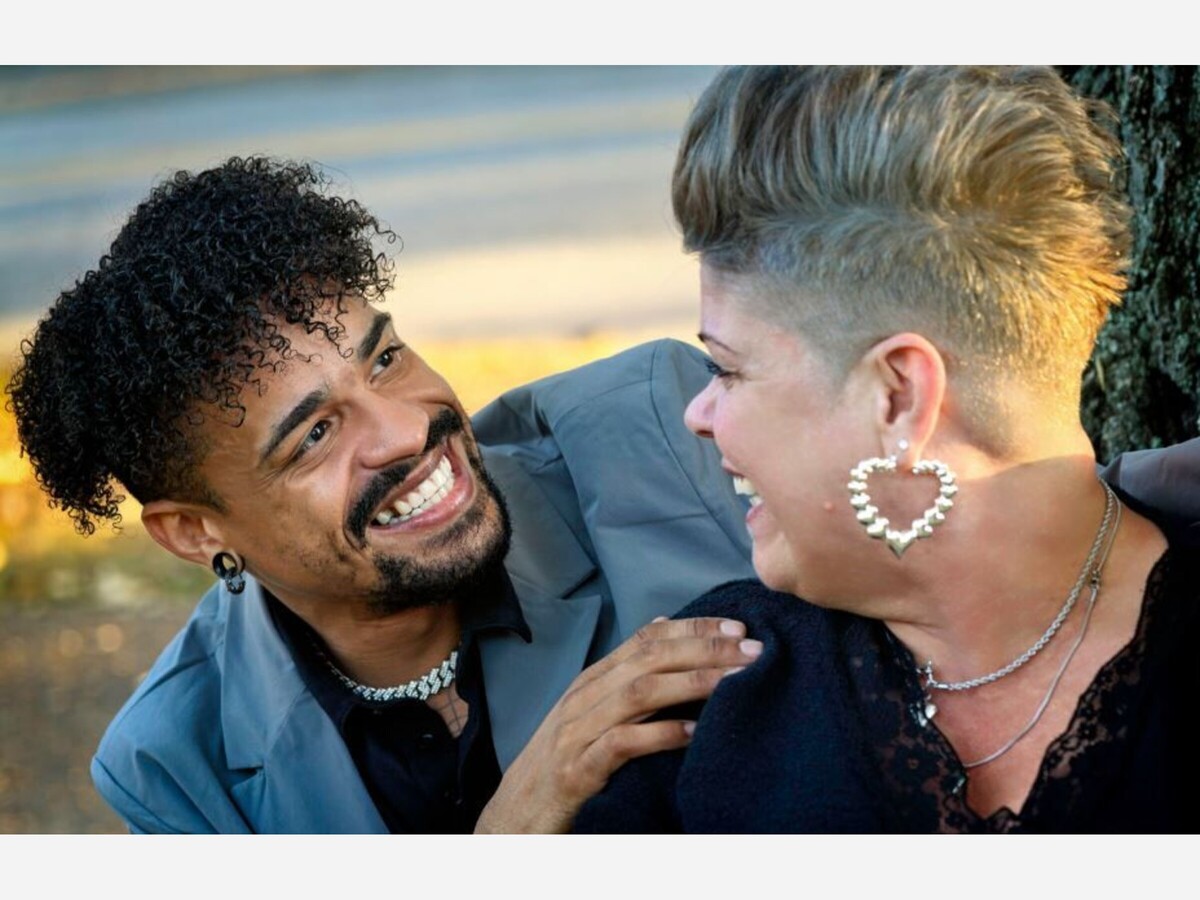



Marcus Rivers, left, credits his mother Karen Baptista, right, for sharing stories of her early life and nurturing his ability to develop resilience. (Photo by Michael Salerno/Rhode Island Current)
by Marcus Rivers, Rhode Island Current
October 8, 2025
I asked my mom about her childhood. She didn’t hesitate.
“I grew up in a toxic household,” she said. “We lived in the projects. I saw drugs, alcohol, violence. I was bullied. I was alone.”
She was 4 when they moved in. Fourteen when they left. Ten years of trauma. Ten years of silence. No one asked her what she needed. No one asked her what she saw. No one asked her if she was OK.
She met my father at a Portuguese festival. That gave her friends. That gave her breath. But the damage didn’t disappear. It followed her to work, where anxiety and paranoia made her feel small. She sat beside women who talked about vacations she couldn’t afford. She felt invisible. She felt less than.
Then something shifted inside her. She decided to speak up and share some of her experience. Not for them but for herself. She named the fear. She saw the patterns. She began to understand her own story. She realized she belonged and started to feel present.
That moment did not change the room. It changed her. And because she changed, I did too.
My mother is Portuguese and Italian. My father is Black. Their stories don’t fit neatly into any textbook. But hearing their stories while growing up shaped me and how I see systems, silence, and survival. My parents taught me that storytelling isn’t just personal. It is political.
We are losing stories like theirs every day. Not because they aren’t powerful. Because we stopped asking. We stopped listening. We stopped treating lived experience as knowledge.
Intergenerational storytelling is not a hobby. It is public infrastructure. It is how communities pass down survival strategies, emotional intelligence, and civic memory. It is how we learn what systems erased and what people rebuilt.
* * * **
My mother is Portuguese and Italian. My father is Black. Their stories don’t fit neatly into any textbook. But hearing their stories while growing up shaped me and how I see systems, silence, and survival.
* * * *
Storytelling across generations has been shown to promote posttraumatic growth and healing and reduces anxiety, especially when paired with cultural rituals and community support. A study published online in June 2024 in Psychological Trauma found that when Black parents shared trauma narratives with their adult children, both generations experienced emotional relief and increased self-worth.
These stories are not just personal. They are policy-relevant. They are data.
Yet schools rarely teach oral history. Mental health assessments ignore cultural context. Community programs lack funding to record and preserve these truths. We treat storytelling like nostalgia. That is a mistake.
We need to act.
Educators can assign interviews with elders. Students can transcribe stories and reflect on their meaning. Community leaders can host forums where youth and elders build public memory together. Policymakers should fund oral history programs as mental health and civic engagement strategies. Families can ask questions. Record answers. Share them.
I recorded my mom’s story. Her voice cracked. Her truth didn’t. She taught me to speak up. She taught me to know my worth. She taught me that silence is not strength. She taught me that survival is not healing.
We don’t just inherit trauma. We inherit truth. Let’s make sure it’s heard.
GET THE MORNING HEADLINES.
SUBSCRIBE
Rhode Island Current is part of States Newsroom, a nonprofit news network supported by grants and a coalition of donors as a 501c(3) public charity. Rhode Island Current maintains editorial independence. Contact Editor Janine L. Weisman for questions: info@rhodeislandcurrent.com.
Our stories may be republished online or in print under Creative Commons license CC BY-NC-ND 4.0. We ask that you edit only for style or to shorten, provide proper attribution and link to our website. AP and Getty images may not be republished. Please see our republishing guidelines for use of any other photos and graphics.
Marcus Rivers
Marcus Rivers of Pawtucket is a dancer, teacher, and mental health advocate. He has performed with cruise lines and in film, and currently teaches at local competitive dance studios. As a student at College Unbound, Marcus uses personal storytelling and public writing to champion the arts as essential infrastructure for healing.MORE FROM AUTHOR

Sunny, with a high of 84 and low of 59 degrees. Sunny in the morning, overcast for the afternoon and evening, clear overnight.