

Image
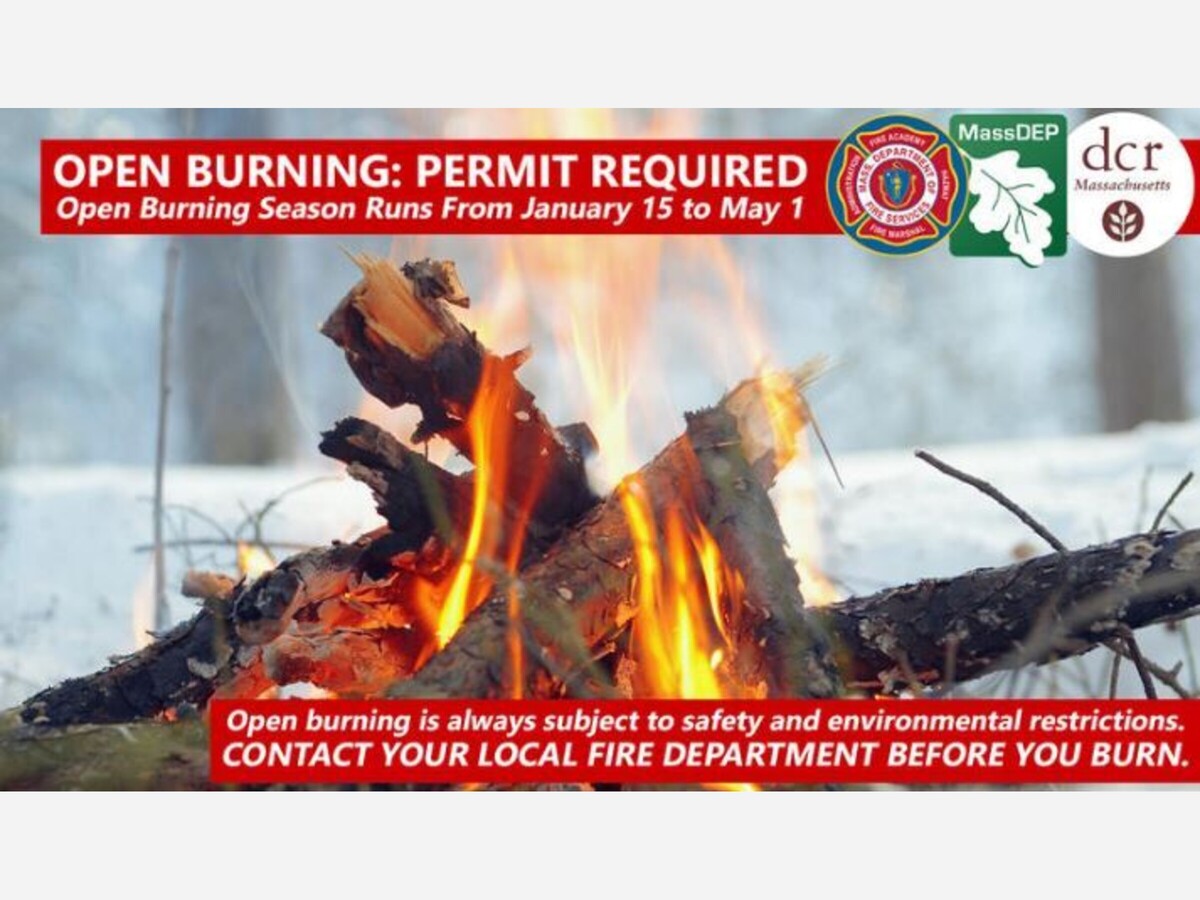
Massachusetts’ fire and environmental leaders are reminding residents to use caution, care, and common sense if they plan to burn certain agricultural waste during open burning season, which began January 15 and runs to May 1.
State Fire Marshal Jon M. Davine, Commissioner Bonnie Heiple of the Massachusetts Department of Environmental Protection (MassDEP), and Chief Fire Warden David Celino of the Department of Conservation and Recreation (DCR) said restrictions on open burning are imposed at the state and local levels.
“Open burning season applies only to specific types of fuel and is always limited based on the daily fire hazard, environmental concerns, and location,” said State Fire Marshal Davine. “Even where burning is authorized, you must have a permit from your local fire department and you must be able to extinguish the fire on a moment’s notice. Please make safety your priority when burning.”
“Improper open burning creates safety risks and can harm air quality,” said MassDEP Commissioner Bonnie Heiple. "Only burning approved natural materials — like driftwood and prunings — and burning on ‘good air days,’ when pollution levels are low and air circulates well, ensures these fires can be managed safely.”
“Massachusetts residents have seen just how quickly outdoor fires can grow out of control,” said DCR Chief Fire Warden Celino. “We encourage everyone to exercise caution - don’t risk a fire that puts you, your home, or your community at risk. Burn only approved materials, always get a permit from your local fire department, and ensure that any fire is extinguished properly and completely.”
These restrictions are authorized by 310 CMR 7.07, which sets baseline requirements based on air quality and allows for “no burn” days; MGL chapter 48, section 13, which prohibits any open air fire unless a permit is issued; and the Massachusetts Comprehensive Fire Safety Code, which gives local fire chiefs the authority to impose additional limits.
Open burning is prohibited year-round in the cities and towns of Arlington, Belmont, Boston, Brookline, Cambridge, Chelsea, Chicopee, Everett, Fall River, Holyoke, Lawrence, Lowell, Malden, Medford, New Bedford, Newton, Somerville, Springfield, Waltham, Watertown, West Springfield, and Worcester.
In the remaining communities, open burning season runs from January 15 through May 1 with the following limitations. Local fire departments may deny a permit or set additional limitations if circumstances make open burning hazardous.
Only certain agricultural waste may be burned. This includes brush, cane, driftwood, residential forestry debris, fruit tree and bush prunings, raspberry stalks, infected bee hives, trees and brush from agricultural land clearing, and fungus-infected elm wood if no other acceptable means of disposal is available. It is unlawful to burn leaves, grass, hay, stumps, tires, household trash, construction materials, demolition debris, or brush, trees, cane, or driftwood from commercial or industrial land clearing.
Open burning may only be conducted:
Persons who burn unlawfully or allow a fire to grow out of control could be held liable for firefighting costs or face fines or even jail time.
Open Burning Safety

Sunny, with a high of 71 and low of 33 degrees. Sunny for the morning, clear in the afternoon and evening,