55° and Cloudy



Image
If you have any questions about this week's report, e-mail us at bob@beaconhillrollcall.com or call us at (617) 720-1562.
Beacon Hill Roll Call
Volume 51 - Report No. 35
August 24-28, 2026
Copyright © 2026 Beacon Hill Roll Call. All Rights Reserved.
By Bob Katzen
GET A FREE SUBSCRIPTION TO MASSTERLIST – Join more than 30,000 people, from movers and shakers to political junkies and interested citizens, who start their weekday and Saturday mornings with MASSterList—the popular newsletter that chronicles news and informed analysis about what’s going on up on Beacon Hill, in Massachusetts politics, policy, media and influence. The stories are drawn from major news organizations as well as specialized publications.
MASSterList will be e-mailed to you FREE every Monday through Saturday morning and will give you a leg up on what’s happening in the blood sport of Bay State politics. For more information and to get your free subscription, go to: www.massterlist.com
THE HOUSE AND SENATE: There were no roll call votes in the House or Senate last week. This week, Beacon Hill Roll Call reports local representatives’ roll call attendance records for the 2026 session through August 28.
The House has held 154 roll calls so far in the 2026 session. Beacon Hill Roll Call tabulates the number of rolls calls on which each representative voted and then calculates that number as a percentage of the total roll call votes held. That percentage is the number referred to as the roll call attendance record.
Sometimes a representative is not able to attend only one or two sessions during which roll calls are held. However, since there are sometimes multiple roll calls on each one of those days, the number of roll calls they missed can be high even though they only missed one or two sessions.
Eighty-four (53.2 percent) of the 158 representatives did not miss any roll call votes and had a 100 precent roll call attendance record.
Seventy-four (46.8 percent) of the representatives missed one or more roll call votes.
The representative who missed the most number of roll calls is Rep. Tackey Chan (D-Quincy) who missed 34 roll calls (77.9 percent roll call attendance record.)
“For the past 14 years I was the primary caretaker for my mother who had stage 4 lung cancer,” Chan told Beacon Hill Roll Call. “This year her condition changed from stable to terminal. I was caring for her in her final days. This resulted in my absence from formal sessions.”
The representatives who missed the next most number of roll calls are Reps. Chynah Tyler (D-Roxbury) and Amy Sangiolo (D-Newton) who each missed 27 roll calls (82.4 percent attendance record.)
“Both absences were family-related,” Sangiolo told Beacon Hill Roll Call. “I was out on Feb. 26, 2026, for my nephew’s wedding in San Francisco and missed 16 roll call votes on that day. We had purchased tickets months in advance and booked for Thursday so I would not miss a formal session [because formal sessions are rarely held on Thursdays]. But a formal session was held on [that] Thursday. I was also out on April 27, 2026, to watch my son, who lives in England, at his competition in Florida and missed 11 roll call votes that day.”
Rep. Tyler did not respond to repeated requests by Beacon Hill Roll Call asking her why she missed 27 roll calls.
Fourteen other representatives missed ten or more roll call votes. Beacon Hill Roll Call asked all 14 why they missed roll calls. Only five responded.
“Rep. Silvia was out due to a medical issue (cardiac surgery), and he had two very significant deaths,” said Rep. Alan Silvia spokesperson Monica Sousa. “His 23-year-old grandson who was on active duty at Camp Lejeune and his long-time legislative aide, Clara Fallon.” Silvia missed 25 roll calls (83.7 percent attendance record.)
"During the recent roll call votes, I was out of state supporting my wife and family following the passing of my father-in-law—a man who has been a cherished part of my life since I was 17 years old—after he was hospitalized on Father's Day and placed in hospice care,” said Rep. Homar Gomez (D-Easthampton) who missed 11 roll calls (92.8 percent attendance record.) “While my commitment to serving our community remains absolute, being at his bedside and standing by my family through this profound loss was my essential duty."
Rep. Margaret Scarsdale (D-Pepperell), who missed ten roll calls (93.5 percent attendance record), said she missed roll calls because she was out of state for her niece’s wedding and then also out of state for her only son’s wedding.
Rep. Kate Lipper-Garabedian (D-Melrose), who missed 12 roll calls (92.2 percent attendance record), said she missed roll calls “due to parenting responsibilities.”
Rep. Marjorie Decker (D-Cambridge), who missed 12 roll calls (92.2 percent attendance record), said she missed roll calls on February 11 because of a family emergency, and then again on July 31 because of a death in the family.
“The vast majority of votes I missed — if not all of them — occurred the week of June 3, 2026, when I traveled to attend the wedding of my niece, where I served as officiant,” said Rep. Ken Gordon (D-Bedford) who missed ten roll calls (93.5 percent roll call attendance record.) “It is a choice I expect my constituents would understand.”
The remaining nine representatives who missed more than ten roll calls did not respond to repeated requests by Beacon Hill Roll Call asking them why they missed roll calls. They are Reps. John Barrett (D-North Adams) and John Rogers (D-Norwood) who each missed 16 roll calls (89.6 percent attendance record); Colleen Garry (D-Dracut) and Nick Boldyga (R-Southwick) who each missed 14 roll calls (90.9 percent attendance record); Joe McGonagle (D-Everett) and Tram Nguyen (D-Andover) who each missed 11 roll calls (92.8 percent attendance record); and Chris Flanagan (D-Dennis) and Mark Cusack (D-Braintree) who each missed ten roll calls (93.5 percent attendance record).
2026 HOUSE ATTENDANCE RECORDS THROUGH AUGUST 28
Here are the 2026 roll call attendance records of local representatives through August 28. The attendance records are based on 154 roll calls.
The percentage listed next to the representative's name is the percentage of roll call votes on which the representative voted. The number in parentheses represents the number of roll calls that he or she missed.
Rep. Jeffrey Roy 100 percent (0)
ALSO UP ON BEACON HILL
TOXIC MEDICAL DEVICES (H 5550/S 3106) - A new law that would ban the use and sale of DEHP, a toxic chemical which is commonly added to plastic intravenous bags and tubing and linked to breast, liver, lung and testicular cancer took effect on August 25. The bag ban would begin on January 1, 2030, while the tubing ban would begin on January 1, 2035.
Supporters of the law said this timeline gives health care providers and manufacturers time to transition to safer alternatives that are already in use at hospitals in Massachusetts.
Many IV bags and tubing currently contain DEHP, which is added to improve the plastic’s flexibility but can pose serious health dangers to patients. The measure also prevents manufacturers from replacing DEHP with similar ortho-phthalates and encourages the transition to safer alternatives while preserving limited exemptions for specialized blood collection and cell therapy products.
“Patients deserve to know that the tools being used to care for them are safe,” said Gov. Maura Healey who signed the new law on July 25 but held a ceremonial signing on August 25, the day the law became effective. “This law phases out a harmful chemical from IV bags and tubing and moves our health care system toward safer alternatives. Massachusetts will continue to follow the science and put the health and safety of patients, families and health care workers first.”
“The Toxic-Free Medical Devices Act was filed because patients should never have to worry that the tools meant to heal them are exposing them to a cancer-linked chemical, especially when safe alternatives already exist and are already in use at hospitals here in Massachusetts,” said Senate sponsor Sen. Joan Lovely (D-Salem) ... “This is a real step forward for safer medical care in the commonwealth.”
“Massachusetts has always been a leader in health care, and we here in the commonwealth have a responsibility to continue advancing innovative policies that ensure patients safety,” said Rep. Jim O’Day (D-West Boylston). “This legislation reduces unnecessary exposure to DEHP in medical devices while giving hospitals and providers the flexibility needed for a responsible transition to safer alternatives.”
DOMESTIC WORKERS’ RIGHTS DAY (H 3417) - The Senate, on a voice vote without a roll call, approved a measure that would annually establish June 16 as Domestic Workers’ Rights Day to honor all domestic workers who work in private homes and in recognition of Massachusetts’ historic enactment of basic labor standards in the Domestic Workers’ Bill of Rights.
The House has already approved the bill. Only another round of approval in each branch is needed before the measure goes to Gov. Healey for her signature.
“This legislation is an extension of the important work that began with the passage of the Domestic Workers Bill of Rights before I joined the House of Representatives,” said co-sponsor Rep. Judy Garcia (D-Chelsea). “While establishing Domestic Workers’ Rights Day is symbolic in nature, it is deeply meaningful in honoring the workers whose care and labor are so essential to families across our commonwealth.”
Co-sponsor Rep. Priscila Sousa (D-Framingham) did not respond to repeated requests from Beacon Hill Roll Call asking her how she feels about the bill’s passage and why she filed it.
$15.3 MILLION TO CONVERT COMMERCIAL PROPERTY INTO 856 NEW HOMES – Gov. Healey announced $15.3 million in Commercial Conversion Tax Credit Initiative awards to support five projects that will transform vacant or underutilized commercial properties into 856 new rental homes in Boston, Dedham, Springfield, Westford and Worcester.
“Massachusetts has buildings sitting empty and communities that need more homes. These awards will put underused properties back to work, create 856 new apartments and help bring more residents, customers and energy to downtowns and commercial districts across the state. By making smart use of the spaces we already have, we can build more housing, strengthen local economies and lower costs.”
“The reality is that many commercial conversion projects are difficult to finance even when the sites are in prime locations, have community support and ready to move forward,” said Housing and Livable Communities Secretary Juana Matias. “The Commercial Conversion Tax Credit Initiative helps close that gap. This second round of awards will not only unlock another 856 homes, but will preserve historic buildings, support transit-oriented development and help revitalize downtowns across Massachusetts.”
$3.5 MILLION TO PROTECT NONPROFITS – The Healey Administration announced that 30 Massachusetts nonprofit organizations at high risk of terrorist or extremist violence, will receive nearly $3.5 million in federal funds for security improvements.
“The right to practice one’s faith freely and safely is essential, and our administration is committed to ensuring that no one experiences harm while practicing this right,” said Lt. Gov. Kim Driscoll. “We will not allow threats or acts of violence to infringe on free expression or the freedom of religion. And the security investments made through these grants will help further protect members of our communities.”
“The Healey-Driscoll Administration recognizes the important role of nonprofit and faith-based organizations in making Massachusetts the best place to live and raise a family,” said Public Safety and Security Secretary Gina Kwon. “This grant program is one element of our strategic efforts to strengthen the integrity of the spaces where they provide essential social services and gathering space for people from every walk of life.”
PROTECT ANIMALS IN HOT CARS – Last week marked ten years since former Gov. Charlie Baker signed into law a bill protecting animals. Known by many as the “Hot Car Law,” the measure prevents animal suffering and death by ensuring animals can be rescued from hot or cold cars, limiting the time dogs spend on a tether and increasing enforcement of prior prohibitions on keeping dogs in cruel conditions.
“Despite ongoing efforts to share information about the dangers of animals left in cars in extreme heat or cold, it was clear that state and local officers needed more tools to ensure animals are not suffering — and do so before the animals, usually dogs, were at risk of dying,” said MSPCA-Angell Advocacy Director Kara Holmquist. “We were proud to help advocate for this law in the Statehouse.”
Holmquist encourages the public to familiarize themselves with the steps to take if they see an animal in distress in a hot car. “The first step is to call 911, then try to locate the animal’s owner,” she said. “If the animal is in immediate danger, Massachusetts law allows a person to remove the animal in the least forceful manner, with breaking the window as a last resort.”
“We will continue to protect innocent animals from abusive treatment, whether it is from entrapment within a hot car, being left outdoors to endure unreasonably dangerous conditions or any other situation threatening their health and safety,” said bill sponsor Sen. Mark Montigny (D-New Bedford). “Such callousness warrants tough penalties, including jail time for the most egregious offenders. I am grateful to the men and women who advocate for these precious creatures and our law enforcement officers helping to keep them safe every day. If you see an animal suffering, call 911, and break the window. Time is of the essence, and our law will protect you.”
REP. FRANCISCO PAULINO PLEADS “NOT GUILTY” TO PANDEMIC BENEFITS FRAUD – Rep. Francisco Paulino (D-Methuen) was in federal court last week and pleaded “not guilty” to 11 counts brought against him for pandemic benefit fraud. According to United States Attorney Leah Foley, Paulino faces eight counts of wire fraud and three counts of unlawful monetary transactions. He is due back in court on October 7th. He is charged with fraudulently obtaining over $700,000 in COVID unemployment insurance benefits and small business loans and using the proceeds to buy real estate and loan money to clients of his mortgage business, before he was elected to public office.
Conditions of Paulino’s release include limiting his travels within Massachusetts and New Hampshire and requiring him to get permission to travel anywhere else; surrendering his passport; prohibiting him from changing his address; and requiring that his remaining business, Madison Tax, temporarily suspend operations and that his clients be notified of the suspension.
In March 2026, United States Attorney Leah Foley announced the creation of the Benefit and Voter Fraud Team, a district-wide initiative established in response to the fraud being uncovered across Massachusetts. Members of the public are encouraged to report suspected benefit fraud in Massachusetts by calling 1-855-SCAM-MA-1 (855-722-6621).
Paulino did not respond to numerous requests by Beacon Hill Roll Call asking him to respond to the indictment.
QUOTABLE QUOTES
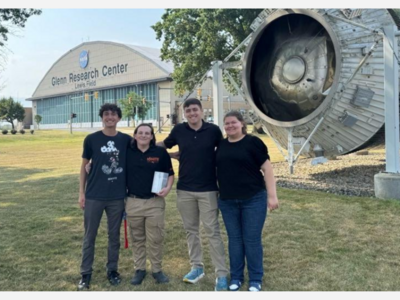
“We are proud of the Lexington team for once again representing Massachusetts so well. These students are putting environmental science into practice – working together to understand complex challenges and develop solutions. Their success reflects the strength of environmental education in Massachusetts and the promise of the next generation of environmental leaders.”
--- Energy and Environmental Affairs Secretary Rebecca Tepper, on Lexington High School's Envirothon Team earning fifth place at the 2026 National Conservation Foundation Envirothon in Starkville, Mississippi. The annual competition brings together top high school Envirothon teams to demonstrate their knowledge of environmental science and natural resource management.
“The strongest solutions come from the people who know their communities best, and these investments will help transform that knowledge into action. This funding will mean healthier places to live, work and age, and it will enable people to access the resources and opportunities they need to be healthy – and to stay healthy. When we listen to and lift up the voices of people who live in these communities, we can build something that is more meaningful, more equitable and more lasting.”
--- Public Health Commissioner Robbie Goldstein, on $17.9 million in grants to 31 community organizations, cities, towns and regional planning commissions to improve health and help people live healthier lives across Massachusetts.
"Massachusetts' greatest competitive advantage has always been our people. These investments will help more residents access the skills, training and opportunities they need to succeed while ensuring employers have the talented workforce they need to grow, innovate and create jobs here in Massachusetts."
---Gov. Maura Healey announcing more than $24 million in funding to strengthen Massachusetts' workforce and talent development through the Workforce Investment Trust Fund. The investments are designed to help Massachusetts employers recruit and train the skilled workers they need to grow while expanding pathways for residents to build skills and access careers in high-demand industries and create economic opportunity.
“Between 2022 and 2025, at least 100 crashes involving heavy trucks, light trucks, vans and buses colliding into bridges or overhead gantries occurred on Storrow Drive, Memorial Drive and Soldiers Field Road.
---AAA Northeast reminding back-to-college drivers to carefully plan their routes and check vehicle heights to avoid being “storrowed” — a common reference to infamous collisions with low bridges on Storrow Drive, a major Boston thoroughfare.
HOW LONG WAS LAST WEEK’S SESSION?
Beacon Hill Roll Call tracks the length of time that the House and Senate were in session each week. Many legislators say that legislative sessions are only one aspect of the Legislature’s job and that a lot of important work is done outside of the House and Senate chambers. They note that their jobs also involve committee work, research, constituent work and other matters that are important to their districts.
Critics say that the Legislature does not meet regularly or long enough to debate and vote in public view on the thousands of pieces of legislation that have been filed. They note that the infrequency and brief length of sessions are misguided and lead to irresponsible late-night sessions and a mad rush to act on dozens of bills in the days immediately preceding the end of an annual session.
During the week of August 24-28, the House met for a total of 39 minutes and the Senate met for a total of 33 minutes.
Mon. August 24 House 11:00 a.m. to 11:29 a.m.
Senate 11:14 a.m. to 11:34 a.m.
Tues. August 25 No House session.
No Senate session.
Wed. August 26 No House session.
No Senate session.
Thurs. August 27 House 11:03 a.m. to 11:13 a.m.
Senate 11:16 a.m. to 11:29 a.m.
Fri. August 28 No House session.
No Senate session.
Bob Katzen welcomes feedback at bob@beaconhillrollcall.com
Bob founded Beacon Hill Roll Call in 1975 and was inducted into the New England Newspaper and Press Association (NENPA) Hall of Fame in 2019.


Sunny, with a high of 66 and low of 47 degrees. Sunny in the morning, overcast in the afternoon and evening, clear overnight.