

Image
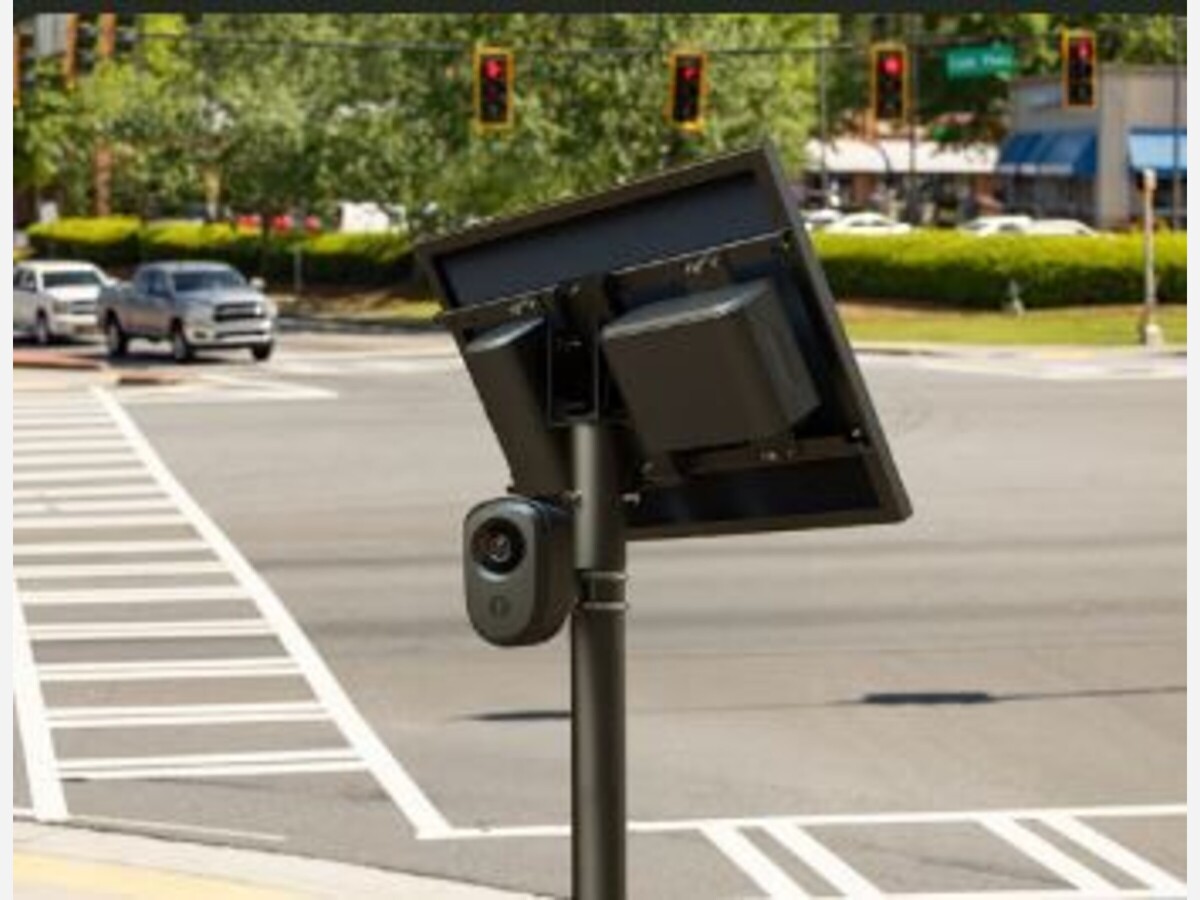
In an age when everything from your car, your toaster, or your neighbor’s Ring camera, to Big Tech and Big Government routinely take slices out of what used to be considered your privacy every hour of the day, it is both unsurprising and yet quite remarkable that so many people have become deeply upset by police-run Flock cameras (owned and operated by Flock Safey) in communities across the country.
Where to begin in a recitation of examples? Rhode Island’s governor has recently banned new Flock cameras in the state. The Boston City Council has said it wants to get rid of them (and then discovered that the Boston Police Department was simply replacing them with similar devices run by other vendors). And in upstate New York, a mayor declared a state of emergency to try to override a city council vote to ban the devices!
To be sure, law enforcement organizations are largely ardent defenders of Flock because its national reach has greatly enhanced the ability to investigate and solve crimes.
Here in Franklin and Medway, Flocks have become a part of life, though still relatively few in number. [CORRECTION: In the first posting of this article we stated that in addition to the original plan of having a camera at each interchange with I-495 in Franklin, it appeared that an additional Flock camera had been added at the intersection of West Central Street (Route 140) and Union Street. However, acording to Deputy Chief James West the device at that intersection is not a Flock camera and the police department has no knowledge of it...*]
There are some municipalities that are threading the needle between no limits and an outright ban. One is Medford, where a 2023 ordinance requires community control over public surveillance.
The surveillance oversight ordinance adopted in Medford establishes a transparent, democratic process ensuring that Medford public agencies cannot acquire new surveillance technologies without community buy-in. Sponsored by Medford City Councilors Zac Bears and Kit Collins, the ordinance mandates that surveillance technologies cannot be funded, acquired, or used without express City Council approval. City departments seeking to use a previously-acquired surveillance technology in a new way must also receive City Council approval of the new use.
The ACLU launched a nationwide effort back in 2016 to pass similar laws that ensure residents, through their city council representatives, are empowered to decide if and how surveillance technologies are used.
It has probably been the headline-grabbing instances of cops misusing the technology, in particular to stalk former love-interests, that seems to have galvanized public opposition recently. It has happened across the country as well as here in Massachusetts. In response, both the Flock company and many officials insist the problem can be prevented by new security measures. But perhaps the damage has been done.
And the ACLU, with an eye to the concerns of “undocumented” migrants and those seeking abortions, claimed in a letter sent to all of the state’s 351 communities late last year, that the privacy guarantees Flock has provided to supposedly prevent data sharing with other government agencies, are chock full of legal and procedural loopholes that make them meaningless.
Franklin and Medway so far seem to have dodged controversy with their camera installations but nationally the Flock controversies do not seem to have peaked, so that could change. Time will tell
* [Chief Lynch subsequently informed us, that the mystery camera at the corner of W. Central and Union is a "snow camera" that takes a photo every 20 minutes (no live feed). The system allows the DPW to remotely monitor roadway conditions during inclement weather. DPW supervisors can access the photos remotely via their phones, tablets, or computers to determine what resources are needed to keep the roadways open during inclement weather (snow, ice, etc.). Three (3) snow cameras are deployed in town at the following intersections:
Route 140 and Union Street, Partridge Street and Beech Street, Washington Street and Jefferson Road. Thanks Chief Lynch!]


Overcast, with a high of 61 and low of 47 degrees. Overcast in the morning, light drizzle in the afternoon and evening, overcast overnight.