52° and Cloudy
Image
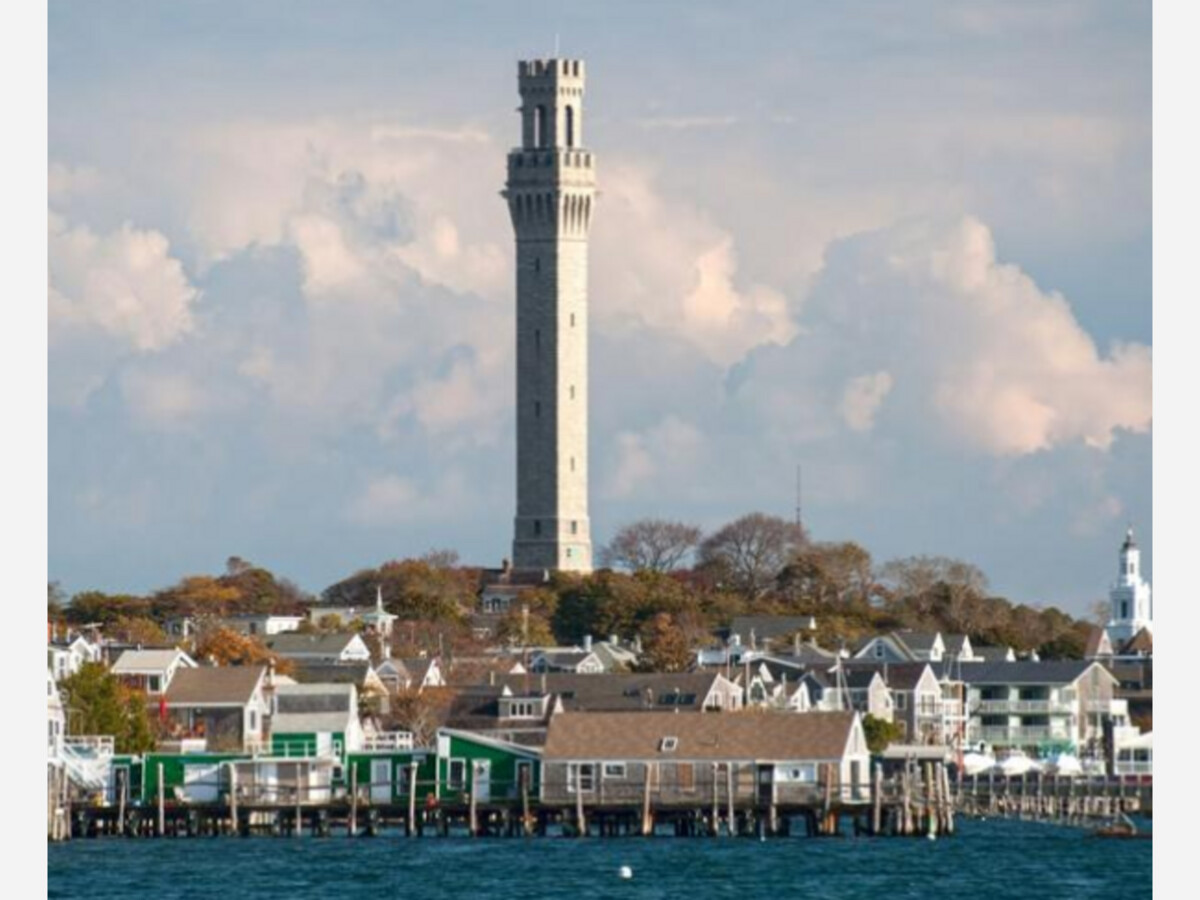



The Pilgrim Monument is part of the historic district in Provincetown, a town where local control desires and state government realities sometimes collide. Sen. Julian Cyr of Provincetown said his district sends more home rule requests before the Legislature than any other part of the state. (Ruth H Curtis on Unsplash)
Michael Norton | SHNS
On issue after issue, Democrats who control the Legislature are publicly apoplectic about the sharp shift in values and governing approaches under complete Republican control at the federal level. Though they are more circumspect about it, municipal officials in Massachusetts are also feeling disempowered by their state partners while the vise of property tax restrictions, swelling inflation and budgets, and limited increases in local aid is tightening on cities and towns.
House Speaker Ron Mariano and Senate President Karen Spilka are running unopposed Nov. 3. The two leaders have, over their long tenures, deflected local option measures sought by cities and towns and Gov. Maura Healey, but some signs of collaboration are appearing.
From housing and zoning rules to laws governing property and local option taxes and rent control, the issue of state versus local control seems to be growing in prominence, highlighted by this year's showdown between Boston Mayor Michelle Wu and the state Senate over the city's effort to temporarily boost commercial property taxes.
Republican nominee for governor Mike Minogue has pledged to deliver a massive increase in state aid to cities and towns, though it's unclear how that shift will affect other state programs and services. Healey, who has boosted local aid during her first term, has been unsuccessful in steering through the Legislature her "municipal empowerment" plans to facilitate greater local government efficiency while authorizing increases to the maximum local option lodging tax and the local meals tax ceiling, and adding a new local option surcharge of up to 5% on local motor vehicle excise bills.
John Cluverius, a political science professor at UMass-Lowell, said communities looking for new funding and policy options are dealing with state legislators who operate with a structural power advantage, no term limits and fewer election challengers, and are not subject to the public records law. Legislators "do not give up power willingly," he said.
"We are seeing a lot of change desired from cities and towns," Cluverius said. "I think the demand is absolutely coming from cities and towns who want a broader array of options to fund things their citizens do support."
Massachusetts Municipal Association Executive Director and CEO Adam Chapdelaine speaks at a State House press conference on May 4, 2026.
Adam Chapdelaine, executive director of the Massachusetts Municipal Association, said the issues fall into two buckets. There are topics that cities and towns want more control over, such as alcohol licensing, removing double utility poles and permanent authority to host remote public meetings. There are also areas where cities and towns don't want to give up control they already possess, like land use. Beyond that, there's the "broader umbrella" of fiscal constraints.
"Massachusetts is a home rule state, where at least by the letter of the law, local governments are allowed to make decisions on their own unless they are expressly prohibited from doing it by state law," he said. "And of course in Massachusetts there are lots of prohibitions whereby cities and towns need to go to the Legislature to get permission to do things."
House Ways and Means Committee Chairman Aaron Michlewitz sees any state versus local tension as the normal product of "checks and balances" between state and local governments. He said balancing state and local control is something "that we've consistently had conversations on and really depends on the particular issue that we're talking about."
"But certainly in a larger sense, I think the checks and balances system that we have here between the local municipalities and the state government, I think has served our state or served our commonwealth well," Michlewitz said. "You always want to go back and analyze and review and see what's working, what's not."
Michlewitz said the state must consider precedents that home rule petitions may establish and impacts on the region surrounding a particular community or even the whole state. Other times, he said, petitions arrived at the State House with "flaws" and need to be rethought or rewritten.
"We take these things on a case-by-case basis," added the Boston Democrat.
Boston's showdown with the Senate punctuated the state-local frontier this session, but unease over failed local option policies and chafing over the concentration of power on Beacon Hill is present across the state's 351 cities and towns.
Sen. Julian Cyr of Provincetown represents Cape Cod, Martha's Vineyard and Nantucket and said his district sends more home rule requests before the Legislature than any other part of the state.
"The substantive home rules, to me, are really about us trying to solve a problem that we are facing, that if it's not unique in the commonwealth, the aspects of it are exacerbated by or enhanced through our geographic isolation and dynamics in our economy," Cyr said.
For several years, Cyr has been pitching the option of a new property transfer fee on higher-priced home sales in his district to help solve the region's worsening housing affordability problems. The policy has local support, but has stalled in a Legislature where it's viewed as a tough tax vote, not all lawmakers feel the same urgency about housing, and real estate industry lobbyists are fighting against transfer fee proposals they say will drive up home prices.
Cyr estimates Nantucket alone needs about $500 million to successfully subsidize middle market year-round housing on an island that desperately needs workers and where building a single unit of housing that's affordable will cost about $1 million. He said he's "clear-eyed" about asking the Legislature to appropriate that money out of the General Fund.
"It's unlikely that communities that have some of the most expensive real estate in the country should receive scarce state resources when we know we need those dollars for education, transportation, and a whole host of infrastructure in communities across Massachusetts," he said.
While it weighs precedents and statutory uniformity, the Legislature is often slow to permit controversial local policies.
"When you're talking issues like public safety and public health, you do kind of need to have a statewide uniform policy," Michlewitz said. "You're walking a tricky line if you start making different changes in different places that aren't uniform."
A longer lookback period reflects some local option wins for cities and towns, including fees associated with Community Preservation Act projects, municipal excise taxes on short-term housing rentals and new revenues for wastewater projects on the Cape, and property transfer fees that help conserve and protect land but are limited to the islands.
Cyr suggested breakthroughs take time. He noted that former Rep. Sarah Peake worked on the so-called Airbnb bill, which passed in 2018, for "something like 10 years" and "we're only in year four of the transfer fee fight."
In an arena where wins and losses are measured in sessions rather than months or years, two local option ideas that are common in other states could pass this year and if not, may take momentum into 2027.
The Senate attached to its economic development bill, which is being negotiated with the House, a measure giving cities and towns more authority to make alcohol licensing decisions and added a happy hour measure to permit discounted drinks in towns that adopt the policy.
Anyone who closely follows the Legislature can see how regularly it takes up bills authorizing an alcohol license for a store in one town, or two stores in another. Lawmakers have to work to get these bills through and critics say the whole process is better handled at the local level.
The Legislature took a step in 2024 by passing a law authorizing Boston to award 225 liquor licenses over three years. This summer, the Legislature fast-tracked a temporary law allowing later last calls and "public consumption districts" to coincide with the state hosting World Cup matches.
Boston Mayor Michelle Wu pointed to that allowance as a success, but found the House and Senate divided on the city's home rule petition to temporarily shift more of the property tax burden to commercial owners as a way of limiting residential property tax hikes. The city was united, but senators disagreed with the proposed solution.
During remarks at a Boston business breakfast in September, Wu laid bare her expectations about the state ceding control, but also her desire to let communities expand their toolboxes, a topic that will resurface in 2027.
"We don't expect — I mean, I'll ask for it — but I don't expect the state's going to suddenly hand over the reins to cities to say, 'OK, you set your own taxes, you make your own decisions, you decide how many liquor licenses, you decide when businesses can open and close' - All decisions that many other cities get to make on their own because it affects within their boundaries," Wu said.
But, she said, cities need flexibility and dedicated resources to meet their housing, climate and transportation goals.
At the same time that mayors and select board members want the state to deliver more power and money to the local level, the state is encroaching on an area that has long been tightly under local control. New laws are forcing MBTA communities to allow more housing production and enabling some homeowners to build accessory dwelling units. Proposals with momentum on Beacon Hill this year aim to facilitate duplex and commercial-to-residential conversion zoning while accelerating timelines for local site plan review. And Question 7 on the Nov. 3 ballot would allow single family homes to be built on smaller lots in some communities.
In theory, more production would boost local property tax bases and give people new options in a tight housing market. That could make Massachusetts more attractive to employers and people who want to move here, supplementing a labor force that is graying. In reality, the housing push is also creating local tensions and pressure on local budgets.
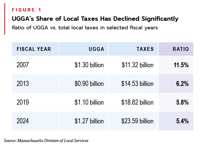
Unrestricted General Government Aid, the state's second biggest pot of local aid after Chapter 70 school aid, is covering a smaller share of municipal government expenses.
From MMA's 2025 "Perfect Storm" report
In October 2025, the Massachusetts Municipal Association released a "Perfect Storm" report that examined the impacts of inflation, spending demands and sluggish state aid. The report found inflation-adjusted spending on operations in cities and towns grew by just 0.6% annually between 2010 and 2022, and suggested the constraints of Proposition 2 ½, which supporters see as a key check on the growth of property tax bills, "may be too restrictive."
As debate turns to whether the state will relinquish some of its power and give cities and towns new tools and revenue options in 2027, Chapdelaine said the fix "has to be on both sides" — more revenue and more tools.
Municipal counsel Mina Makarious, a partner at Anderson & Kreiger, wrote in June that rise in home rule petitions "is also reflective of a larger trend: a desire by the electorate to influence Beacon Hill from the outside."
"These petitions, which may grow out of frustration with other governmental entities’ failure to act, are being made ever more accessible by technological innovations, such as artificial intelligence and social media, that streamline the process for citizens to draft petitions, publicize them, and lobby for them at the local level," Makarious wrote.
Michael P. Norton is the editor of State House News Service and State Affairs Pro Massachusetts.



Sunny, with a high of 55 and low of 40 degrees. Sunny for the morning, clear during the afternoon and evening,