45° and Clear



Image
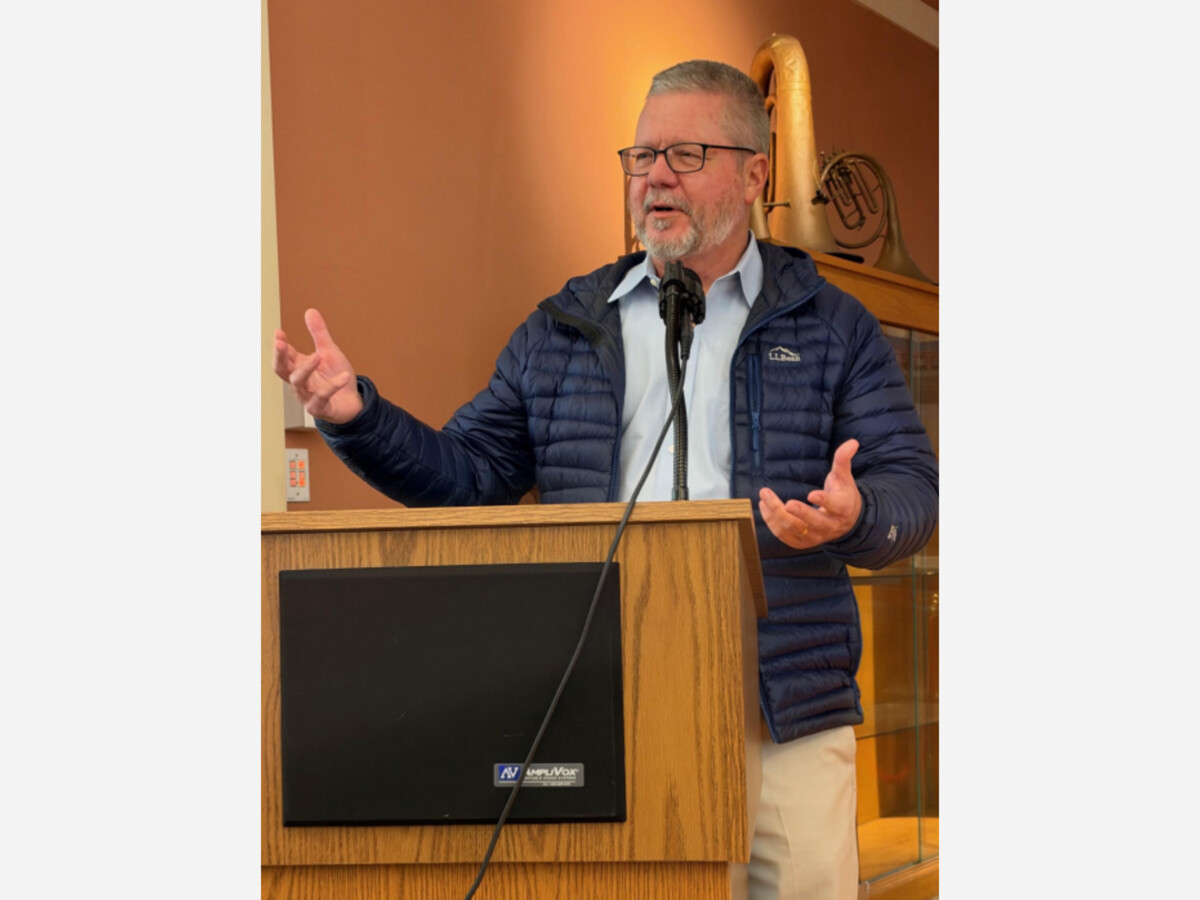
With a modest crowd, almost all female, thanks perhaps to starting at the same time as the Patriots, author Scott Ferson, after being introduced by State Rep. Jeff Roy, delivered an intriguing talk, at the Franklin Historical Museum on Sunday afternoon, related to his book `How the Democrats Lost America: Making Sense of the 2024 Election and the Future of American Politics.’
Ferson, a public relations executive and political consultant, described the origin of the book in his surprise at the outcome of the 2016 presidential election. Initially, he explained, he had no thought of writing a book but simply wanted to get past polling numbers and simplistic explanations, to better understand voters, particularly those away from the coasts.
To that end, alone and with various colleagues, he made dozens of trips essentially incognito, and generally avoiding directly talking about politics – though often the subject would eventually come up. Much of what he found was surprising. For instance, one Iowan, a well-compensated union member in the construction field, had never voted in his life until 2016 – and that’s when he voted for Trump. He told Ferson that the process made him think more about where his taxes go and led him to vote for Trump again in 2024.
He told Ferson he `made more money under Biden but kept more under Trump.’
More broadly, Ferson said the areas away from the coast, particularly, have typically been given only lip service by politicians, Democrats in particular. Closer to home, he cited Fall River, traditionally a Democrat bastion that went solidly for Trump.
And in Rhode Island, according to Ferson, “If you can see the water you vote Democrat.” A case in point is East and West Greenwich, separate towns but traditionally very similar. In the last decade or so they have evolved so that West Greenwich voted for Trump, East Greenwich for Harris. And their governing bodies are similarly polar opposites.
Part of his answer for Democrats, at least, is that they need to have a program and message that goes past simple opposition to Trump.
Speaking to the audience in the room, largely composed of Democrats, he posed a series of rhetorical questions. What is the Democrat immigration policy? What is the Democrat tariff policy? Both questions were greeted with silence because, he suggested, there isn’t an agreed upon answer.



Sunny, with a high of 56 and low of 40 degrees. Sunny in the morning, clear for the afternoon and evening,