38° and Clear



Image
If you have any questions about this week's report, e-mail us at bob@beaconhillrollcall.com or call us at (617) 720-1562.
Beacon Hill Roll Call
Volume 51 - Report No. 43
October 19-23, 2026
Copyright © 2026 Beacon Hill Roll Call. All Rights Reserved.
By Bob Katzen
GET A FREE SUBSCRIPTION TO MASSTERLIST – Join more than 30,000 people, from movers and shakers to political junkies and interested citizens, who start their weekday and Saturday mornings with MASSterList—the popular newsletter that chronicles news and informed analysis about what’s going on up on Beacon Hill, in Massachusetts politics, policy, media and influence. The stories are drawn from major news organizations as well as specialized publications.
MASSterList will be e-mailed to you FREE every Monday through Saturday morning and will give you a leg up on what’s happening in the blood sport of Bay State politics. For more information and to get your free subscription, go to: www.massterlist.com
THE HOUSE AND SENATE: Beacon Hill Roll Call reports local representatives' votes on roll calls from the week of October 19-23. There were no roll calls in the Senate last week.
$2.8 BILLION FISCAL 2026 SUPPLEMENTAL BUDGET (H 5700)
House 152-0, approved and sent to the Senate a $2.354 billion fiscal 2026 budget to close out the books on fiscal year 2026.
Provisions include $1.8 billion for MassHealth, the state’s Medicaid program that provides health care for low-income and disabled persons; $159 million for snow and ice removal costs; $54.5 million for Department of Transitional Assistance caseworkers; $22.5 million for no-cost calls by prisoners; $5.6 million to implement cannabis-related legislation; and $4 million for rest homes.
Other provisions include prohibiting the constitutional officers from spending or authorizing the use of public funds for advertisements or promotions to build personal recognition, but preserving their ability to use public funds to inform residents about state programs; regulating the use of artificial intelligence (AI) in political ads by requiring the disclosure of AI use in political ads and banning deceptive communications about a candidate or about the electoral process within three months of an election; authorizing online Lottery revenues to be distributed to the Early Education Grant Fund; and eliminating the $10 surcharge imposed on car-sharing organization rentals.
“This supplemental budget will close the books on fiscal year 2026 in a balanced and fiscally responsible manner,” said Rep. Aaron Michlewitz (D-Boston), Chair of the House Committee on Ways and Means. “By making critical investments into much needed programs in healthcare, Department of Transitional Assistance caseworkers and early education to name a few, the commonwealth will be in a strong fiscal position for fiscal year 2027 and beyond.”
“I supported the fiscal year 2026 closeout supplemental budget because it includes funding to address shortfalls in several important state programs, including MassHealth and snow and ice removal,” said Republican Minority Leader Rep. Brad Jones (R-North Reading). “It also provides rate increases for nursing home facilities and early childcare providers and expands the Massachusetts School Building Authority’s ability to provide grants to communities to rehabilitate their schools and build new education facilities, which will be of tremendous help to our cities and towns.”
Although the budget was approved unanimously, it wasn’t without its critics. “The Massachusetts Legislature just passed an annual budget that went into effect on July 1,” said Massachusetts Fiscal Alliance Executive Director Paul Craney. “Now, they are passing another budget on top of the one they just passed. This additional spending shows how mismanaged our state is from the top. Instead of getting their spending under control, they just view the taxpayers as their ATM machine. Voters can send them a message by voting ‘Yes’ on Ballot Question 5, which will send refunds back to the taxpayers when the state collects too much from its taxpayers.”
(A “Yes” vote is for the budget.)
Rep. Jeffrey Roy Yes
SUSPEND THE STATE’S 24-CENTS-PER-GALLON GAS TAX FOR TWO MONTHS (H 5699)
House 30-132, rejected an amendment that would suspend the state’s 24-cents-per-gallon gas tax for two months.
“People across Massachusetts are feeling the squeeze of rising costs, and they deserve action, not excuses” said amendment sponsor Rep. Todd Smola (R-Warren). “A 60-day gas tax holiday is a practical way to deliver meaningful relief to families, commuters and small businesses. Every dollar matters when people are working hard to make ends meet. We have a responsibility to use the tools available to us to ease that burden and put taxpayers first. Our job is to deliver results for the people we represent, and this is an opportunity to put real savings back in the hands of Massachusetts residents. The Legislature missed an opportunity to help those in need."
“Families across the state are struggling with gas prices that are averaging about $4.28 a gallon,” said GOP Minority Leader Rep. Brad Jones (R-North Reading). “I supported the proposed gas tax holiday because it would provide temporary but tangible relief at the pump for Massachusetts residents, while still addressing the commonwealth’s transportation infrastructure needs by using Fair Share money to backfill these lost revenues.”
“The governor’s two-month gas tax suspension would have provided some relief at the pump, while [Republican gubernatorial candidate] Mike Minogue has proposed a more substantial approach that would suspend the gas tax whenever prices rise above $4 a gallon,” said Massachusetts Fiscal Alliance Executive Director Paul Craney. “There are ideas on the table to give taxpayers a break, but legislative leaders don’t seem interested in any of them. Massachusetts families are being squeezed from every direction, and Beacon Hill’s response is to keep collecting every penny it can from them at the pump.”
"It’s a short-term political fix that will do virtually nothing to assuage the high prices currently squeezing our constituents, providing minimal savings at most for the average taxpayer,” said amendment opponent Rep. Adriane Madaro (D-East Boston). “The amendment also fails to guarantee that oil companies and gas station chains simply won’t pocket the difference, using this temporary cut to increase profit margins rather than lowering the price at the pump for consumers."
(A “Yes” vote is for suspending the state’s 24-cents-per-gallon gas tax for two months. A “No” vote is against suspension and favors keeping intact the state’s 24-cents-per-gallon gas tax.)
Rep. Jeffrey Roy No
OFFSHORE WIND (H 5700)
House 25-129, rejected an amendment that would delete a section of the budget that would transfer $35 million, in fiscal years 2026 and 2027, from the General Fund to the Massachusetts Offshore Wind Industry Investment Trust Fund.
“Offshore wind has demonstrated serious challenges with its economic viability and continues to depend heavily on taxpayer subsidies,” said amendment sponsor Rep. Ken Sweezey (R-Duxbury). “At the same time, our commercial fishermen have raised significant concerns about the safety and economic impacts of these projects on an industry that has supported Massachusetts communities for generations. I cannot justify committing up to another $70 million in taxpayer dollars to subsidize large energy corporations, and I will always stand with our fishing industries and local blue economy partners.”
Amendment opponent Rep. Mark Cusack (D-Braintree) said that despite setbacks, offshore wind remains vital to our economic growth, providing thousands of good-paying jobs and helping to power our ever-growing climate tech economy. He noted that the fund in Massachusetts has supported more than 3,700 jobs over the course of construction and generated more than $380 million in direct wages and benefits for workers. He argued that the fund has played a vital role in building and sustaining this industry.
(A “Yes” vote is for the amendment which would keep the $70 million in the General Fund. A “No” vote is against the amendment and supports putting the $70 million in the Offshore Wind Industry Investment Trust Fund.)
Rep. Jeffrey Roy No
ALSO UP ON BEACON HILL
$38 MILLION TO HELP FAMILIES REDUCE MEDICAL DEBT – An estimated 70,000 Massachusetts residents are soon going to receive letters announcing that they will receive a portion of more than $38 million in direct medical debt relief under a nonprofit partnership created by the Atrius Health Equity Foundation. The foundation has erased more than $293 million in medical debt since it started in 2024.
Supporters note that there is no application process for this debt relief, and it cannot be requested. Patients are automatically selected if they meet certain income criteria and their medical debt is available for acquisition through a partnership with a provider, such as a hospital or collection agency. Patients receiving the letters do not need to take any action. The eligible medical debt will automatically be eliminated for those who qualify, no strings attached and negative credit score marks will be removed.
“Medical debt not only impacts families’ long-term financial future, but also makes people reluctant to seek care,” said Dr. Ann Hwang, president of the Atrius Health Equity Foundation. “Our hope is that the patients and families across Eastern Massachusetts aided by this debt relief can move forward without this burden.”
“For too many patients, an unexpected illness or medical emergency can create financial hardship that lasts long after they leave the hospital, ER or doctor's office,” said Undue Medical Debt CEO and President, Allison Sesso. “Eliminating medical debt gives people a meaningful fresh start and ensures that getting the care they need doesn’t come at the cost of their economic security and mental health.”
PROTECT PETS DURING EMERGENCIES (H 1559) – On February 5, The House gave initial approval to a proposal that would make major changes in laws about pets in homes, apartments, hotels and shelters across the state during a state of emergency. The measure is designed to allow owners of pets to remain safely housed and not be formally removed from housing due to their pets. No further action has been taken on the proposal and it remains stalled in the Bills in Third Reading Committee.
Supporters say that pets are very important to their owners and argue that these new laws would be fair to the pets, owners and landlords while also protecting public safety.
The bill would prohibit a landlord from “initiating action to evict any person from a residential dwelling unit who has a pet without written permission based solely on the presence of the pet until one year after a state of emergency, unless the presence of pets is causing harm to the safety of other residents.”
Key provisions include prohibiting a hotel from unreasonably refusing to allow pets into a hotel during a state of emergency, unless the pet has demonstrated noise and safety concerns; prohibiting condominium associations from discriminating against owners or renters by banning certain types of dogs based on breed, size, weight or appearance; establishing a program of pet ownership by residents of state-aided public housing; and allowing landlords to require a tenant to pay additional rent for “common household pets” but limiting the amount of the additional rent charged for each household pet to not more than 1 percent of the first full month’s rent charged to the tenant.
Other provisions include prohibiting landlords from charging additional rent for a service or assistance animal required by a tenant with a disability as a reasonable accommodation under state or federal law; and prohibiting an insurance company from refusing to offer or renew insurance to homeowners or renters or from imposing an increased premium or rate of a policy based on a specific breed of dog owned on the property.
OFFICIAL JAZZ SONG OF MASSACHUSETTS (H 3407) - The House gave initial approval to a measure designating the song, “Massachusetts,” sung by Springfield native Montenia Shider, as the state’s official jazz song.
Supporters said the bill will honor 79-year-old Shider, who has been singing for more than 40 years and also taught music.
Rep. Orlando Ramos (D-Springfield), the sponsor of the proposal, did not respond to repeated requests by Beacon Hill Roll Call asking him to comment on initial approval of his bill and why he filed it.
The song was written by Andy Razaf and Charles Roberts and first recorded in July 1942 by Gene Krupa, many years before Shider recorded it in the 1990s, with new lyrics focused on western Massachusetts.
RECYCLING, COMPOSTING AND WASTE REDUCTION – The Healey Administration announced more than $5 Million in grant funding to support 323 municipalities and regional solid waste districts maximize recycling, composting and waste reduction.
“We’re proud to support municipalities and regional solid waste districts as they expand reuse, recycling and composting programs to make a difference in their communities,” said Energy and Environmental Affairs Secretary Rebecca Tepper. “These investments help reduce the amount of material going into the waste stream, save money on disposal costs, minimize climate impacts and grow jobs and businesses.”
“These grants help communities put the circular economy into action—investing in programs and equipment that keep valuable materials in use and out of the waste stream,” said Massachusetts Department of Environmental Protection Commissioner Bonnie Heiple. “This year’s record investment gives municipalities more resources to reduce waste, save money and strengthen their programs for years to come.”
The list of communities and the grants they received can be found at https://www.mass.gov/doc/list-of-2026-municipalregional-grant-awards-oc…
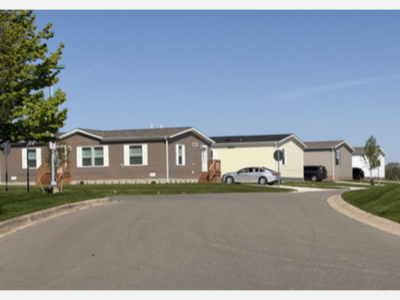
EXPAND HOME OWNERSHIP – The Healey Administration announced the launch of “Move-In Mass,” a new initiative to expand homeownership opportunities across the Bay State by supporting innovative, cost-effective approaches to building starter homes. The program is expected to support at least 20 homes in its first round, with financing designed to be repaid and reinvested in future housing developments.
Supporters say that Move-In Mass will encourage the use of manufactured, modular and other innovative construction methods that can reduce development costs, shorten construction timelines and make homes more affordable for first-time homebuyers. The initiative aims to build quality homes at lower costs while reducing reliance on state subsidies, allowing public investments to support additional housing opportunities over time.
“Buying your first home should be an exciting milestone, but for too many people in Massachusetts, it feels out of reach,” said Gov. Maura Healey. “We're working to change that by helping first-time homebuyers with down payments and building more housing to bring down costs. Move-In Mass is another way we're making homeownership more attainable by lowering the cost of building starter homes. We want more people to have the opportunity to put down roots, build equity and raise their families right here in Massachusetts.”
“Gov. Healey and I want Massachusetts to be a place where people can grow up, get a good job, buy their first home and build a future,” said Lt. Gov. Kim Driscoll. “That's why we're focused on creating more opportunities for first-time homebuyers, from making down payments more affordable to increasing the supply of starter homes. Move-In Mass gives us another tool to work with communities and developers to build quality homes at lower costs and help more families achieve the dream of homeownership.”
QUOTABLE QUOTES
“All eligible voters should be able to cast a ballot freely, safely, and without intimidation or interference. I am proud to stand with California in pushing back against this unlawful federal overreach that would obstruct thousands of voters’ fundamental right to cast a ballot.”
---Attorney General Andrea Campbell announcing that she has joined a coalition of 22 other attorneys general challenging the Trump Administration's efforts to prevent California election officials from counting the ballots of over 20,000 individuals who the U.S. Department of Justice claims are “likely” noncitizens.
“Childcare is essential to our communities. It gives children a strong start and helps parents go to work knowing their kids are in good hands. These investments will help local providers take on major projects, expand their programs and create safe, welcoming spaces for more children and families. We're proud to support the childcare programs that families and communities across Massachusetts depend on every day.”
---Lt. Gov. Kim Driscoll announcing $5 million in grants to six childcare and afterschool programs across Massachusetts to expand facilities, create new classrooms and improve learning environments for children and educators.
“We’re proud once again to be a top-caliber institution in the eyes of U.S. News and World Report. Our work prepares students through academic rigor, vital research and career-connected opportunities in a vibrant, supportive environment. The 2027 rankings also underscore the return on investment our students and their families realize from a UMass Lowell education, as well as our commitment to community engagement.”
---Chancellor Julie Chen on UMass Lowell, for the second consecutive year, being named the top public university in Massachusetts in U.S. News and World Report’s ranking of “Best Value Schools.”
“Innovation Career Pathways show what's possible when schools, colleges and employers work together to create meaningful opportunities for students. These programs help students discover their interests, build confidence and make informed decisions about their futures while they're still in high school. I'm grateful to the educators, school leaders and industry partners, like those at Norwood High School, who are bringing these experiences to life and helping more students see the many paths available to them.”
---Education Secretary Steve Zrike announcing that as part of Massachusetts STEM Week, more than $5 million in grants will be awarded to expand and strengthen Innovation Career Pathways programs that provide high school students with hands-on learning experiences and opportunities to explore careers in high-demand STEM fields and other growing industries.
HOW LONG WAS LAST WEEK’S SESSION?
Beacon Hill Roll Call tracks the length of time that the House and Senate were in session each week. Many legislators say that legislative sessions are only one aspect of the Legislature’s job and that a lot of important work is done outside of the House and Senate chambers. They note that their jobs also involve committee work, research, constituent work and other matters that are important to their districts.
Critics say that the Legislature does not meet regularly or long enough to debate and vote in public view on the thousands of pieces of legislation that have been filed. They note that the infrequency and brief length of sessions are misguided and lead to irresponsible late-night sessions and a mad rush to act on dozens of bills in the days immediately preceding the end of an annual session.
During the week of October 19-23, the House met for a total of eight hours and 44 minutes and the Senate met for a total of 26 minutes.
Mon. Oct. 19 House 11:00 a.m. to 11:10 a.m.
Senate 11:08 a.m. to 11:20 a.m.
.
Tues. Oct. 20 No House session.
No Senate session.
Wed. Oct. 21 House 11:00 a.m. to 7:14 p.m.
No Senate session.
.
Thurs. Oct. 22 House 11:00 a.m. to 11:20 a.m.
Senate 11:15 a.m. to 11:29 a.m.
Fri. Oct. 23 No House session.
No Senate session.
Bob Katzen welcomes feedback at bob@beaconhillrollcall.com
Bob founded Beacon Hill Roll Call in 1975 and was inducted into the New England Newspaper and Press Association (NENPA) Hall of Fame in 2019.

Sunny, with a high of 64 and low of 38 degrees. Sunny in the morning, clear in the afternoon and evening,