37° and Clear



Image
If you have any questions about this week's report, e-mail us at bob@beaconhillrollcall.com or call us at (617) 720-1562.
Beacon Hill Roll Call
Volume 51 - Report No. 44
October 26-30, 2025
Copyright © 2026 Beacon Hill Roll Call. All Rights Reserved.
By Bob Katzen
GET A FREE SUBSCRIPTION TO MASSTERLIST – Join more than 30,000 people, from movers and shakers to political junkies and interested citizens, who start their weekday and Saturday mornings with MASSterList—the popular newsletter that chronicles news and informed analysis about what’s going on up on Beacon Hill, in Massachusetts politics, policy, media and influence. The stories are drawn from major news organizations as well as specialized publications.
MASSterList will be e-mailed to you FREE every Monday through Saturday morning and will give you a leg up on what’s happening in the blood sport of Bay State politics. For more information and to get your free subscription, go to: www.massterlist.com
THE HOUSE AND SENATE: Beacon Hill Roll Call reports local representatives' votes on roll calls from the recent October 21 House session. Both roll calls are on proposed consolidated amendments to the recently approved $2.354 billion fiscal 2026 budget designed to close out the books on fiscal year 2026. There were no roll calls in the House or Senate last week.
There was no debate on either amendment. And neither key supporters nor opponents of the amendments responded to several requests from Beacon Hill Roll Call asking them why they voted the way they did.
Paul Craney, the Massachusetts Fiscal Alliance’s executive director, did respond and told Beacon Hill Roll Call why he opposed both amendments. "Amendment 1 and 2 are spending plans that are on top of the state budget that went into effect on July 1,” said Craney. “Only in Massachusetts do lawmakers pass an additional spending plan three months after passing the state budget, which was the largest in state history. Legislative leaders cannot help themselves in spending more and more taxpayer dollars when they should be looking at driving down state spending to help make Massachusetts more affordable."
CONSOLIDATED AMENDMENT #1 (H 5699)
House 132-19, approved a lengthy amendment that consolidated 50 amendments into one consolidated amendment.
The consolidated amendment includes allowing stores to sell liquor on Thanksgiving Day; imposing up to a 5-year prison sentence on anyone who has been ordered to wear a GPS tracking device by a court and then intentionally damages, removes, modifies or deactivates the device; prohibiting a car license number plate from being covered or obscured by an opaque, transparent, translucent or tinted material; and imposing a $50 fine on any ice cream truck driver who does not have an amber dome light and the flashing orange lights on the back of their ice cream truck when the truck is parked and serving ice cream.
Neither supporters of the amendment nor opponents of it spoke for or against it on the House floor.
House Speaker Ron Mariano (D-Quincy) and House Ways and Means Chair Rep. Aaron Michlewitz (D-Boston) did not respond to repeated requests from Beacon Hill Roll Call asking them why they supported the consolidated amendment.
Beacon Hill Roll Call also asked many of the 19 Republicans who voted against the amendment why they did so. None responded.
(A “Yes” vote is for the consolidated amendment. A “No” vote is against it.)
Rep. Jeffrey Roy Yes
CONSOLIDATED AMENDMENT #2 (H 5699)
House 143-8, approved a lengthy amendment that consolidated 140 amendments into one.
The consolidated amendment includes millions of dollars in funding earmarked for projects and programs in local representatives’ districts. Critics say that these earmarks are used to secure votes of representatives for the budget itself and sometimes for other bills.
Once again, neither supporters of the amendment nor opponents of it spoke for or against it on the House floor. And House Speaker Ron Mariano (D-Quincy) and Rep. Aaron Michlewitz (D-Boston) again did not respond to repeated requests from Beacon Hill Roll Call asking them why they supported the consolidated amendment.
Beacon Hill Roll Call also repeatedly asked all eight Republicans who voted against the amendment why they did so. None responded. Those eight Republicans are: Reps. Kim Ferguson (R-Holden), Paul Frost (R-Auburn), Michael Chaisson (R-Foxboro), Steven Howitt (R-Seekonk), Hannah Kane (R-Shrewsbury), Norman Orrall (R-Lakeville), Alyson Sullivan-Almeida (R-Abington) and Kenneth Sweezey (R-Duxbury).
(A “Yes” vote is for the consolidated amendment. A “No” vote is against it.)
Rep. Jeffrey Roy Yes
ALSO UP ON BEACON HILL
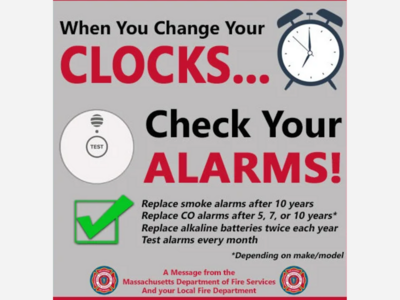
CHANGE THE BAY STATE’S TIME ZONE (S 2157) – The Senate gave initial approval to a bill that would make Atlantic Standard Time (AST) the standard year-round time in Massachusetts and would put an end to the practice of switching between AST and Daylight Savings Time (DST). This means that people would no longer change the clocks in the Spring and Fall. The change would only take effect if two or more neighboring states (Connecticut, Maine, New Hampshire, New York, Rhode Island or Vermont) also adopt similar legislation.
Within 120 days of this new law taking effect, Gov. Maura Healey would be required to petition the United States Department of Transportation (DOT) to include Massachusetts within the AST Zone. Under current federal law, a state cannot simply unilaterally decide to change their time zone. Any change would have to be approved by the DOT.
The measure also would require the Department of Elementary and Secondary Education (DESE) to establish a task force to study school start times and the connection between start times and student performance. DESE must also hold public hearings and obtain comments and suggestions from teachers, students and parents and must report its findings to the Legislature’s Committee on Education within one year.
Currently, 48 states use DST – the exceptions being Hawaii and Arizona. DST begins at 2 a.m. local time on the second Sunday in March. On the first Sunday in November, areas on DST return to AST at 2 a.m. When DST begins in the United States you turn your clocks ahead one hour (“Spring forward”). At the end of DST, you turn your clocks back one hour (“Fall back”).
"Thomas Emswiler, a Quincy constituent and dedicated expert on time zone policy, brought this bill to my attention,” said sponsor Sen. John Keenan (D-Quincy). “Through his advocacy and the work of the Special Commission on the Commonwealth’s Time Zone, the potential benefits of this bill have come to light. If Massachusetts were to observe AST year-round, studies show that doing so could decrease energy usage, reduce the risk of heart attacks, strokes, car accidents and increase workplace productivity.”
“Here we are again, setting our clocks back an hour," said Senate President Karen Spilka (D-Ashland). "It’s a ridiculous seasonal dance that upends our sleep schedules and scrambles our lives twice a year, I hear about this often from constituents who are tired of this outdated relic of the 20th century. Permanently establishing a single time system would improve our health and even make our roads safer.”
Johns Hopkins Bloomberg School of Public Health says the time change is associated with an increased risk of heart attacks, strokes, mood disturbances and hospital admissions; Stanford School of Medicine finds that disruptions to the body’s circadian rhythm are associated with higher rates of stroke and obesity; and Northwestern Medicine has linked the clock change to longer-term health effects, including depression, slowed metabolism, weight gain and cluster headaches.
The bill still needs additional approval in the Senate, approval by the House and Gov. Healey’s signature before becoming law. "Gov. Healey supports eliminating Daylight Savings Time because we could all use more sunshine in our lives,” said Karissa Hand, a spokesperson for the governor. House Speaker Ron Mariano’s office did not respond to repeated requests by Beacon Hill Roll Call asking how the speaker feels about the bill.
REPEAL ABORTION LAW - The Compassionate Care Coalition, led by Massachusetts Citizens for Life and Massachusetts Family Action, announced at a Statehouse event that it has collected 97,276 signatures, nearly double the 49,716 signatures needed to put the recently-approved abortion bill on the 2028 ballot for voters to repeal or maintain.
The measure, signed by Gov. Healey on August 10, would loosen restrictions on abortions that can be performed after 24 weeks of gestation. The bill is scheduled to take effect on November 8, 90 days after the governor signed it. The measure removes existing requirements that limit abortions at 24 weeks of pregnancy or later to four specific medical circumstances, and instead allows licensed physicians and providers to rely on their best medical judgment when caring for patients. Local city and town officials have certified the signatures, but the Secretary of State’s office still has to certify the signatures in order for the question to go on 2028 ballot.
As it stands now, if the secretary certifies the signatures, the question would not only go on the 2028 ballot but the law would be suspended until after the 2028 election. However, Gov. Healey can attach an emergency preamble to make the law go into effect immediately which would also prevent it from being suspended. She did exactly that to prohibit suspension of the 2024-gun law, which is the subject of a repeal effort that voters are deciding on November 3.
“The people of Massachusetts did not ask for abortion through all nine months, and in a matter of weeks they made that clear,” said Sam Miele, chairman of the Compassionate Care Coalition. “We are grateful to every volunteer, pastor and parish staffer who carried a clipboard. Because of them, voters will have the final say.”
“When it seems impossible to reach and serve vulnerable, hurting women, remember that truth paves the road of possibility,” said Myrna Maloney Flynn, president of Massachusetts Citizens for Life and vice chair of the Compassionate Care Coalition. “If you ever think you’re powerless when it comes to protecting the unborn, think again.”
Catholic Action League Executive Director C. J. Doyle congratulated the Compassionate Care Coalition. He noted, “If this proposed referendum makes it to the ballot in 2028, it will be the first time in 42 years that Bay State voters will directly decide an abortion issue.”
“This law was passed on the fundamental principle that decisions about pregnancy belong between a woman and her doctor, not politicians,” said Rep. Lindsay Sabadosa (D-Northampton) who opposes repeal. “In Massachusetts, physicians must be free to exercise their best medical judgment, patients must be free to make decisions for themselves and their families, and no one should have to leave the commonwealth to receive care available in our world-class medical institutions. Indeed, the idea that politicians belong in the exam room is an extreme and deeply outdated view, one that runs counter to the values Massachusetts residents have repeatedly affirmed through their strong support for abortion rights.”
“The [bill] is supported by leading medical experts, reproductive health and justice advocates and more than two-thirds of Massachusetts voters,” said Sheila Ramirez, executive director of the Planned Parenthood Advocacy Fund of Massachusetts. “People in Massachusetts don't want politicians or religious institutions dictating what kind of pregnancy care they can receive. The groups behind this referendum effort are once again spreading fear and misinformation to stigmatize abortion and restrict access to care that patients need and providers are trained to deliver. Massachusetts has consistently stood for health care access, reproductive freedom and evidence-based medicine, and voters are not interested in moving backward.”
Kathleen Melendy, Massachusetts state director for Reproductive Equity Now, argues that the law "responds to the realities patients and providers are facing and ensures patients can access compassionate care here at home."
Melendy continued, “This referendum effort is part of a broader national anti-abortion campaign working state by state to roll back reproductive freedom. It is no coincidence that it comes as the Trump administration and its allies are using the power of the federal government to restrict reproductive health care nationwide. Now, anti-abortion activists are trying to bring that same agenda to Massachusetts."
$800,000 TO IMPROVE WORKPLACE SAFETY – Gov. Healey announced the awarding of $800,000 in grants to help nearly 7,000 workers across Massachusetts stay safe on the job. The grants, administered by the Department of Industrial Accidents (DIA), support workplace safety training and education to help prevent injuries and reduce risks for workers.
Grant recipients include 176 entities including cities and towns, small businesses, minority-, women- and veteran-owned businesses, and employers in industries such as manufacturing and construction. DIA says it has awarded an estimated $25 million since 1988 in workplace safety grants, supporting approximately 340,000 workers and 1,880 employers across the Bay State.
“Whether you're working for a small business, on a construction site or for your local community, everyone deserves a safe workplace,” said Lt. Gov. Kim Driscoll. “These grants will help cities, towns and businesses provide important training, prevent injuries and make sure their employees have the tools they need to do their jobs safely.”
“The ideal workplace injury is the one that never happens,” said Maryann Falvey, Director of the DIA Office of Safety. “Behind every grant is an opportunity to turn safety training into real-world action, giving workers the confidence to recognize hazards, speak up about risks and protect themselves and their coworkers. Our goal is to make workplace safety more than a requirement. We want it to become second nature, embedded in how work gets done every day across Massachusetts.”
See a list of all the grant recipients at https://www.mass.gov/news/governor-healey-awards-800000-to-improve-work…
Last year, the Healey-Driscoll Administration launched the SafetyWorks Initiative, a one-stop menu featuring free technical consultation and state occupational and industrial safety resources to make it easier for businesses to access guidance, training and tools to strengthen workplace safety. Public- and private-sector employers interested in these resources can visit https://www.mass.gov/safetyworks to schedule a confidential consultation and/or apply for training grants of up to $25,000.
OKUR-CHUNG NEURODEVELOPMENTAL SYNDROME AWARENESS DAY (H 3366) – The Senate gave initial approval to a House-approved bill designating April 5 as Okur-Chung Neurodevelopmental Syndrome (OCNDS) Awareness Day.
House sponsor Rep. Kristin Kassner (D-Hamilton), noting the bill was brought to her attention by her constituent Jillian Kavanagh, said that this neurodevelopmental disorder can cause severe speech delay, developmental delay, epilepsy, behavioral challenges and feeding difficulty.
Kassner continued, “OCNDS is hard to diagnose, which is why it’s so important to raise awareness about this syndrome. Awareness can lead to early diagnosis, which can lead to early treatment, which will lead to better outcomes. The sooner we pass it, the sooner we can spread the word about OCNDS and make a difference for patients and their families."
The bill still needs additional approval by the House and Senate before it goes to Gov. Healey for her signature.
QUOTABLE QUOTES
“We cannot allow the United States government to indefinitely disappear human beings. If we cannot locate our clients, we cannot pursue the relief for which they are legally eligible. The law gives our clients the right to seek protection. This policy obstructs that right when our clients need it most.”
---Jackie Kelley, director of immigration legal services at the Rian Immigrant Center, one of a group of legal services organizations that filed a lawsuit challenging the federal government’s new policy of hiding the locations of thousands of people detained by U.S. Immigration and Customs Enforcement.
“The law is clear: Every eligible voter has the right to cast a ballot without intimidation, and no one has the right to corrupt the election process through fraud or interference. Our office will not tolerate either. Anyone who attempts to undermine a federal election through criminal conduct should understand that we are prepared to investigate, enforce the law and pursue accountability. The integrity of our elections is not negotiable.”
---United States Attorney Leah Foley.
“Massachusetts Hazmat technicians are our first line of defense against chemical, biological, radiological, nuclear and explosive hazards. Making this powerful tool available to so many techs is going to help protect them and our residents from hazards that are unseen but deadly serious.”
---Public Safety Security Secretary Gina Kwon, announcing that 200 State Hazmat technicians are being outfitted with personal radiation detectors through a federal grant program, providing advance warning for personnel who might be entering a hazardous environment and alerting them to radioactive threats.
“Veterans have given so much in service to our state and our country, and we want to make sure they receive every dollar they are owed. By bringing our divisions together, we are doing even more to help them recover funds they may not know they are owed.”
---State Treasurer Deb Goldberg on the Massachusetts Unclaimed Property Division and the Massachusetts Veterans Bonus Division partnering to help veterans recover unclaimed property and funds owed to them. The collaborative effort began in August and has already resulted in 93 claims with an estimated value of over $45,000.
HOW LONG WAS LAST WEEK’S SESSION?
Beacon Hill Roll Call tracks the length of time that the House and Senate were in session each week. Many legislators say that legislative sessions are only one aspect of the Legislature’s job and that a lot of important work is done outside of the House and Senate chambers. They note that their jobs also involve committee work, research, constituent work and other matters that are important to their districts.
Critics say that the Legislature does not meet regularly or long enough to debate and vote in public view on the thousands of pieces of legislation that have been filed. They note that the infrequency and brief length of sessions are misguided and lead to irresponsible late-night sessions and a mad rush to act on dozens of bills in the days immediately preceding the end of an annual session.
During the week of October 26-30, the House met for a total of 46 minutes and the Senate met for a total of 54 minutes.
Mon. Oct. 26 House 11:00 a.m. to 11:08 a.m.
Senate 11:16 a.m. to 11:19 a.m.
.
Tues. Oct. 27 No House session.
No Senate session.
Wed. Oct. 28 House 11:45 a.m. to 12:19 p.m.
Senate 12:16 p.m. to 12:17 p.m.
Thurs. Oct. 29 House 11:02 a.m. to 11:06 a.m.
Senate 11:21 a.m. to 12:11 p.m.
Fri. Oct. 30 No House session.
No Senate session.
Bob Katzen welcomes feedback at bob@beaconhillrollcall.com
Bob founded Beacon Hill Roll Call in 1975 and was inducted into the New England Newspaper and Press Association (NENPA) Hall of Fame in 2019.

Sunny, with a high of 65 and low of 44 degrees. Cloudy in the morning, overcast for the afternoon, clear overnight.