53° and Patchy rain nearby



Image
By Ingrid Grenon
In 1933, newly elected president Franklin D. Roosevelt did some great things to pull the country out of the Great Depression of 1929. The inception of the Civilian Conservation Corps, designed to employ young men in the development of natural resources owned by federal, state and local governments, was integral in the expansion of the state forest system in Massachusetts and throughout the country. Public lands became places to enjoy, relax and revere. The state forest in Franklin was established in 1935.
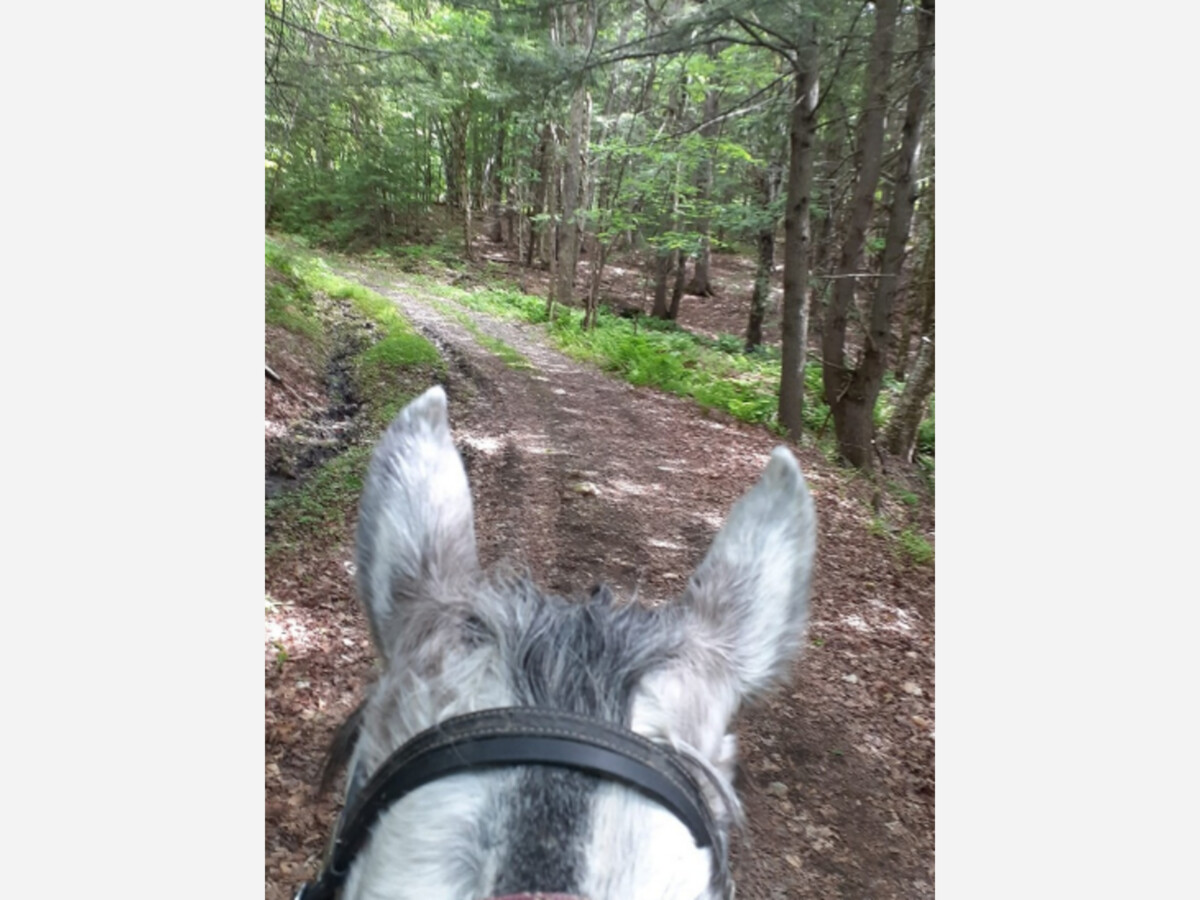
In the 1970’s I was always on the lookout for trails and wooded areas where I could ride my horses, and it wasn’t long before I found the state forest. Leaving my home on South Street, then a dirt road, I entered the forest on my equine companions via Spring Street, off Washington Street. Washington Street did pose a bit of a danger with the frequent commercial traffic and occasional reckless driver, but luckily, I was able to leave the road at the most dangerous point and ride through the fields of the Root Farm, with the permission of Melvin and Alice Root. We always exchanged pleasant conversation as I passed their farm stand where fresh vegetables were offered for sale to passing motorists.
“Why are you wearing long sleeves on such a hot day,” Alice inquired as I rode past on my chestnut hunt pony. “Because of the horseflies,” I explained. “They are trying to eat us alive.” What Alice could not see was the pint of fly spray I had applied to my horse prior to heading out. Although the biting, blood sucking flies were an annoyance to humans, they were an awful menace to the horses.
The most dangerous part of the journey was trying to cross the street where Hillside Nurseries was located, and all too often there was noisy activity related to work on the nursery; tractors, power equipment, and such. Turning left onto Spring Street meant I had made it safely, and Spring Street was the entrance to the forest. Actually, as per the old maps I perused, I found Spring Street was once a public throughfare emerging on Route 140 near the current Garelick Farms. In the 1970’s public access terminated at the edge of Denny Bishop’s field, where the state forest officially began.
Denny Bishop was a colorful character who was always kind to me. I would see him often on his tractor working his field that abutted the state forest. Once he piled logs together across the entrance to the forest, to prevent the dirt bikes from coming out of the forest and travelling over his planted fields. When he saw me attempt to navigate around the barrier on my horse, he apologized and explained his dilemma.
Denny told me about how his sister, Alice, used to ride her Saddlebred into the state forest, using a “big ole western saddle.” That, of course, would have been in the 1940’s. Once he saw me doing battle with horseflies, stopped his tractor and explained, pointing to a reddish mark on his arm, “It felt like this one was drilling a hole into me. They’re real bad this year.”
Once I got onto the old Spring Street in the state forest and beyond any barrier Denny was forced to erect, my horse would tug at the reins and I would let her go. Usually breaking into a canter, hooves pounded on the dirt and sometimes clattered on an occasional stone. We were free, as well as outrunning the flies. . . and I felt that I had entered another century. This is what remains of old Franklin, I thought. Unspoiled, so far. . .
Covering over 843 acres, the Franklin State Forest was a magical place for a teenager on horseback who loved history. What were once open fields enclosed within stone walls centuries ago, the woodland now claimed. The forest encroached on what had been forgotten and left behind, but the signs of this earlier time were still present, although often hidden. Finding a cellar hole was an exciting event, and next, searching for artifacts left behind. Bottles, remnants of wrought iron and fragments of pottery were most common. Once I found a horseshoe, and wondered about the era of my predecessor.
The well was always a hazard and care was taken not to fall in. There was always a well not far from a cellar hole and that presented serious danger for a horse. Often the well opening was covered with fallen branches, leaves or other debris.
Once I became lost, and began weaving back and forth through an apparent maze of somewhat overgrown trails that reminded me of Frost’s poem The Road Not Taken. I followed at a walk as the footing was questionable and a faster pace may present a danger to my horse. I loosened the reins and let the horse wander up and yet further up the trail, coming upon a large pile of stones and bricks. I figured we must be near the top of Forge Hill. Could this have been the storied forge that once operated on this hill? If so, it would have been a hub of activity centuries ago, I thought, glancing around at the overgrown brush and trees that enveloped it.
Time passes all too quickly, and summer turns into fall. Fall was the best time to ride in the state forest; the flies were gone and the stone walls emerged brightly against the backdrop of brilliant autumn foliage. Trotting and cantering on the disused old roads was invigorating and educational. In the cool fall mornings, my horse would tug at the reins and snort, asking for a brisker pace. I would indulge, and soon we would end up at Route 140, covering the space between Washington Street and West Central Street in no time at all. If we pressed forward, we would end up on Maple Street in Bellingham and enter another vast trail network. But that was a while ago and this is no longer possible.
The forest has endured many insults; an unsightly water tower was built in the 70’s, dirt bikes have eroded many trails, thoughtless construction has obliterated formerly scenic views. . . and the expansion of misplaced solar arrays loom. According to the Massachusetts Audubon Society, “Since 2010, more than 500 ground-mount solar projects have been developed across the state, covering 8,000 acres, of which about 60 percent are forest acres, according to the report. Unfortunately, Massachusetts’ current pattern of solar development is causing unnecessary harm to nature.” Rather than cut down established forested lands for solar panel construction, it is suggested to use rooftops, parking lots and other spaces of this sort.
The Franklin State Forest was a treasure trove of pastoral delights and remnants of an earlier time. Hopefully most of it will remain for a bit longer.
Ingrid Grenon is a writer, historian and farrier, who lived in Franklin for many years.


Overcast, with a high of 64 and low of 43 degrees. Overcast in the morning, sunny in the afternoon, cloudy for the evening, light rain overnight.