41° and Partly Cloudy



Image
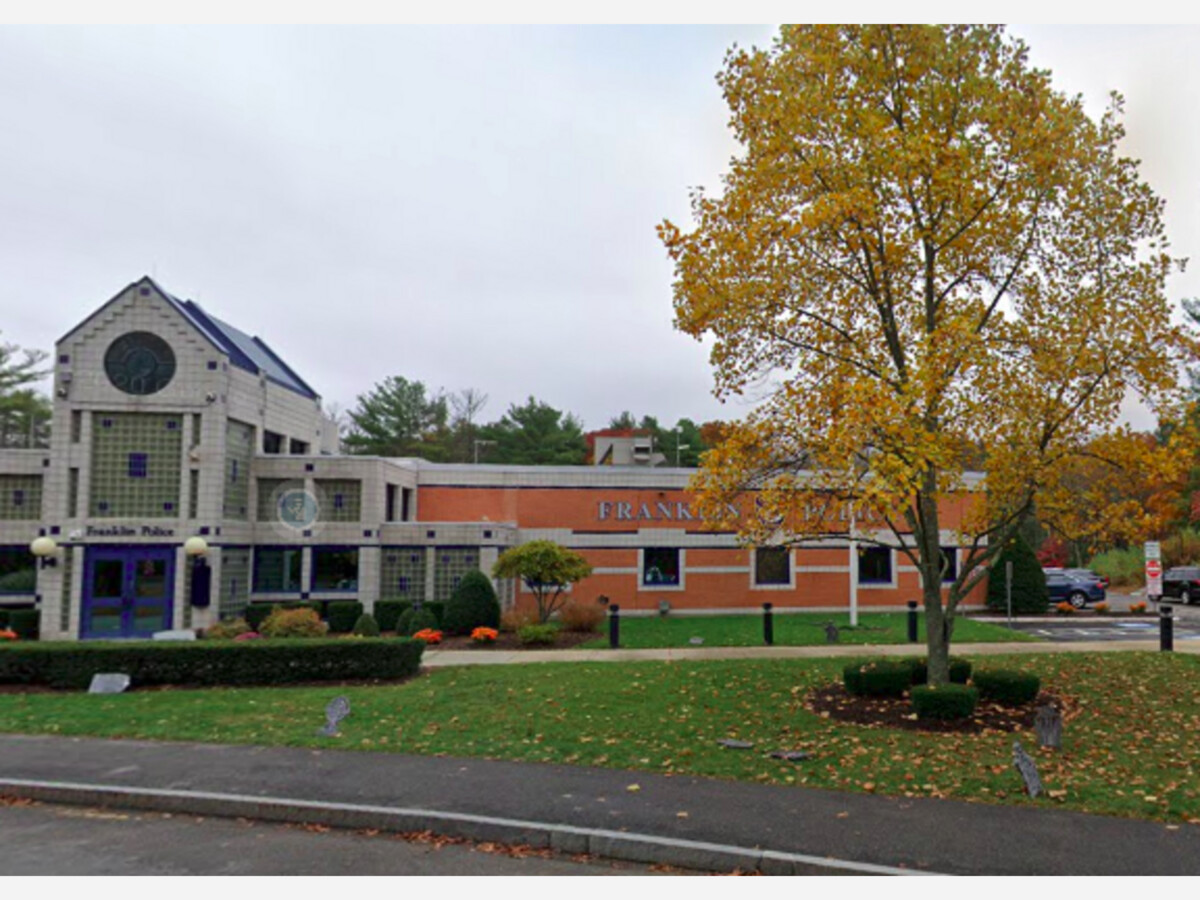
Yesterday's article, is continued here in Part 2
The question of where to build a new police station has become intertwined with several other major decisions facing Franklin, including what to do with surplus school buildings, how to accommodate other municipal departments and how much additional debt taxpayers can reasonably support.
The town's Police Station Building Committee has recommended the former Gerald M. Parmenter Elementary School property as the preferred location for a replacement headquarters. But the recommendation is only one step in a process that could ultimately commit the town to tens of millions of dollars in construction expenditures.
The approximately $40 million estimate, first appearing in municipal planning documents in early 2024, is not a final price. Nor does it necessarily represent the amount Franklin would need to borrow after completing design, engineering, site preparation and other preliminary work.
As of the latest municipal discussions, the Town Council had not made a final decision on the location or financing of the proposed station.
Parmenter emerges as a favorite
The Parmenter property, near King Street and Wachusett Street, was among several locations examined by the Police Station Building Committee and its consultants.
Other candidates included the former Davis Thayer School property near downtown, which remains empty and unused, a residential parcel on Grove Street and the existing police station property on Panther Way.
The Franklin Observer examined these and other possibilities in February 2025, noting that the town has relatively little undeveloped land suitable for a major public building. Using town-owned land could eliminate property acquisition costs, although site preparation and demolition expenses could still be substantial.
The Observer also identified several other municipal properties that might warrant consideration, including land on Beaver Street and the possibility of combining public safety functions at an existing fire station.
Those possibilities were discussed as alternatives, not necessarily as locations formally endorsed by the building committee.
On January 6, 2026, the committee voted unanimously to recommend Parmenter as the preferred site.
At the same meeting, members voted 6-1 to recommend a $62,500 code review of the existing Parmenter building. Such an assessment could help determine whether the structure could be retained or adapted, rather than demolished.
The vote, according to a Franklin Matters report, did not authorize construction of a new station.
A broader debate about town property
The police station proposal is part of a larger discussion about Franklin's publicly owned real estate.
On September 2, 2026, the Town Council began what Town Administrator Jamie Hellen described as a multi-month discussion of the future of the Parmenter and Davis Thayer properties, along with town-owned land at 275 Beaver Street.
The council was also expected to consider the permanent location of the Recreation Department and whether certain properties should be sold, leased or retained for future municipal needs.
According to Hellen's August 28 memorandum, the September presentation was intended to begin public discussion rather than produce immediate decisions.
The distinction matters because selecting Parmenter for a police station could affect the town's ability to use that property for recreation, education or other municipal purposes.
Conversely, choosing another site could free Parmenter for reuse or disposal while creating additional costs elsewhere.
The town's September agenda reportedly included reports from its Geographic Information Systems director, public facilities director and planning staff, as well as draft requests for proposals involving other municipal properties.
What have other communities done?
Franklin is hardly alone in confronting the cost and complexity of modern police facilities.
A February 2025 Franklin Observer comparison examined how other Massachusetts communities approached similar projects. Some chose to build separate police stations, while others combined police, fire and municipal functions in a single complex.
Neighboring Medway, for example, pursued a combined police, fire and town hall project, illustrating an approach intended to bring multiple municipal functions together.
Other communities have favored separate facilities, sometimes located away from congested town centers to improve vehicle access and accommodate future expansion.
The Observer's comparison suggested that there is no single model appropriate for every municipality. Land availability, departmental needs, population, existing facilities and local finances all influence the decision.
One important question for Franklin is whether a stand-alone police station would be more economical over its useful life than a combined public safety complex.
Combining functions can sometimes reduce duplication of meeting rooms, training spaces, mechanical systems and other facilities. However, shared buildings also require more complicated planning and may cost more initially.
No conclusion about the financial merits of such an approach in Franklin can be reached without a comparable engineering and cost analysis.
The $40 million question
For taxpayers, the most consequential issue may be how Franklin intends to finance the project.
Municipal construction projects are frequently financed through long-term borrowing, allowing costs to be spread over the useful life of a building.
But borrowing introduces interest expenses, and the eventual amount paid can be considerably higher than the original construction cost, particularly with borrowing costs that have trended upward in recent years.
For illustration, borrowing $40 million over 30 years at a fixed 4.5 percent interest rate could produce annual principal and interest payments of approximately $2.46 million, assuming level annual payments.
Over the full repayment period, those payments could perhaps total approximately $73 million.
That calculation is illustrative only. It is not a town financing proposal, and actual costs would depend on interest rates, borrowing terms, project expenditures and any available funding from other sources.
Franklin officials would also need to determine whether the debt could be supported within the existing municipal budget or, more likely, what additional tax revenue would be required.
A debt exclusion under Massachusetts Proposition 2½ is one possible financing mechanism for a major capital project, but it would require voter approval. Other financing approaches may be available depending on the town's fiscal capacity.
The town's decision would therefore involve more than choosing a location. It would require balancing the police department's long-term needs against other municipal priorities, including schools, roads, water and sewer infrastructure, and existing debt obligations.
Renovation versus replacement
Another question that has not been absolutely answered is whether the existing Panther Way station could be substantially renovated or expanded at a lower cost.
The current location has significant limitations, particularly wetlands and site constraints that restrict conventional expansion.
Still, the relative costs of renovation, vertical expansion and new construction could be worth comparing before a final commitment is made.
The International Association of Chiefs of Police, in its Police Facilities Planning Guidelines, recommends that communities begin by thoroughly assessing operational requirements, future growth, site conditions and alternatives.
The guidelines recognize that police facilities represent unusually long-term investments and that most communities undertake such projects infrequently.
For Franklin, that suggests that the immediate objective should not simply be to construct a larger building, but to determine which solution provides adequate capacity, security, accessibility and operational efficiency at an acceptable long-term cost.
What happens next?
The Police Station Building Committee's Parmenter recommendation gives the Town Council a starting point, but several important questions remain.
Among them are whether the former school building should be retained or demolished, what the final size and configuration of the new station should be, whether other municipal departments might share the site, and what would become of the existing Panther Way property.
A detailed cost estimate will also be needed to determine whether the original $40 million planning figure remains realistic.
For residents, the coming decisions will help determine not only the future of Franklin's police headquarters, but also the disposition of valuable town-owned property and the community's financial commitments for decades to come.


Sunny, with a high of 54 and low of 40 degrees. Overcast in the morning, clear for the afternoon and evening,