

Image
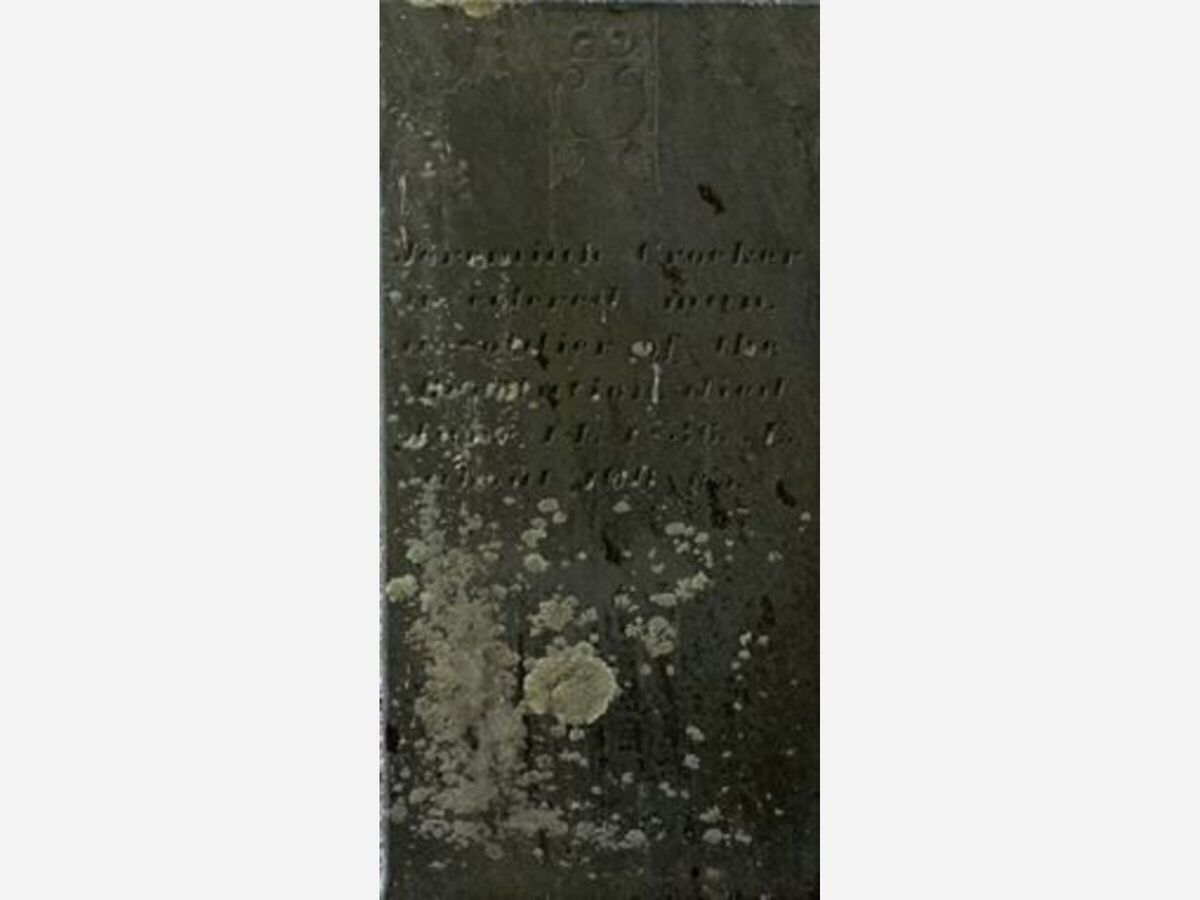
The weathered headstone of Jeremiah Crocker, 'colored man, soldier of the Revolution,' who served Franklin but has never been given the same acknowledgement as his white comrades.
As has often been pointed out, particularly in recent years, the inspiring goals and ideals of the American Revolution were tarnished at their inception by the institution of slavery. Fortunately, the Revolutionary period also sowed the seeds that would eventually lead to the abolition of slavery in Northern states and, of course, to a deeply destructive war that, in effect, brought about the end of the practice nationwide, four score and seven years later.
Here in Franklin, slavery was an established fact at the time of the War of independence. And, as has come to light in recent years, enslaved men, residents of Franklin, served the new nation as soldiers.
In 2017, Susan Elliot, a writing tutor at Dean College and a history buff, discovered that a local man named Charles Paine had served the new country from 1777 to 1780. Ample documentation shows his period of service. The records she found show that he was sold within Franklin and, while under the ownership of the Gilmore family, was enlisted to serve in the Continental Army, possibly as a “substitute” for a Gilmore family member. Upon his release, his owners applied the sum provided as payment for his enlistment, toward purchasing his freedom – a fortuitous move on their part, since court cases under the new Massachusetts Constitution led to emancipation of all slaves in the state a few years later, without compensation to those who claimed to be their owners.
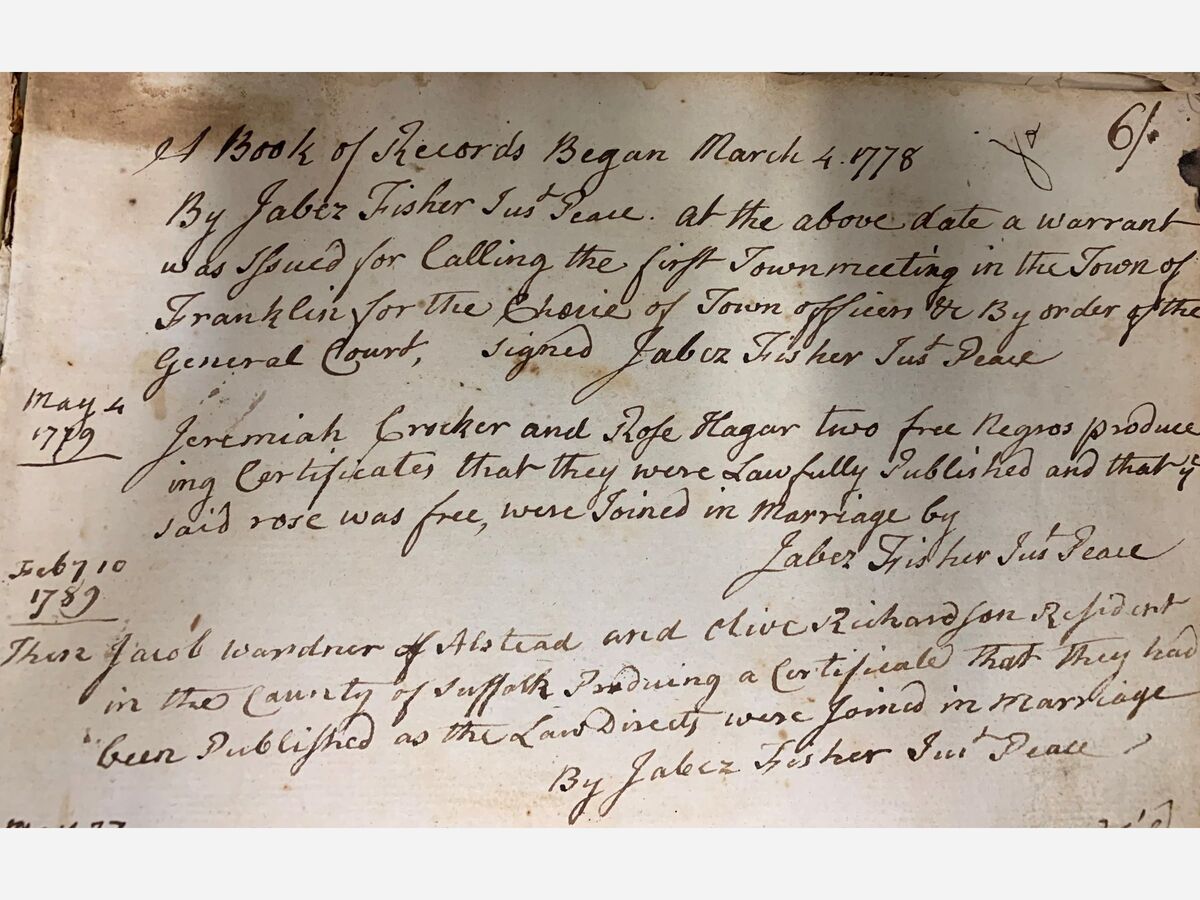
Similarly, in 2019, Vicki Earls, Head of Reference and Public Services at Franklin Public Library, discovered documents relating to another black Revolutionary War soldier, Jeremiah Crocker. He, too, is a neglected figure from a military perspective. But Crocker does have a special place in the town’s history. He and his wife, Rose Hagar, were the first nuptials performed and recorded in the new Town by the new justice of the peace, Jabez Fisher on May 4, 1779.
According to records uncovered by Earls, Jeremiah stated that he was born in Natick, , was a slave to a family from Bellingham, and was living in Massachusetts at the start of the American Revolution. He was a soldier for most of the war, enlisting in the service quotas of various towns, including Franklin. He spent the last 40 or so years of his life in Henniker, N.H. None other than future president Franklin Pierce was among those testifying on his behalf when he sought a war pension.
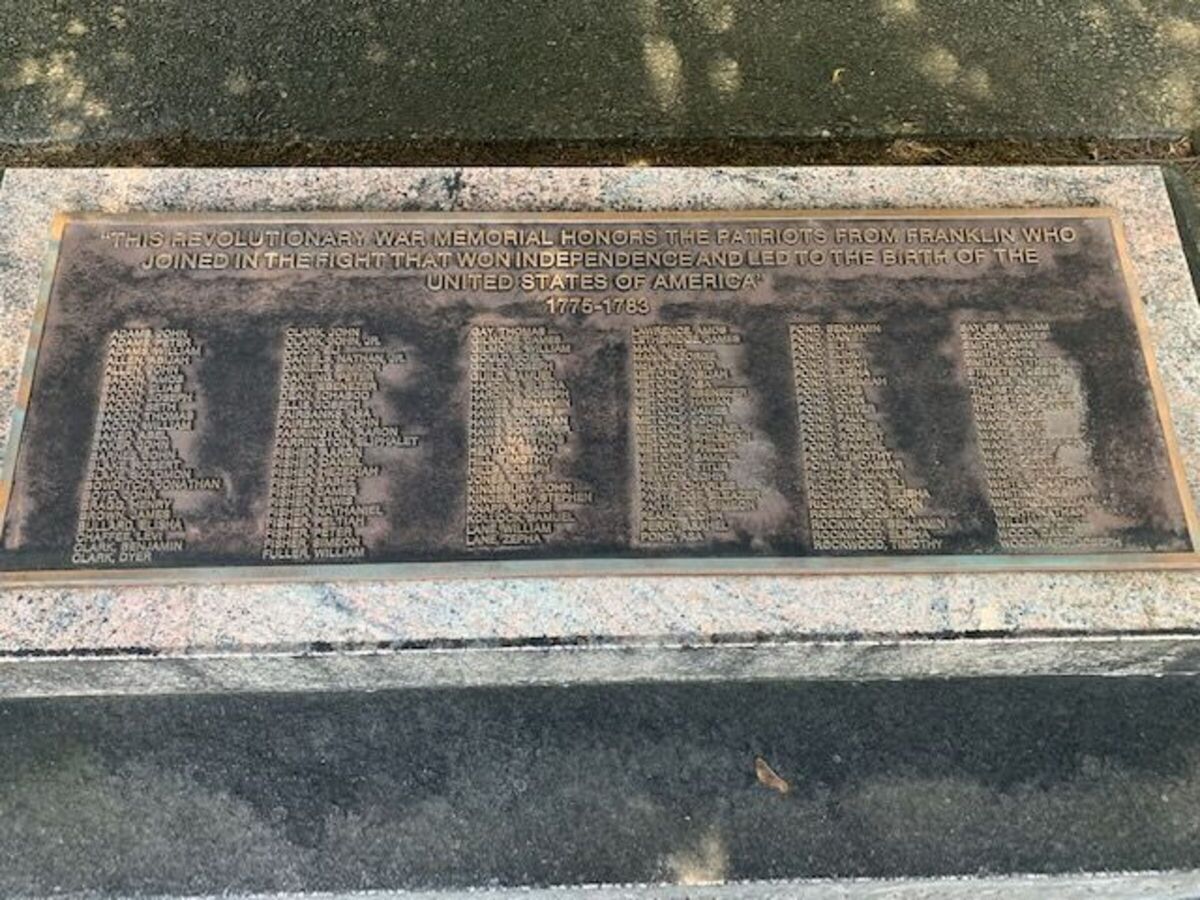
Unfortunately, when the Town of Franklin finally got around to memorializing its Revolutionary War soldiers, some two centuries after their time of services, neither Paine nor Crocker were included on the bronze plaque.
As he prepared to end his service in Franklin, former Veterans Services Officer Dale Kurtz got the ball rolling on a plan to garner funding to spruce up and repair various war memorials on the Common. As a result, for example, the town recently put out to bid a new concrete support for the GAR monument that includes the words of the Gettysburg Address.
Further researching the “lost” soldiers of the American Revolution from Franklin and finding a way to properly memorialize them on the Town Common would seem to be an equally worthy undertaking.

Light snow, with a high of 33 and low of 20 degrees. Light snow during the morning, clear during the afternoon and evening, light freezing rain overnight.