35° and Overcast



Image
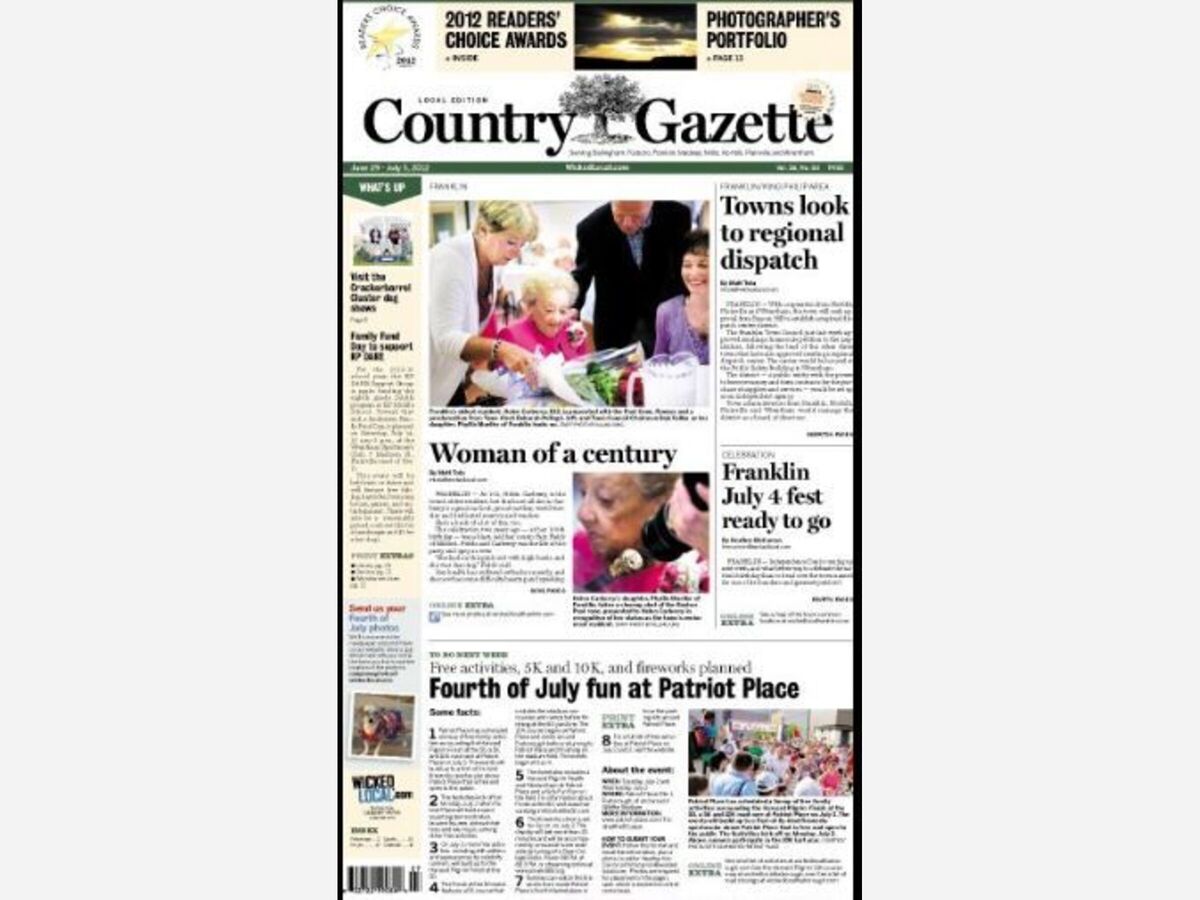
We note with regret the announcement last week that the Country Gazette, Franklin’s weekly news source for decades, is ceasing its print publication in May. This is particularly unfortunate for the segment of the population, mostly but not exclusively older, that gets by without smartphones and computers and relies on a traditional newspaper.
Certainly, one of the reasons for this decision is the high cost of putting out a physical newspaper, and advertising has been on a downward spiral for at least 20 years. But a lot of the blame also lies with the big companies that bought up local papers by the hundreds in the `80s, `90s and `00s... The lure was purely profit. The thinking was that shared ownership would allow for consolidation and massive cost cutting, leaving the owners with a decent profit.
It’s a formula that worked for a while, but hollowed-out newsrooms produced less and less content of interest to readers, which accelerated the trend toward consumption of online content.
Now, though, some in Congress and in the Biden administration are pushing a bailout to “rescue” local news. It’s an idea that has been floated for a few years and currently seems to be embodied in the Future of Local News Act of 2021 (S.1601). According to Congress.gov, the proposed bill would establish the Future of Local News Committee to examine, report on, and make recommendations related to the state of local news and the ability of local news to meet the information needs of the people of the United States.
The duties of the committee include would include (1) examining the implications of the loss of local newspapers, digital news outlets, and broadcasting outlets; (2) assessing the impact of the COVID-19 (i.e., coronavirus disease 2019) pandemic and whether the Paycheck Protection Program has had beneficial effects on local news organizations; and (3) assessing and examining existing and potential means of supporting local news production.
The committee must recommend mechanisms that the federal government can create and implement to support the production of local news, such as the possible creation of a new national endowment for local journalism or the reform and expansion of the Corporation for Public Broadcasting. Also discussed have been tax credits for advertisers and payroll tax credit for news media organizations.
Not only does this further erode what little independence there seems to be in the news media as a whole, it does nothing to recognize that there has been a fundamental change in the technology of news reporting and news delivery and, instead, tries to keep old models and old players on life support.
This does not serve the public and it will tend to create an even more tame news media, consistently looking for government support rather than helping to ensure that government is functioning in the public interest. Sadly, in a related development, New York state is instituting regulations designed to destroy the time-honored world of freelance writing and reporting, forcing people who choose this kind of work to be subject to government mandated pay and working conditions and, in essence, to give up the “free” in freelance. This hurts the profession and further undermines the entrepreneurial energies needed to revive local news media.
Here in Franklin we have the outstanding example of Steve Sherlock’s Franklin Matters – a labor of love that demonstrates what a single individual can do to help keep the community informed. The Observer, based on a commercial PatchLabs platform, functions similarly albeit with a small potential for actually earning revenue.
Thanks to support from the cable TV industry and rate payers, we also have lots of quality information coming through Franklin TV and WFPR. We might also add that Franklin Town News, a monthly print publication run by local entrepreneurs, seems to be doing just fine.
These robust, 21st century efforts to deliver the news and similar efforts in communities across the nation will do more for us than bailouts. Better to let these experiments flourish with a minimum of interference than to put in place a bureaucracy that will serve only to prop up the Gannetts and Tribune Media giants that have done so little good for the cause over the last few decades.
Let’s just say no to government media and let the existing news media reinvent itself from the ground up.



Patchy rain nearby, with a high of 38 and low of 34 degrees. Patchy rain nearby in the morning, overcast in the afternoon, clear overnight.