69° and Partly Cloudy
Image
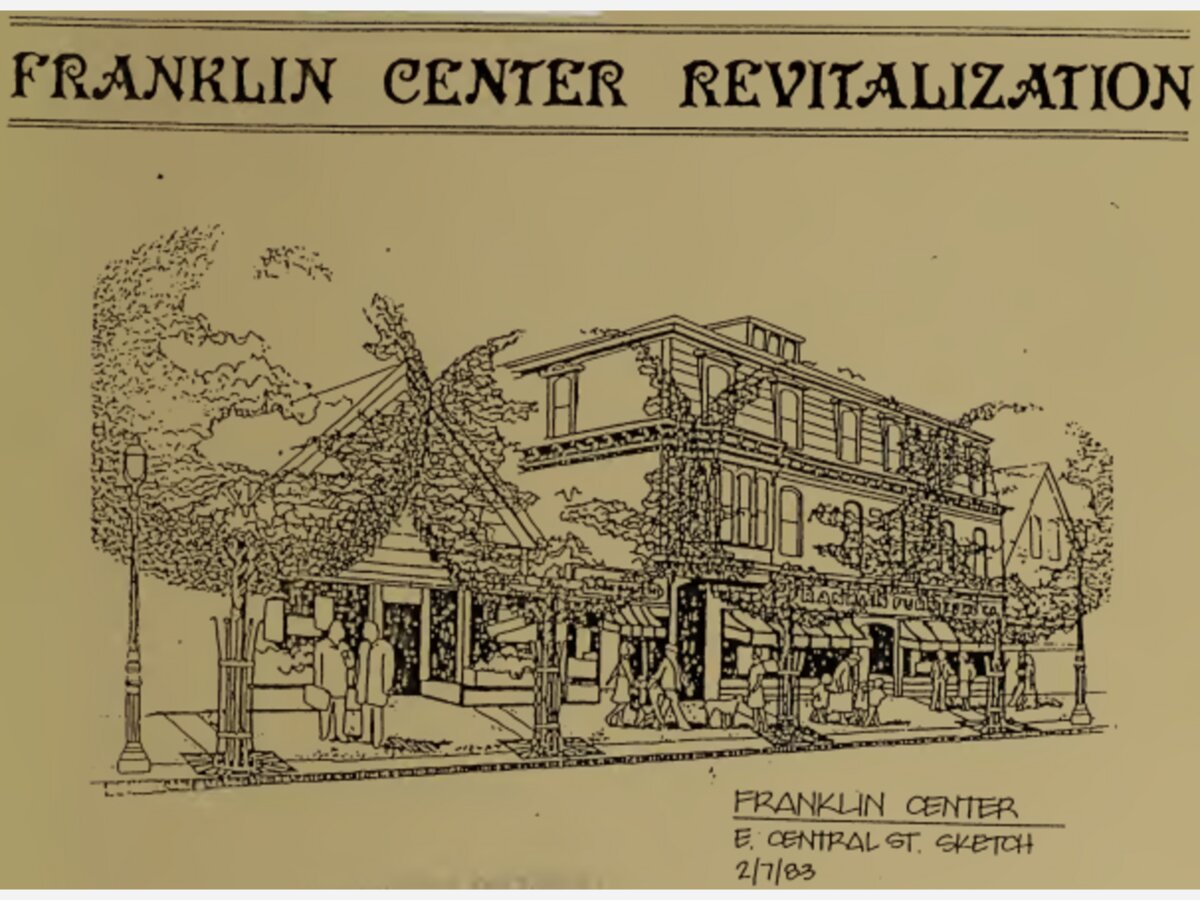



Some 40 years ago, from 1983-1984 to be exact, a group of Franklin residents worked with the Metropolitan Area Planning Council (MAPC) to try to come up with a cure for the town’s ailing business district.
Like the current rezoning project that the town is undertaking, it put the MAPC in charge of the process. But locally, The Franklin Center Revitalization Committee included a broad swath of citizens including Vilma Pascucci (Chair), as well as Norman Ristaino, Lawrence Benedetto (police chief at the time), George Simon, Gordon McClay, Barbara Razzano, Robert Reed, K. Robert Malone, Victor Pisini, Joel D’Errico, Joseph L. Polito, John R. Dean, Steve Crowley, Barbara Levins, Moe Pukulis, Robert Ballarino, Diane Kerr, Florence Keras, and Robert Simmler. A number of those people are still active. Others have since passed from the scene.
The Committee worked with MAPC for about a year and, as a committee, endorsed a plan that was designed around MAPC’s market study. At that time, hard as it may be to imagine, I-495 was still viewed as very much the far outer limits of Greater Boston. But more and more people were deciding to move to town and, under favorable conditions, could drive to the center of Boston in less than an hour with traffic slowdowns limited to just a few spots.
And the malls that crowd interchanges up and down the route today were mostly nonexistent. But they were close enough – Framingham, for example – that they had begun to erode the business of grocers, clothiers, and others that dotted the town’s “uptown.” The report proposed changes that would help the area compete, but most of them had to do with updating business practices rather than the structure or real estate of the area.
But the plan also recommended establishing and/or enhancing central parking areas, increase plantings, and adding more “Victorian” touches, such as park benches and old-style lighting. Some of those style suggestions have been implemented over the years as has more parking, but not as much as was viewed as necessary by the 1984 report authors.
Today, many of the challenges have changed, but many of the specific issues the downtown faces have never been fully resolved. You can peruse the pages of the report online here.

Patchy rain nearby, with a high of 88 and low of 64 degrees. Sunny during the morning, patchy rain nearby for the afternoon and evening, clear overnight.