52° and Light rain


Image
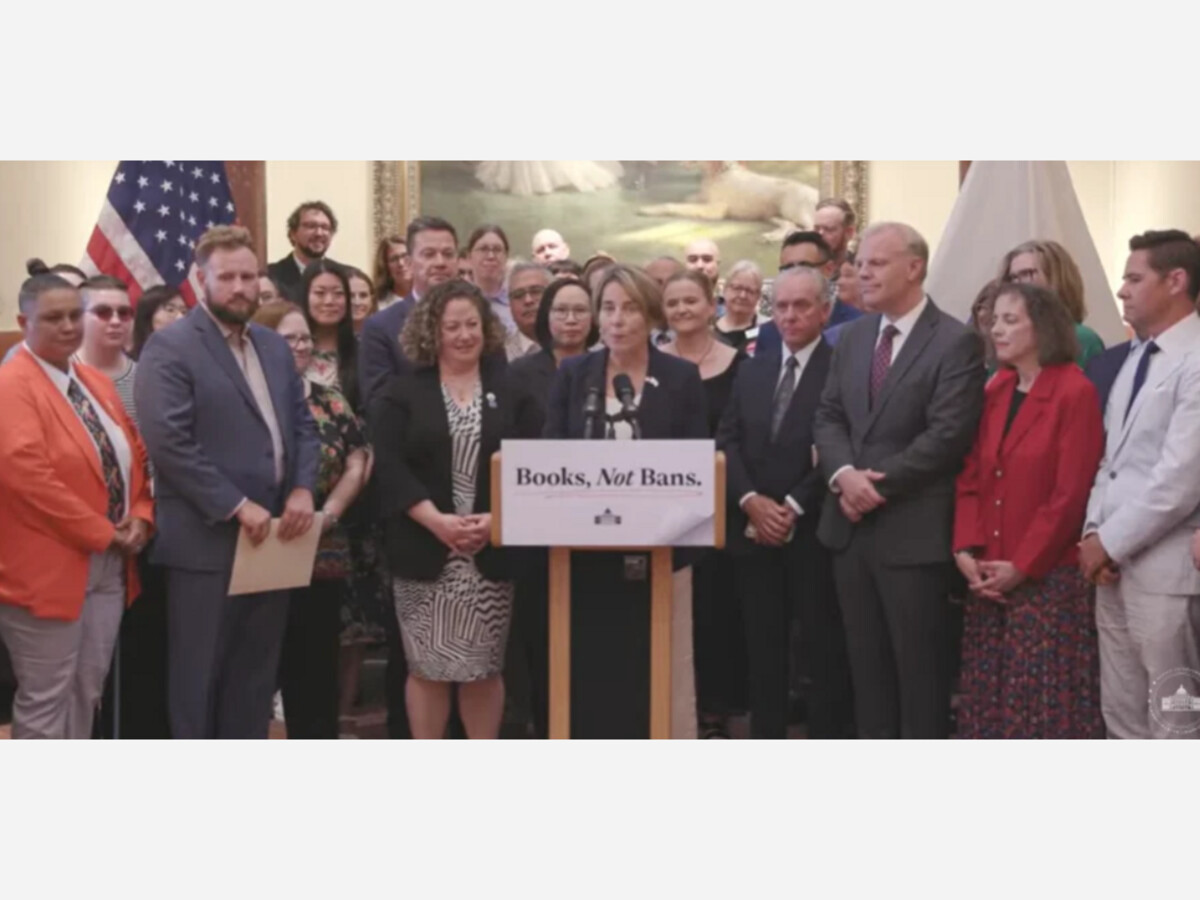
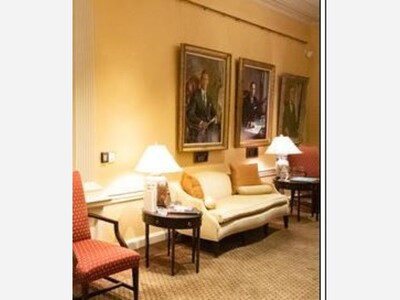
Gov. Maura Healey and other public officials stand at Franklin Public Library on Aug. 10, 2026 right before signing a book ban-related bill.
Ella Adams |SHNS
When Andrea Fiorillo became
co-chair of the Massachusetts Library Association's Intellectual
Freedom and Social Responsibilities Committee in 2019, she remembers
there being fewer than 10 challenges to library materials in
Massachusetts.
By
2025, there were 229 challenged titles, Fiorillo said on Monday.
Fiorillo, who is also a member of the Mass Freedom to Read Coalition,
noted a change around 2021, "when reports started to come in of
Massachusetts libraries receiving entire lists of books to be banned,
with a pattern emerging of challenges to books by and about LGBTQ people
and people of color."
Fiorillo
stood at a podium at Franklin Public Library --- the nation's first free public library -- to support Gov. Maura Healey's signature on a bill (S
3241) establishing a process for how library materials are able to be
challenged and removed in Massachusetts, and laying out criteria for
school library teachers to use when determining material
appropriateness.
Materials
can only be removed from a library after a vote by the local school
committee or charter school board of trustees following a notice, public
hearing and finding by a school personnel review committee "that the
material, taken as a whole, based on clear and convincing evidence, is
devoid of any educational, literary, artistic, personal or social value
or is not age appropriate." Only school employees, parents or guardians
or students enrolled in the school can lodge challenges. Students,
parents and guardians are able to appeal a decision to remove materials
from the library to court.
The
criteria for school library teachers to use when determining whether
materials are appropriate for a library include whether it is age
appropriate, serves an educational purpose, and is "based on the
teacher’s or employee’s professional training and not on personal,
political or doctrinal view."
According to the American Library Association's Office for Intellectual Freedom, there were 4,235 different titles challenged
in 2025, second to 2023 when there were 4,240 challenges. ALA noted
that not all book challenges are reported and that its data "represents
only a snapshot of book censorship throughout the year."
The Massachusetts Board of Library Commissioners said earlier this year that formal challenges
to library materials, programs and services have increased by 50% since
fiscal 2023, and that public libraries (not including school libraries)
in 2025 reported 33 formal challenges — representing more than seven
years combined. The board said that 86 libraries reported 309 informal
challenges to materials, services and programs.
"In
this moment, when education and free thinking are under attack, it's
really important that there's leadership coming from the states, and
that's what today is about," Healey said Monday right before signing the
bill. "We want every young person to be able to have the chance to read
freely, to think critically and to develop their own understanding of
the world — which also may include, from time to time, reading and
learning about things that they may disagree with."
The
law ensures that school library employees cannot lose their license or
professional certification or be "dismissed, disciplined, placed on
probation, involuntarily transferred, be otherwise subjected to an
adverse employment action, fined or imprisoned for the selection of
library materials when the selection is made in good faith and in
accordance with the policy established."
School
districts, charter schools and local education agencies must create a
written policy for their school libraries for how materials are
selected, how library materials and facilities are used, and how to
respond to challenges requesting to remove or restrict the materials.
The policy must be aligned with American Library Association standards
and be posted on the website of the school district, charter school or
local education agency. Challenged materials must remain on the shelves
of the school library pending a vote of the school committee or the
board of trustees of a charter school made during the outlined process.
The
districts, schools and agencies also have to file an annual report with
the Department of Secondary and Elementary Education with information
about complaints and challenges related to removing materials. The law
requires a similar report be filed by the Board of Library
Commissioners.
The House enacted the legislation on July 31 on a 152-1 vote, and the Senate enacted it on a voice vote that same day.
Carver
Republican Rep. John Gaskey cast the one vote against sending the bill
to Healey's desk. He spoke in June on the floor about a rejected
amendment, saying that "the ideological activists have decided to attack
local school boards for simply daring to protect children from
state-sponsored pornography."
Apparently in response to the bill signing, Mass Resistance, a group that believes parents need and deserve more control over what their children read, sent out an email blast, reiterating its concerns and directing attention to its website.
Education
Secretary Stephen Zrike, Sens. Rebecca Rausch, Jeff Roy, Jacob Oliveira
and Julian Cyr, and Reps. John Moran, Adam Scanlon, Sean Garballey and
Aaron Saunders were among advocates and others at the bill signing.
Ella Adams is a reporter for the State House News Service and State Affairs Massachusetts.


Overcast, with a high of 71 and low of 53 degrees. Fog during the morning, sunny in the afternoon, overcast during the evening, light drizzle overnight.