Image
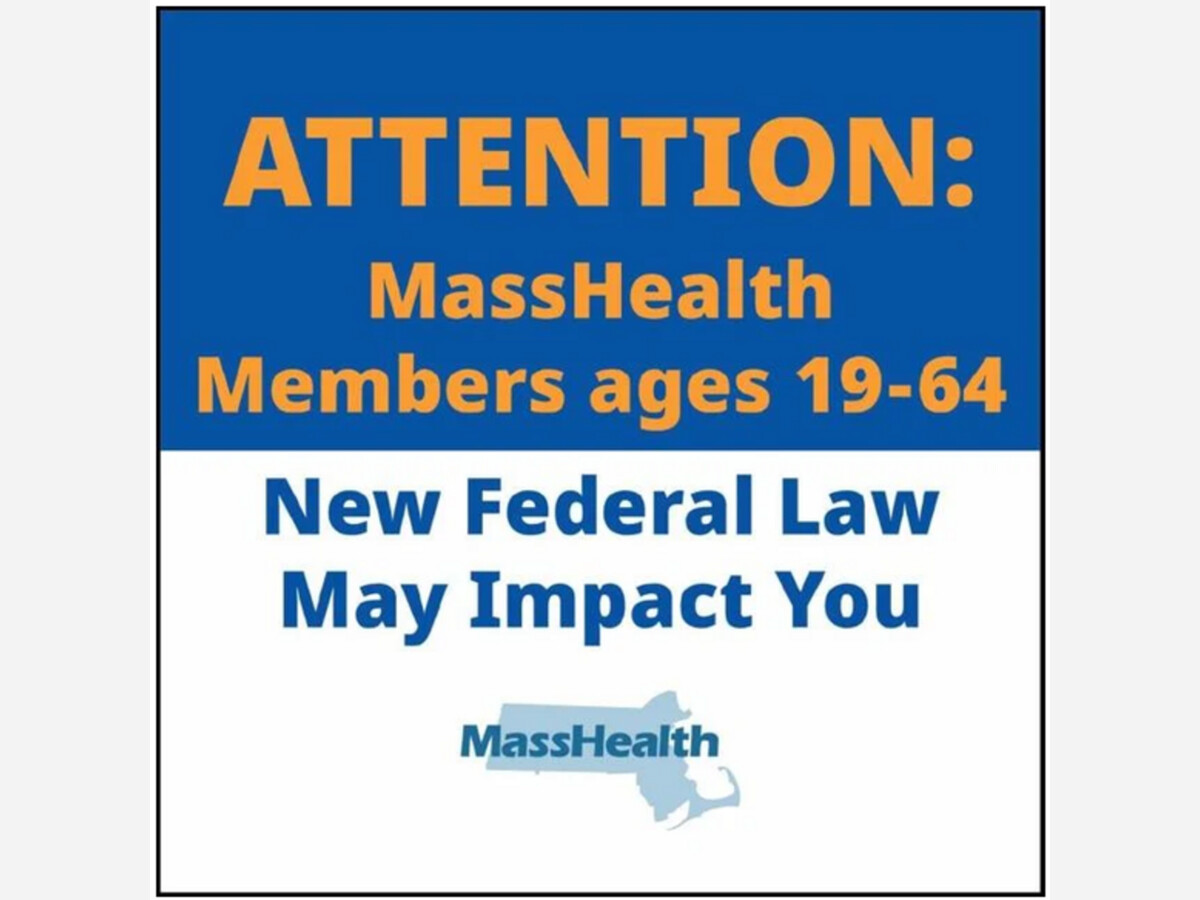



MassHealth rolled out social media graphics on Tuesday, Aug. 11, 2026 as part of a new public outreach campaign.
Alison Kuznitz|SHNS
Beginning in less than five months, more than 300,000 MassHealth members will need to satisfy work and education requirements to maintain their coverage as a result of the One Big Beautiful Bill Act that Trump signed in July 2025.
Through the federal law, President Trump and congressional Republicans have set their focus on eliminating what they describe as fraud, waste and abuse in public benefit programs like Medicaid and SNAP. In a New York Times opinion piece last year, U.S. Health and Human Services Secretary Robert F. Kennedy Jr. and other Trump administration leaders said "that too many able-bodied adults on welfare are not working at all" and implementing work requirements will "prioritize the vulnerable, empower able-bodied individuals, help rebuild thriving communities and protect the taxpayers."
Governor Maura Healey unveiled the MassHealth public outreach campaign at Make It Haverhill, a workforce and digital access program run by Community Action, Inc. The nonprofit is among nearly 50 community-based groups joining with Health Care For All to spread the word about the work requirements. The Legislature appropriated $10 million to Health Care For All for the campaign.
The effort largely mirrors the playbook that Health Care For All deployed during the sprawling MassHealth redetermination process in 2023 and 2024, after eligibility checks were paused during the pandemic.
"The success of that effort showed that trusted, collaborative, community-based outreach is essential to helping people stay covered," Health Care For All Executive Director Jennifer Lemmerman said.
Starting this week, Healey said, notices are being mailed to MassHealth members about how the federal changes could affect them and what actions they need to take to stay covered.
MassHealth has a new website about eligibility changes that take effect Jan. 1 and largely impact adults ages 19 to 64. It offers information on how to report changes to MassHealth, access help from community organizations, find enrollment assisters and visit enrollment centers. There's also a screening tool that people can use to determine whether they may be exempt from the requirements, including if they're pregnant, parenting children ages 13 and younger, have a disability or are managing certain health conditions.
Lemmerman said a targeted advertising campaign will start "very soon" across the state, spanning social media, billboards, and messaging on buses and at MBTA stations.
The campaign features a communications toolkit to alert members about changes with flyers, posters and social media graphics available in English, Spanish, Brazilian Portuguese, Haitian Creole, Vietnamese, Khmer, Simplified Chinese, Arabic and Cape Verdean Creole.
MassHealth estimates that 360,000 members will need to comply with the monthly, 80-hour work and education requirement. Members can also satisfy the requirement if they earn at least $580 monthly, regardless of how many hours worked.
"I want to emphasize these are people that deserve to be in MassHealth, but because of the incredible paperwork barriers that the federal government is imposing, are at risk of losing that coverage for themselves and for their families," Health and Human Services Secretary Kiame Mahaniah said. "The federal government would rather bury us in paperwork rather than make sure that eligible members can receive the care that they need. As a physician at a community health center, this hits particularly close to home, and it is something that is just immoral in terms of the approach the federal government is taking."
Assistant Secretary for MassHealth Ryan Schwarz said Massachusetts will ultimately end up with fewer people enrolled in health insurance "given the frankly completely ridiculous paperwork requirements and administrative hoops that the federal administration is requiring individuals to jump through to retain their coverage." Healey warned coverage losses across Medicaid and the Affordable Care Act marketplace will "hurt everybody" in the form of higher premiums.
MassHealth members will also need to deal with more frequent eligibility renewals. Healey urged members to open all MassHealth communications, including blue renewal envelopes, and ensure the agency has their current contact information. Mahaniah held up a blue envelope and acknowledged he's heard from patients who are fearful to open it and receive bad news.
"This is not one of those cases. This is a case where you really want to open the blue envelope," Mahaniah said. "This is what guarantees that we continue covering you with MassHealth."
MassHealth rolled out a public awareness campaign on Tuesday, Aug. 11, 2026 about upcoming eligibility changes and work requirements.
Mahaniah said officials are working to automatically exempt people who are not subject to the work requirements, including those who are pregnant or have dependents. He also said the state is using data matching to automatically verify people who are already complying with the work and education rules.
Schwarz said his team has been scrambling to digest guidance that the Centers for Medicare and Medicaid published on June 1 for implementing the work requirements. Schwarz became the MassHealth chief a week later.
"That guidance was surprising, if not just downright shocking, to every single state in the country that had been working, based on guidance from our federal partners, from staff at CMS throughout the last 12 months, as to what we were expected to do," Schwarz said. "And they changed a lot of that in the guidance that was issued on June 1. As a result, our team has had to change a lot of our plans and operations, and we've been working literally day and night for the last nine weeks to try and understand how we can best retain coverage for every single eligible member in the state."
During her visit to the Merrimack Valley Tuesday, Healey also held a campaign meet and greet in Methuen alongside Mayor DJ Beauregard, Sen. Pavel Payano and Rep. Ryan Hamilton.
Alison Kuznitz is a reporter for State House News Service and State Affairs Pro Massachusetts.

Sunny, with a high of 72 and low of 57 degrees. Sunny in the morning, overcast during the afternoon, clear overnight.