34° and Overcast
Image
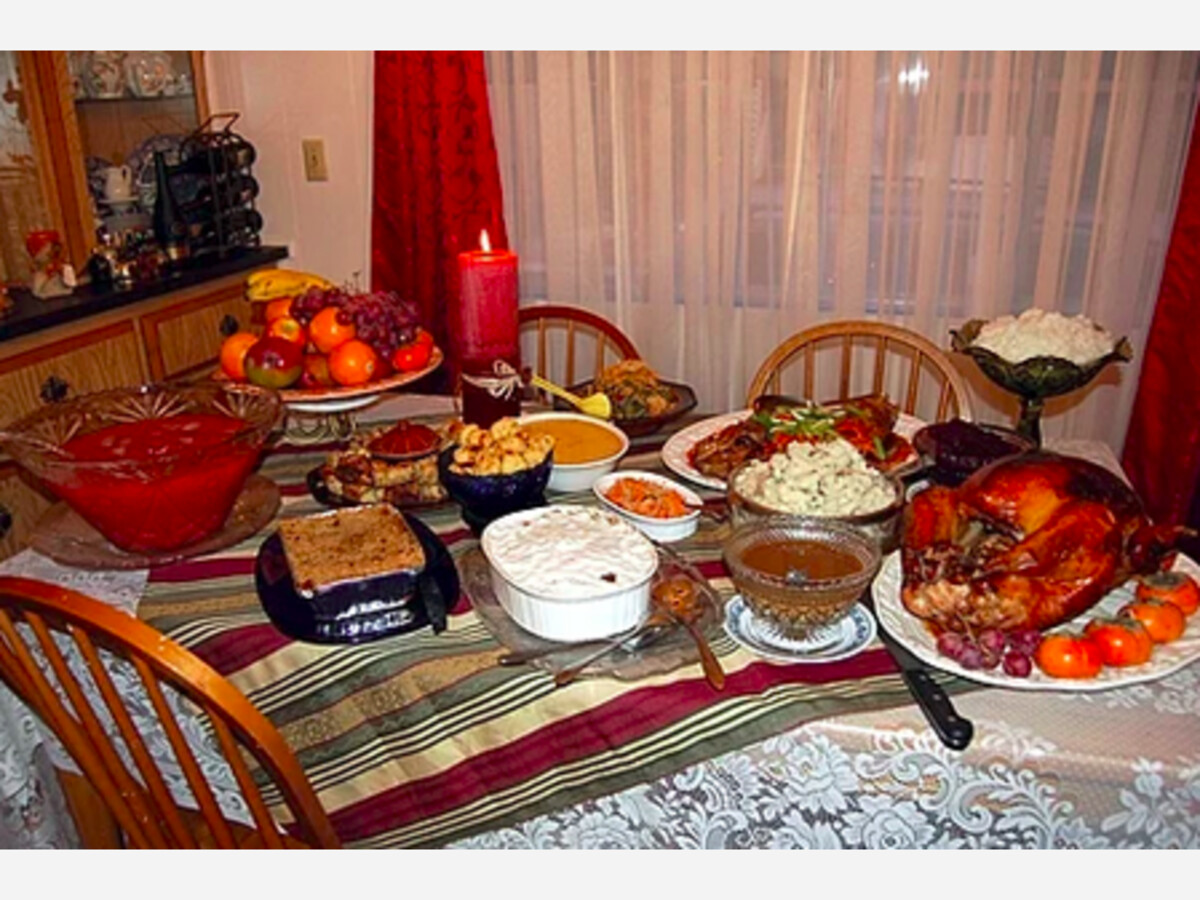



Thanksgiving; The Holiday, Born in Challenge, That Makes Us All Yankees and Cousins at That
By James C. Johnston Jr.
There are many stories as to how the first “Thanksgiving” came about. All of them are charming, and all of them seem to have some degree of validity. Surviving a savage winter during the days of what has been called the “Little Ice Age”.
The “Little Ice Age” lasted roughly from 1300 C.E. to about 1850 C.E. This cooling of earth profoundly influenced such historic events as: Napoleon’s crossing of the Alps in the late 18th Century, Washington’s hardships experienced during the American Revolution at Valley Forge, the failure of the Vikings to remain alive in Greenland in the 14th Century, and the horror of the Pilgrim’s experiences settling the New World in 1620.
Just surviving the unseasonable cold without proper shelter in 1620’s, was fraught with shock and horror. Because there was no Gulf Stream warming-effect in New England, the climate was far more savage than than was the climate of the Pilgrim’s native village of Scrooby in England. The death rate among the settlers of Plymouth was in excess of fifty percent in that first terrible winter. Yet millions of Americans, including myself, are living descendants of that handful of hearty Pilgrim settlers who survived the winter of 1620-1621.
Now, about “The Saints and Strangers” thing. I am sure that most of you are unfamiliar with this expression, but members of the Pilgrim Church were styled “The Saints” and the non-Separatist Saints were called “Strangers.” To make things even more confusing, “The Pilgrims” had no idea that anyone would ever call them “Pilgrims.” This term would not be used for more than a hundred and fifty years later. These People, from the East Anglian Village of Scrooby, were frequently called “Brownists”, because they followed the teachings of Rev. Brown. Most of the time, they were known as “Separatists”, because they had separated themselves from the Church of England. They did not see themselves as “Puritans” either although clearly they shared the Puritan-Calvinist view of the world for the most part. After The Great Synod of 1646, recognizing that they had so much in common from a religious point of view, the Pilgrims and Puritans did merge into what became The Congregational Church. This church embraced its Calvinist roots initially, but over the next three centuries it became a very different faith which embraced its intellectual side, became much more humanitarian, anti-slavery in its outlook, and more reformist and a much more progressive social and cultural institution.
Returning to the subject of that unseasonable North Atlantic voyage to North America, delayed by endless frustrations, false-starts, and resulting delays, Fall seasonal storms, and the over-long voyage itself, during which the sailors of The
Mayflower abused the settlers because of their religious non-conformity, which was seen as a species of “Odd Behavior” worthy of ridicule. This was the height of the Mini-Ice-Age, and even measured against that very cold and raw reality, the winter of 1620 was colder still.
Among the ignorant masses of unsophisticated people, like those who made up the majority of the Mayflower’s crew, anything strange to their social and/or philosophical experience was considered “Fair Game” for ridicule. Human nature remains constant through-out all of history it would seem.
During the three month voyage from England, the 102 Pilgrims were crowded aboard a truly tiny ship which was only 102 feet long. This was because the consort ship to the Mayflower,
the much smaller Speedwell, leaked and had to return the little fleet to England. Passengers were forced to crowd onto the over-burdened Mayflower, a few more would-be settlers had to stay behind on England, and then out the unhappy expedition set again now very late in the season. More than a few who had sampled the hardship of migration on either Speedwell or Mayflower were happy to abandon the adventure altogether. I had at least two ancestors on the Mayflower back in 1620, John Alden, who among his other duties was keeper of the beer, and Pricilla Mullins who was a servant to Mrs. Captain Myles Standish, who would command the colonies’ armed forces. Pricilla would marry John, and they were very happy, fruitful, and multiplied. They never lost a child to death! This was very unusual considering that half of all people born in New England in those days were dead by age twelve. If you survived your first dozen years of life, you had more than a little chance of reaching the ripe-old age of three-score and ten!
Most of the time, there was no fire for heating cooking or much of anything else, because of the brutal tossing of the ship. There was no privacy to speak of onboard either, but there was constant cold in that bitter September, October, November, and December months spent on the ship during the Mini-Ice-Age Atlantic crossing. And even after Mayflower’s arrival in New England far to the North of where she was supposed to have made land-fall hundreds of miles to the South, life on that ship remained horrible as the colonists sought out a suitable place to build their village.
The question is, and has always been, did Captain Christopher Jones, the master if the Mayflower, take a bribe from the Virginia Company or some other financial interest to dump the Pilgrims to the very cold far North as far away from Virginia as possible? The other question is, was Christopher Jones just a very bad navigator. He too was forced to remain in Plymouth longer than he intended. It seems that his very macho crew also began to fall to exhaustion, cold, and disease and began to fall sick and die. They were largely nursed by the very people whom they had tormented for their unconventional religious beliefs. Some of these sea-going-tough-guys later apologized to the “The Separatists” or “Saints” for their bad behavior once they had experienced the “Saints” kindness.
As it was, Captain Jones did not return to England until the winter had passed. By that time a substantial percentage of the 102 settlers had died. The surviving men married the surviving women setting-up new family dynamics out of the awful necessity to live and carry-on. These new marriages were civil rather than religious affairs, and the protection of property and the rights of children were major consideration, even though these people really didn’t have very much in the way of material goods.
My Professor of United States History, a really great historian by the name of Dr. Jordan D. Fiore, gave us a piece of sheer wisdom by way of his interpretation of why “The Plimoth [original spelling] Story” was held in such high regard, and that was because “It is such a Great Story”!
I remember all the stories I have been told about the Pilgrims over the last eighty years from the time I was a toddler of three. It kept changing and evolving as more actual information, legends, mythology, social history, and facts “Most Horrific” were added to the whole “Pilgrim Experience”. I would recommend a book which is by now a well-recognized classic in the field of “Pilgrim Studies”, Saints and Strangers, by George F. Willison and published by Reynard & Hitchcock in New York in 1945. Its full title is Saints and Strangers Being the Lives of the Pilgrim Fathers & Their Families With Their Friends & Foes and Account of Their Posthumous Wanderings in Limbo, Their Final Resurrection & Rise to Glory, & the Strange Pilgrimages of Plymouth Rock.
Now there is a title for you to conjure with leaving no doubt as to what this scholarly tome is all about. As you can gather this rather pretentious title is typical of works of scholarship which are most often demanded as part of the requirement for an advanced degree as a sheer exhibition of scholarship academically generally known as a thesis. The author is also exercising more than a modicum of humor here as well. The truth of the matter is that this book is not only most informative for the time, but it is also a great deal of fun and most likely can be found on line or in most New England Public Libraries unless some foolish and officious individual has deaccessioned it at a book sale designed to “Clean-out old decadent trash” in a book sale to make room for something more trendy. Sometimes even flogging is far too lenient punishment for such an awful transgression against real scholarship! And a further note, 17th century books frequently had titles that were so long and descriptive that they took up the entire title page.
Any book by that great social historian and journalist, Alice Morse Earl concerning New England history is well worth reading, because her scholarship covers everything from the Lizzie Borden Fall River Murders to the Tales from the Wayside Inn. In November, everybody is invited to be a Yankee and to feast with as much gusto as they can manage. You do not have to be a Pilgrim Mayflower
descendant to celebrate this holiday. Although without knowing you, you may very well be among that number. The funny thing about this holiday is that the Saints and the Strangers among them had no idea that they were called “Pilgrims” or that this very popular holiday of Thanksgiving, featuring great groaning tables of food, was so weirdly named.
In the early 17th Century, a “Thanksgiving” was a very serious observance most often in a place of worship where thanks was given for being delivered from a siege, battle, victory in battle, or some related relief from danger. Feasting was no part of a “Thanksgiving”. The whole celebration thing, connected with the newly named Pilgrim Fathers and Mayflower adventure, came along later. In 1820, there was a huge celebration held in Plymouth, Mass. noting the bicentennial of the Plymouth Colony. For this feast special dishes were made in the Staffordshire District of England. I have been collecting these historic plates for the last seventy years, and I only have about seven pieces. I suspect that more than 90 percent of the original number of these lovely pieces of crockery have been broken and tossed away over the last 206 years.
I suppose that they really ought to be in a nice museum for everybody to enjoy, but many such places seem unwilling to accept such donations. It is hard to find local museums who actually want museum pieces these days, and the few that are around do not seem interested in having any historic exhibits! As Louis Carroll would say, “Curiousier and curiousier.” Of course, the characters in “The Alice Books” are most delightfully mad.
The Pilgrim Fathers were celebrated as a result of The Civil War. In 1864, President Abraham Lincoln thought that the celebration of the Plymouth Adventure about harvest time might be a national day of unification. In 1864, he established Thanksgiving as a great, if not “The Great” national holiday. For that I am grateful. The Pilgrim descendants are not a very exclusive club. It is estimated by The General Society of Mayflower Descendants that as many as 35,000,000 people of all races, colors, and creeds are living Pilgrim Descendants. That’s one out of every ten Americans living in the country today, but who knows who is who? So, I like to think that everybody living in this country is my cousin and a fellow Pilgrim Brat! That is why this holiday belongs to everybody my Dear Extended Family! I love you all. Have a great Thanksgiving!


Overcast, with a high of 48 and low of 35 degrees. Overcast in the morning, patchy rain nearby in the afternoon, moderate rain in the evening, overcast overnight.