

Image
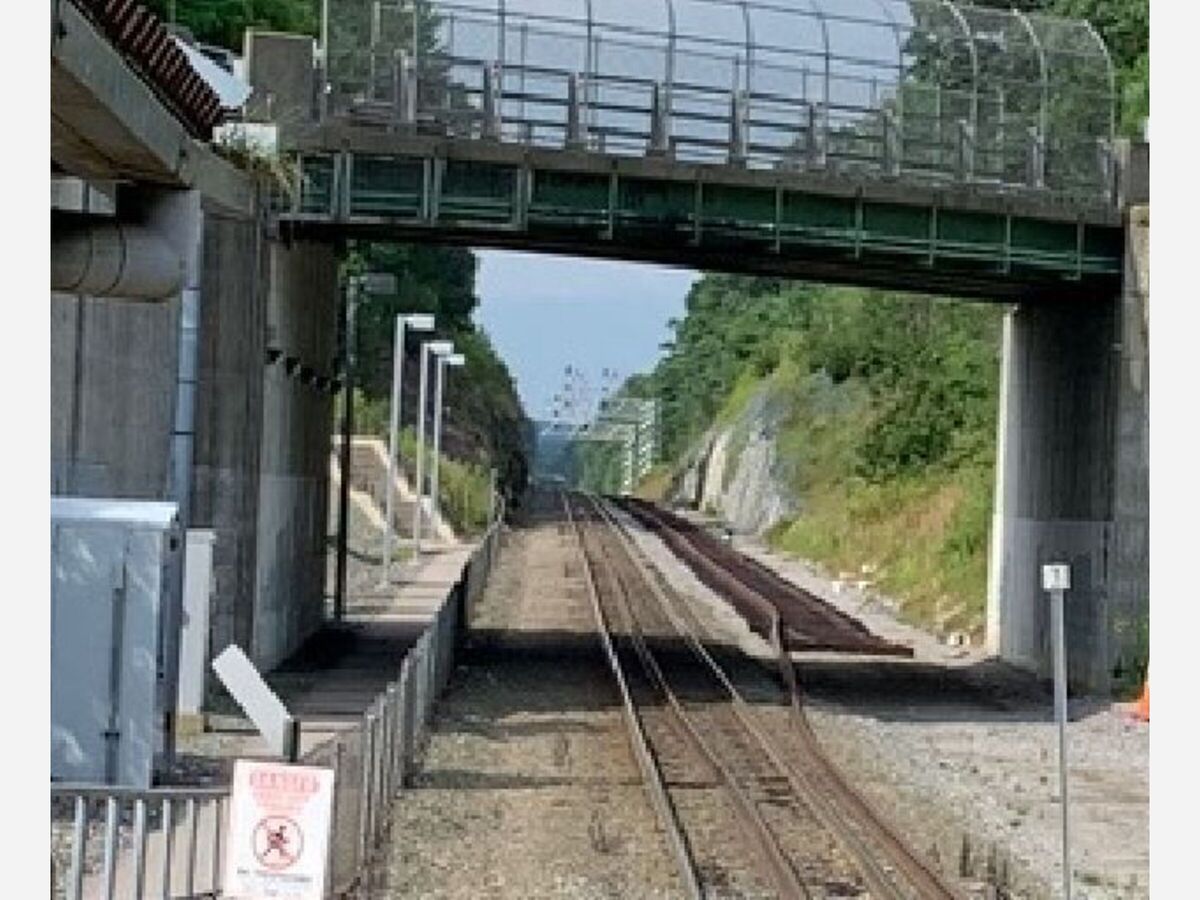
Above, a summer-time image shows the incomplete double tracking at Norfolk Station.
Flush with cash, at least for now, the troubled Massachusetts Bay Transportation Authority (MBTA) has announced plans to reallocate up to $500 million in operating funds to support critical one-time capital investments “while still ensuring a balanced budget through FY23.”
In a “letter to stakeholders” of the MBTA, shared by Franklin State Representative, Democrat Jeff Roy, the agency stated that “$89 million will go toward preserving the existing capital program, including additional funds needed to support the Franklin Double Track and Signal and ATC [automatic train control] Implementation projects, replenishing the surplus/contingency fund to support any future COVID related (materials and labor) cost increases, and advancing the full scope of the Tower 1 Interlocking Early Action project.”
Roy has made the continued improvements on the line, aimed to boost capacity and reliabilitiy, a priority since the agency put the project on ice in 2021. But, he stressed, it was not a solo effort. “This is something the delegation has been working on for several months and I am happy to report that it has led to a good result for our community,” he said.
Another “team member” was Norfolk State Rep, Republican Shawn Dooley. “Having the double track will mean so much for the reliability of the commuter rail in our communities. Now when there is a problem, area residents won’t be held hostage waiting for the repair to take place- a new train will be able to come in and keep things moving,” he said. “It has been a team effort and it has been awesome working with Chairman Roy on getting this project back on track; pun intended,” he said.
On Thursday, MBTA General Manager Steve Poftak said the spending targets important behind-the-scenes improvements at a time when one-time dollars have created new flexibility for a transit agency that stares down budget gaps year after year.
"If you're out on the system, visually, you know there's a number of additional investments that we need to make," Poftak said. "We also know that we are facing a shortage of capital funds that is particularly acute in the middle of the upcoming decade. This $500 million allows us to at least begin addressing some of that shortfall, and it allows us to make some important investments across safety, in our workforce, and on some important projects, particularly in bus."
Poftak and his team plan to deploy the funding in the coming months, and while the agency's board of directors did not need to approve it with a formal vote, its members signaled they are fully on board.
All of the money set to be reallocated comes from the T's traditional revenue streams like fares and advertising. Officials feel empowered to rethink their spending approach after a trio of federal emergency relief laws collectively steered nearly $2 billion to the MBTA, money that closed operating budget gaps ripped open by the Covid-19 pandemic and ensuing plummet in fare revenue.
While it often faces budget gaps on the operating side, the MBTA has increased its capital spending significantly during the Baker administration, reaching $1.9 billion in FY2021.
Dark clouds continue to loom on the horizon, though, as legislative leaders show virtually no interest in tackling long-term funding questions at the T.
Warning of an impending "fiscal calamity," the Massachusetts Taxpayers Foundation in September estimated the agency will need as much as $1.25 billion in new annual revenue to meet its operating and capital needs just a few years from now.


Sunny, with a high of 80 and low of 54 degrees. Sunny for the morning, clear overnight.