50° and Sunny



Image
The Tri-County Regional Chamber of Commerce convened a Zoom call on Tuesday to delve into the four ballot questions that voters face this year, and Observer participated along with “technical expert,” Rep. Shawn Dooley.
Below is a summary of the presentation.
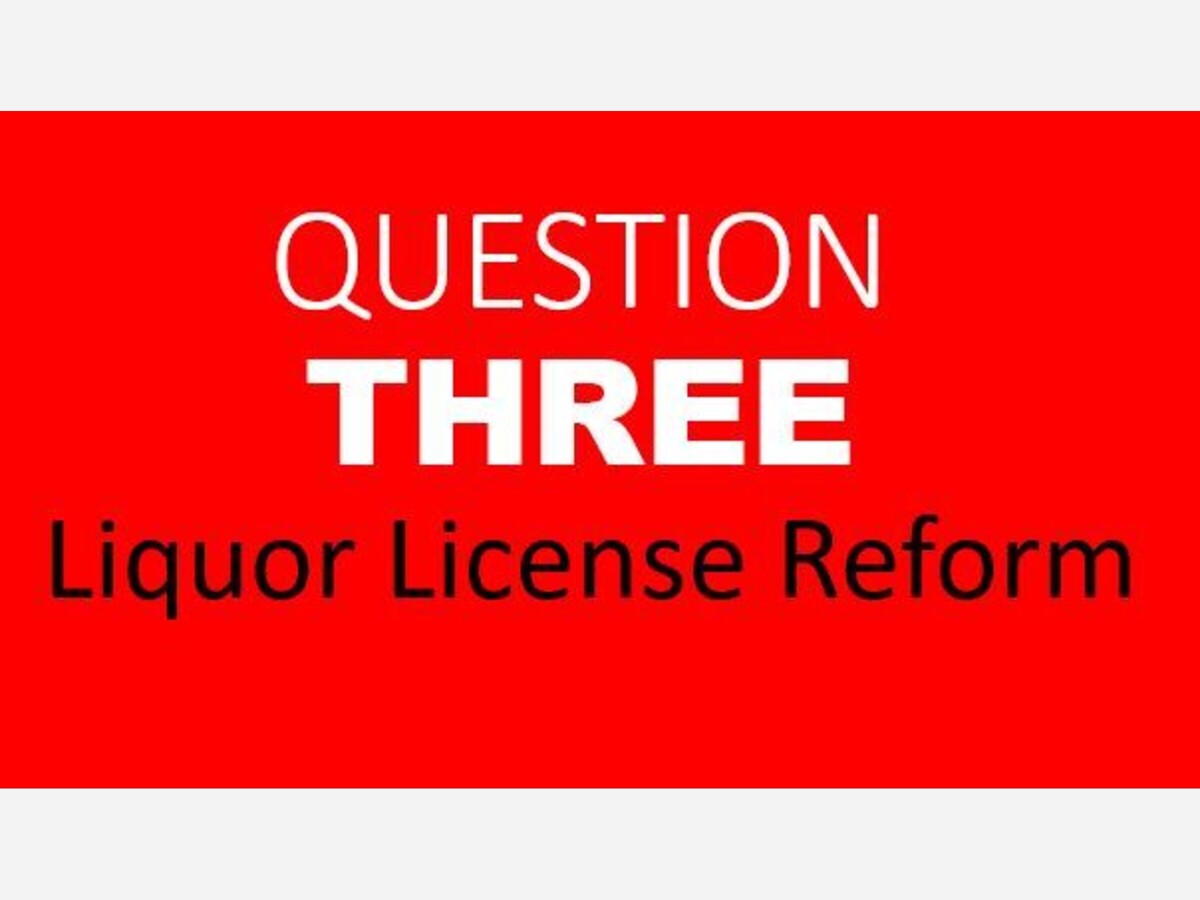
Question 3: Changes the number of licenses per establishment granted incrementally from no more than 12 in 2023 to no more than 18 by 2031 and prohibits in-store automated and self-checkout sales of alcohol
This proposed law would increase the statewide limits on the combined number of licenses for the sale of alcoholic beverages for off-premises consumption (including licenses for 'all alcoholic beverages' and for 'wines and malt beverages') that any one retailer could own or control: from 9 to 12 licenses in 2023; to 15 licenses in 2027; and to 18 licenses in 2031.
Beginning in 2023, the proposed law would set a maximum number of 'all alcoholic beverages' licenses that any one retailer could own or control at 7 licenses unless a retailer currently holds more than 7 such licenses.
The proposed law would require retailers to conduct the sale of alcoholic beverages for off-premises consumption through face-to-face transactions and would prohibit automated or self-checkout sales of alcoholic beverages by such retailers.
The proposed law would alter the calculation of the fine that the Alcoholic Beverages Control Commission may accept in lieu of suspending any license issued under the State Liquor Control Act.
The proposed law would modify the formula for calculating such fee from being based on the gross profits on the sale of alcoholic beverages to being based on the gross profits on all retail sales.
The proposed law would also add out-of-state motor vehicle licenses to the list of the forms of identification that any holder of a license issued under the State Liquor Control Act, or their agent or employee, may choose to reasonably rely on for proof of a person’s identity and age.
REASONS TO VOTE YES
Who supports question 3:
21st Century Alcohol Retail Reform Committee, Massachusetts Package Stores Association, Julio's Liquors, Deerfield Spirit Shoppe, Liquors 44, Gordon's Fine Wine & Liquors, and other liquor stores. Massachusetts Package Stores Association union also supports the measure.
The committees in support of this ballot measure raised a total of $999,152.05
REASONS TO VOTE NO
The only organization opposing this is
the Food Stores for Consumer Choice and the total raised in opposition support was only $12.50. [This figure has risen into the millions recently due to the support of a large, out-of-state alcohol retailer]
Questions from zoom call audience:
QUESTION: Can you explain it a bit and the implications of a yes or no vote in simple terms and how it affect small businesses like local liquor stores?
ANSWER: A yes vote would raise the statewide limit on the number of licenses that a single merchant might hold for the sale of alcoholic drinks, as well as beer and wine for off-premises (non-restaurant and bar) use.
It would also include prohibiting retailers from allowing customers to self-checkout, allowing retailers to accept out-of-state drivers' licenses as proof of age.
It would include a new system of calculating the fine a liquor store would pay instead of suspending a license due to a breach of the law, like selling to minors.
QUESTION: The ads are setting this up as a David vs Goliath question (small businesses vs large chains). Is that true? It puzzling that all small liquor stores want us to vote yes on this…
ANSWER: It is a compromise. The smaller stores and larger stores within the state want different things but this measure is a compromise that smaller stores can live with. Bigger stores were ready to go along until a major out-of-state company came in with major funding for “no.”
QUESTION: The ballot question 3 has several provisions: increasing certain types of licenses, allowing out-of-state IDs for alcohol purchases, and modifying the fine structure in lieu of license suspensions when there are violations. Are all of these provisions actually related to each other? If so, how? Or was this a process of bundling several unrelated provisions other than they all touch on alcohol?
ANSWER: That pretty much it. Like the old proverb about making law being something like making sausage – better not to watch! This ballot measure was the product of many meetings and attempts to smooth over inherent conflicts. So, the elements of it don’t necessarily seem to fit. For example, the way fines are calculated is good for small liquor stores, bad for big supermarkets that sell liquor!
QUESTION: Why are all the local liquor store owners asking the consumers to vote yes? How is this advantageous to them? Most people want to support local businesses, but this does not make much sense…
ANSWER: In the age of big box stores, smaller businesses face challenges. The association that represents the many smaller independent package stores worked to stave of further weakening or even elimination of some of the current restrictions on how many licenses, etc. Larger companies would be very happy to eliminate all restrictions. It that happened, the smaller and ‘mom and pop’ size stores would probably be forced out of business. So, the smaller companies agreed to let in more of the big stores. Confusingly, the “NO” campaign, mostly funded by Total Wine, a giant company from Maryland, talk about protecting family businesses (which in most people’s minds means small business) but they are in fact a family-owned business, but a very large one!


Moderate rain, with a high of 51 and low of 34 degrees. Sunny in the morning, overcast in the afternoon and evening, clear overnight.