14° and Clear



Image
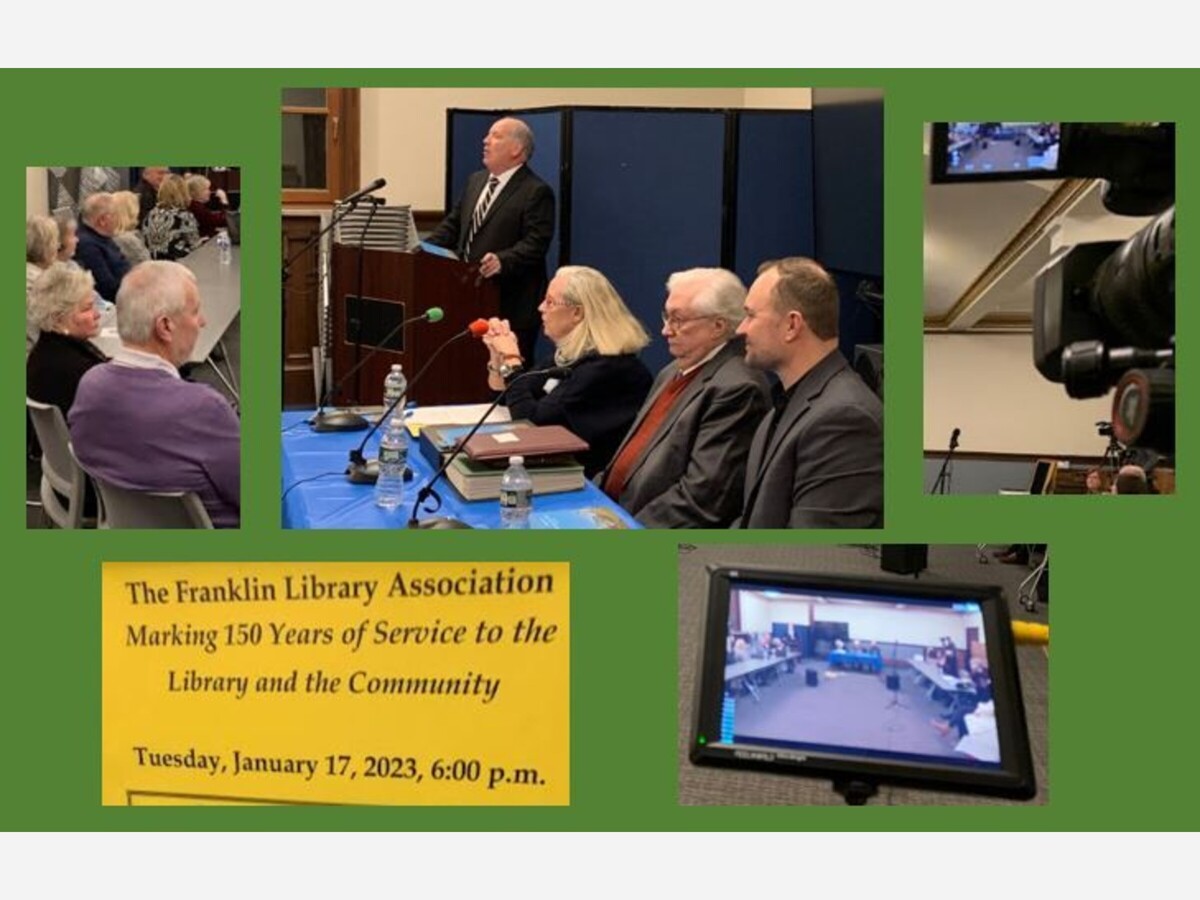
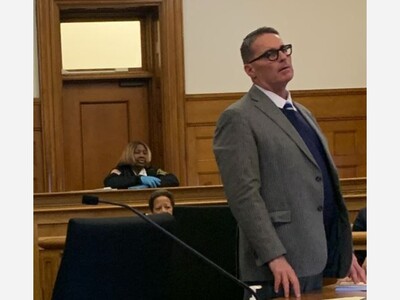
Above, center, in the background, moderator Scott Nolan, president of the Franklin Library Association. Panelists from back to front, Patricia Saint Aubin, James C. Johnston, Jr., and Rob Lawson.
Tuesday evening, the ground floor meeting room at the Franklin Library was packed with library devotees: members of the the Friends of the Franklin Library, the Library Board, the general public, and the board members of the Franklin Library Association, which was celebrating 150 years of incorporation and the release of their new book about their history and that of the library itself.
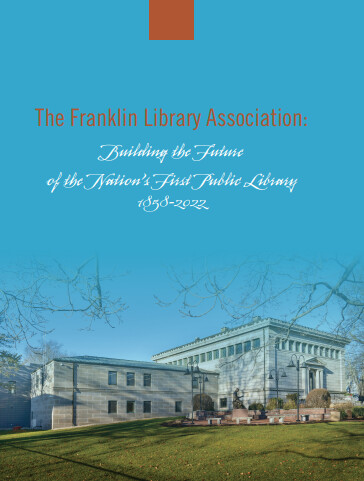
The event began informally at 6 PM. Later, Franklin Library Association President Scott Nolan, welcomed attendees and briefly recapped the history of the Association, originally launched in 1858 to find a home for the books donated by Ben Franklin and provide services to the public. Nolan noted that philanthropist Oliver Dean, later founder of Dean College, assumed presidency of the Association in January of 1859 at the age of 76.
Nolan then recognized the current board and some of the latter-day leaders who had been crucial to the association and library, and discussed the work done during his 16 year tenure -- especially the restoration and preservation efforts that the FLA helped to fund.
Nolan recognized Dean President Ken Elmore, and Dean Chancellor Ed Augustus and presented each with personalized leather-bound copies of the book, to underscore the long and close collaboration between the college, the community, and the library.
He then introduced the panelists who were invited to share some of the wider history of libraries and comment on the future of libraries in the 21st century.
The first speaker was Patricia Saint Aubin who holds a BS in Accounting and MA in American History from Providence College. Currently, Saint Aubin, a Norfolk resident, is completing a PhD in Humanities with a concentration on Colonial Providence, the twenty-five years leading up to the American Revolution, at Salve Regina University. Her research has included studies of the Providence Library Company (1753), which was influenced by Benjamin Franklin’s creation of the Library Company of Philadelphia (1731.)
She noted that the Providence Library Company was integral to the city's growth and development into the principal entrepot of the colony. She also studied the roughly 300 books that the Company purchased and noted that a significant number of titles were identical with those that Dr. Price selected for the Town of Franklin, at the request of Dr. Franklin. These titles, she noted, were deemed vital for those thinking about and seeking to build a democratic society.
James C. Johnston, Jr., was next. He earned his BA and MA degrees in history from Bridgewater State University and was a high school teacher in Franklin for over thirty years. He has written for several local publications, including the Regional Recorder, the Milford Daily News, and the Franklin Observer. He currently lives in the historic Oliver Pond House (1760) in Franklin, and is a former selectman, chair of the town’s 1978 bicentennial commission, and chair of the Town Council. He spoke about the unique talents of Dr. Franklin and passed around an 18th century eglomise silhouette of Dr. Franklin. He later displayed examples of the first US stamp, which featured an image of Franklin.
In attempting to convey Franklin's genius, he spoke initially about Franklin's relationship with the printed word -- as a reader and as an assistant in his older brother's print shop. He then enlarged on the greatness of some of the other great figures in our history, ranging from Roger Williams (who knew everybody worth knowing), to Abigail Adams and Frederick Douglass.
R. A. Lawson (Ph.D., Vanderbilt, 2003) is professor of history and Director of the Honors Program at Dean College, author of Jim Crow’s Counterculture: The Blues and Black Southerners, 1890-1945 (LSU Press), brought many of the points together, citing Alexis de Tocqueville's comments about America. In particular, he summarized a contrast that the chronicler made between Europeans of his time (early 19th century), and Americans. The former, he noted, when faced with a problem, would seek a solution from a nobleman. The latter, the Americans, would instead, unite in an association -- as did the founders of the Franklin Library Association and founders of countless other association.
When it comes to the future of the library, although Lawson acknowledged that books are less numerous in the Dean library than in the past, the library still functions as a place where students can seek help and guidance in finding answers. And, he, concluded, there is a future for both libraries and the book.
Nolan brought the formal proceedings to a close at about 7:30 but many conversations were sparked among the panelists and attendees from then until the close of the library. The Friends of the Library also offered copies of the FLA book for sale to attendees.


Partly Cloudy , with a high of 25 and low of 5 degrees. Overcast in the morning, partly cloudy in the afternoon, clear in the evening,