

Image
By James C. Johnston Jr.
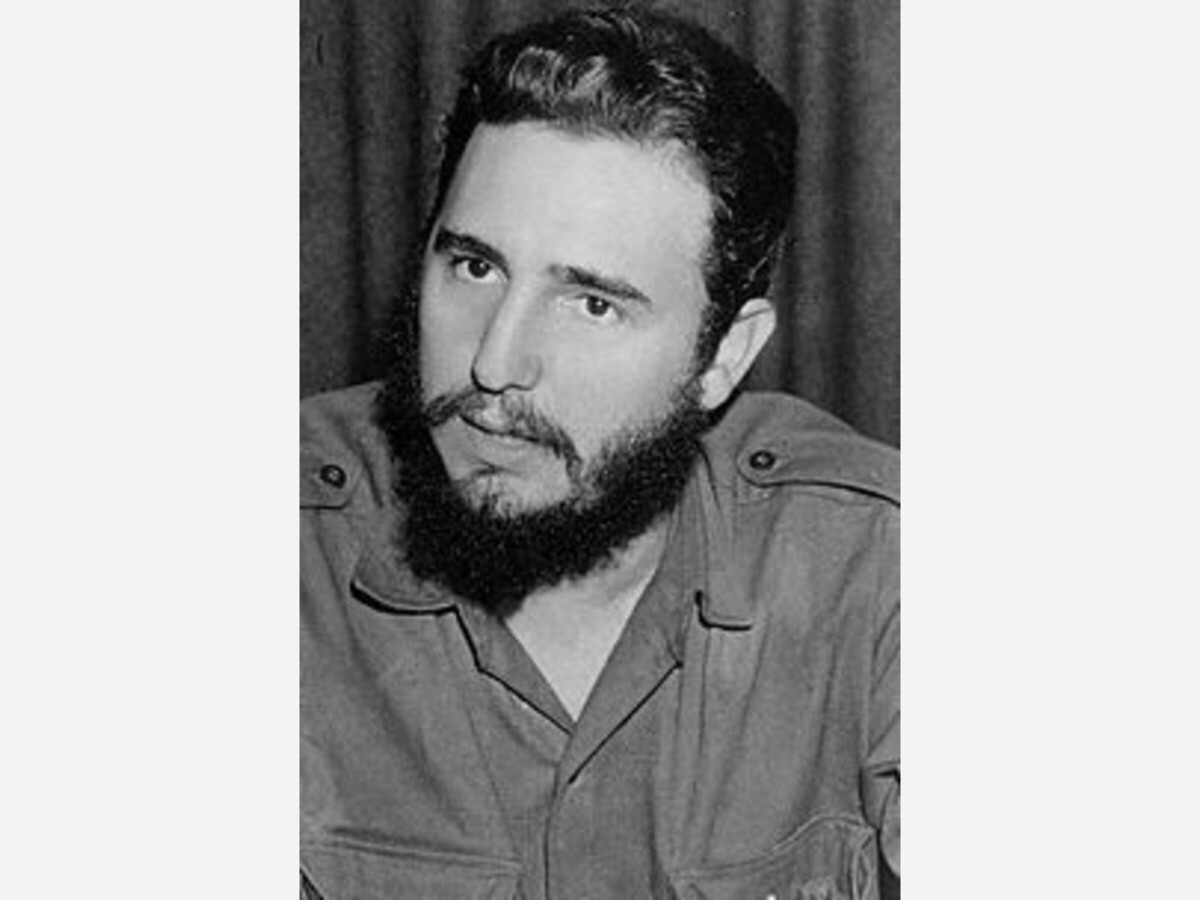
I remember Fidel Castro very well. More than sixty years ago Fidel Castro marched into Havana, Cuba and established a new highly nationalistic and communist government. The ultra-corrupt regime of Fulgencio Batista had flourished in its second incarnation from March of 1952 to January 1, 1959 when Castro had driven him out of the island republic for good. During Batista’s rule, American corporations enjoyed a very favorable relationship with the Cuban regime. The U.S. based American Mafia ran the nightlife and club scene in Cuba’s most popular watering holes as well as the very profitable and extensive drug trade. The essence of these times were captured very well in Francis Ford Coppola’s excellent film, Godfather II.
I think that in 1958, the most popular image of Cuba for the average American was the one of Cuba being a fun place to visit as reflected in America’s most beloved TV show of the decade, I Love Lucy. Lucy and Desi Ricardo traveled to Cuba several times on their show to let us see Ricky’s merry homeland in company with film and TV personalities Caesar Romero, Anne Southern and Fred and Ethel Mertz, their principal sidekicks. Ricky, singing Cuban Pete, set the tone for our naive national view of Cuba in these Lucy episodes. The reality was that Cuba was a very corrupt place where organized crime governed the government through bribery and granting of favors.
Historically, South America, Central America, Mexico, and Cuba had undergone the collective trauma of some 1,800 revolutions and coup d’états since the first revolt against Spain in Mexico in 1811. Political stability was not a major feature of Latin America’s political life. But there was something very different about Castro.
Castro was born into a very wealthy family of the sugar plantation owning class, and went to a series of very good schools in both the United States and Cuba including The University of Havana. Eventually he earned a Doctor of Laws Degree. Castro was also a very good baseball player, and it was rumored that he had even tried out for the New York Yankees and The Washington Senators. It is interesting to contemplate just how different the history of the last century would have been if this were true and Castro became a great player. I wonder what would have happened if Castro had become a multi-million dollar baseball super star. Many Cubans have distinguished themselves in the great American pastime, and baseball is Cuba’s great national sport. Ernest Hemingway sponsored a team there himself.
In late 1958, we began to hear a great deal more about Castro. By then, he had been joined by the likes of Errol Flynn and Ernest Hemingway at his headquarters which gave him a bit more credibility and cachet as a proper revolutionary with world saving ambitions. Yet at the same time, I remember Boston’s Archbishop, Richard Cardinal Cushing, being one of the first prominent Americans to call Castro a “Communist.” For this he was roundly criticized. I can remember him saying, in reply to his critics in, his very raspy and nasal voice in regards to Castro and his brother Raoul, “If it walks like a duck, and if it quacks like a duck, it’s a duck!”
After the fall of the corrupt Batista regime, there was a short period of good will in this country for Castro, but it did not last long. Indeed it didn’t take long for Dr. Castro to nationalize American assets on the island including the Mafia holdings. Then there were the sham trials of anyone who seemed to be an enemy of the new Castro regime. Thousands of plantation owners, bankers, lawyers, landlords, protesting farmers, professors, teachers, the wealthy and formerly well connected in general, and journalists, as well as those deemed enemies of the people, were put on trial, found guilty, and summarily were executed or sent off to prison. The great estates were confiscated, including that of Castro’s mother. The upper class was stripped of its wealth as well as was the prosperous middle class.
I remember Castro visiting the U.N. shortly thereafter. He and his party were staying in the Hotel Theresa in Harlem and feeding themselves by slaughtering chickens and cooking them in the hotel corridor outside of their rooms. Some corporations, whose assets in Cuba had been nationalized, seized Castro’s aircraft as part of a settlement of damages suffered by them. Castro was outraged by the seizing of his plane and asked, “How are we to get home?”
Castro and his fellow Cubans were given a ride back to Cuba by his new friend, the Soviet Union’s Nikita Khrushchev who was to become Cuba’s best friend and greatest supporter, both internationally and financially. This lasted long after Khrushchev himself fell from power.
But the sharpest memory I have of Castro is, and will forever be, the part he played in the “Cuban Missile Crisis.” Castro allowed the Soviets to put thermonuclear missiles in Cuba which were potentially capable of taking out ninety percent of the United States. On a Sunday afternoon in October of 1962, President Kennedy announced this horrible fact on national TV. I was a college freshman at Bridgewater State College at the time. On that Sunday when Kennedy alerted the American public to exactly what was going on in Cuba, I can recall going into the Men’s dormitory where I was living at the time to see fifty or more of the students on their knees praying. I think that most of them must have been Catholic, because they had rosary beads in their hands. I summarily left and walked around the Town of Bridgewater and saw that all of the Protestant Churches were jammed to the doors with people praying. The response to “The Cuban Missile Crisis” seemed to be rather ecumenical. This was, after all, the age of “Duck and Cover”, and the American public thought that “the day of reckoning” seemed to be at hand. And just maybe it was.
All alone, for the next three or four hours, I toured the whole area of this little New England college town on foot transfixed by the reaction to the president’s announcement. I found the reaction to a possible impending of mass destruction quite remarkable. During the next several weeks, as the Cuban Missile Crisis passed and people realized that the prospect of a long life may well be once again a reality, the calming effect was still slow to return. Now, I find it strange that I was so detached as an observer of these historic events and not really as emotionally invested as were most of my peers. Maybe I just didn’t fully grasp the situation in quite the same way that they did, or maybe I knew that in that sharp peasant’s mind of Nikita Khrushchev there was the knowledge that in a thermonuclear Third World War, there would be no winners either Communist or Capitalist. I hope that Mr. Putin is of the same mind.
There is no doubt that Fidel Castro was a Cold War Communist just as Cardinal Cushing said he was at the time that Castro came to power. I don’t know what Castro’s new friends, Errol Flynn and Ernest Hemingway would have thought of their pal as he evolved into the most prominent Communist Leader in the Western Hemisphere. After all, both Flynn and Hemingway were dead by the time of the Cuban Missile Crisis, and Cuba is still an enigma more than 60 years later and still less than a hundred miles off our coast.
James C. Johnston Jr. is a former Franklin selectman, Franklin High School history teacher, and author. Article copyright James C. Johnston, Jr. 2023, used with permission

Sunny, with a high of 43 and low of 25 degrees. Sunny for the morning, overcast in the afternoon and evening, clear overnight.