

Image
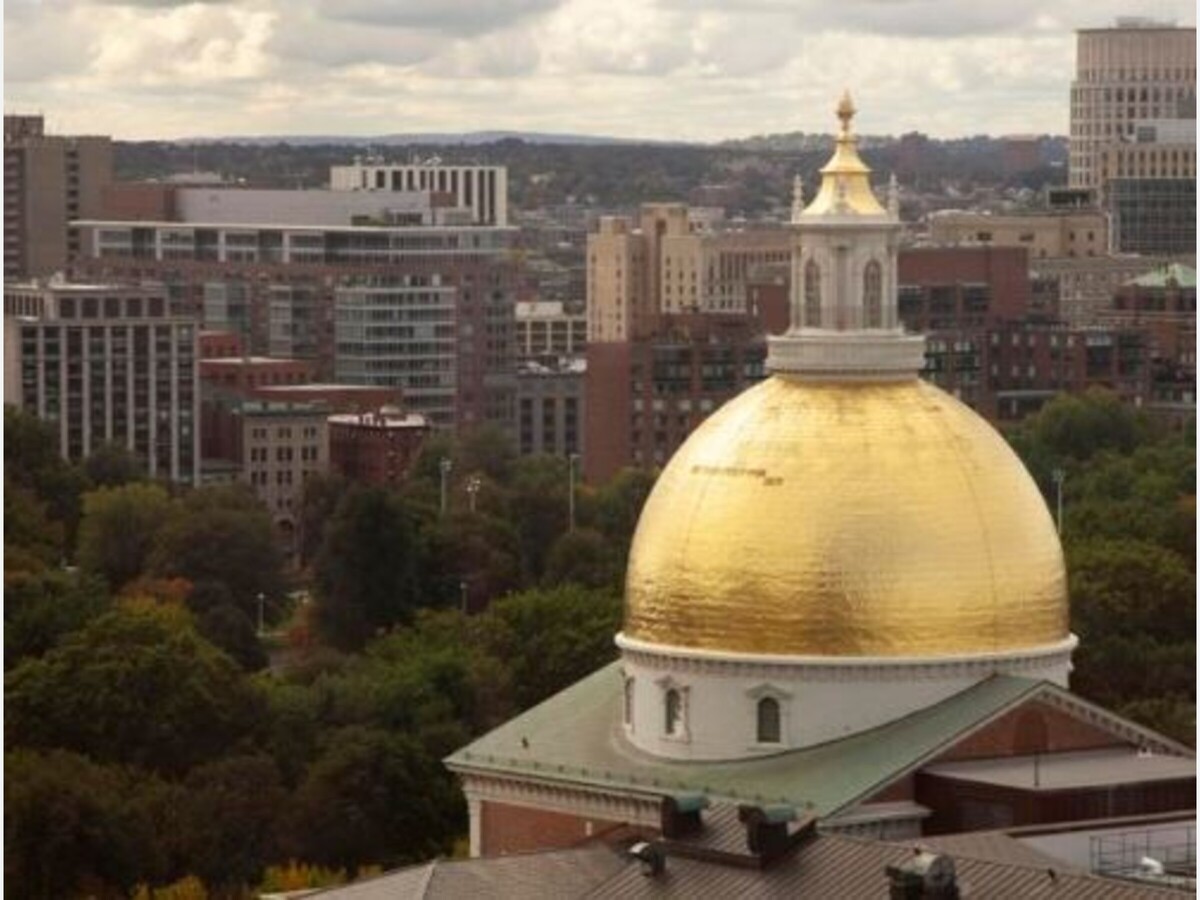
The separate scrums held back-to-back on opposite sides of the State House early Thursday morning were telling.
House and Senate Democrats downplayed the obstacles of moving their stalled supplemental budget with shelter system funding during upcoming informal sessions, but it was the latest example of the majority party showing fundamental disagreements about legislative goals and being unable to rally around a single approach in a timely manner.
Talks around a spending bill to steer money toward the emergency shelter crisis collapsed late Wednesday and the last formal session the Legislature is allowed under its rules to hold this year ended without an agreement between the House and Senate Democrats who left the pressing matter until the very last minute, and are now at the start of a holiday season recess. They now plan to more formally negotiate a compromise and if they can put their differences aside, try to get Republicans on board and pass it during the next several weeks.
"I just want to remind folks that many close-out budgets and other budgets get done in informal session. It's not that unusual for this to happen," Senate President Karen Spilka told reporters at about 1 a.m. Thursday.
Any single member has the power to block something from passing in an informal session. Republicans have been united in their opposition to the shelter funding spending bill, and Republican Rep. Peter Durant just made the issue part of his winning Senate special election campaign, but the GOP has stopped short of saying they'll force Democrats to shelve the bill until January.
Senate Ways and Means Chairman Michael Rodrigues said he's confident he can get the entire Senate on board with passing the bill in an informal, and House Speaker Ron Mariano said he planned to talk to the House Republicans about "whether or not they need another vote" given that they recorded their opposition to the House version.
Lining up the votes (or scuttling potential informal session opposition) might be a more straightforward task than actually reaching a compromise among the six-person conference committee formed in the wee hours of Thursday. The core of the disagreement is whether the Legislature should just approve money for the shelter system or also prescribe specific steps it wants the administration to take to address the crisis.
The House and Senate both agreed to fulfill a request Gov. Maura Healey made more than two months ago to inject $250 million more in the state's emergency assistance shelter system, which has already surpassed the 7,500-family capacity limit that Healey set.
But the House took the additional step of ordering the Healey administration to use a portion of that money to stand up at least one overflow site within 30 days for families unable to access shelter due to the cap.
"We will continue to work with the Senate to get to an agreement where we can protect the folks who are coming in over and above the cap. We're committed to trying to make sure that everyone has shelter, has access to shelter," Mariano said around 1 a.m. Thursday. "So that's basically what the arguments are over. How can we determine that everyone will have an opportunity to receive some sort of opportunity at shelter."
Senate leaders were far more circumspect in the way they talked early Thursday about the areas of disagreement between the branches. Asked if the House approach of dictating how Healey's team could was one of the sticking points, Rodrigues refused to say.
"We're not going to comment and violate conference protocol and comment on specifics," he said. "Let's just say that we are committed, as we said right from the start, to getting this done as quickly as possible."
But when asked if the Senate still generally supports giving the governor flexibility on how the $250 million is spent, Rodrigues said, "Yes."
On the other side of the building, House Ways and Means Chairman Aaron Michlewitz was asked almost the same questions and suggested with some frustration evident in his voice that the Senate had refused to come around to the House's approach.
"Our bill says it says what it says, and I think we're here with no agreement," he said.
While the shelter funding got most of the attention during debate and now appears to be holding up the supplemental budget, the branches included a bevy of policies in their bills that really aren't controversial -- hundreds of millions of dollars to deliver on collectively bargained raises to state employees, setting the 2024 state primary elections for Sept. 3, 2024, and including language to allow renegotiation of contracts for parts of a transmission project linking hydroelectric power generated in Quebec to the regional grid.
Mariano said "obviously there are" points of agreement between the House and Senate, but added that they did not pass a bill featuring just those provisions Wednesday night because that approach, known as reporting in part, "has a specific set of problems."



Sunny, with a high of 43 and low of 25 degrees. Sunny for the morning, overcast in the afternoon and evening, clear overnight.