

Image
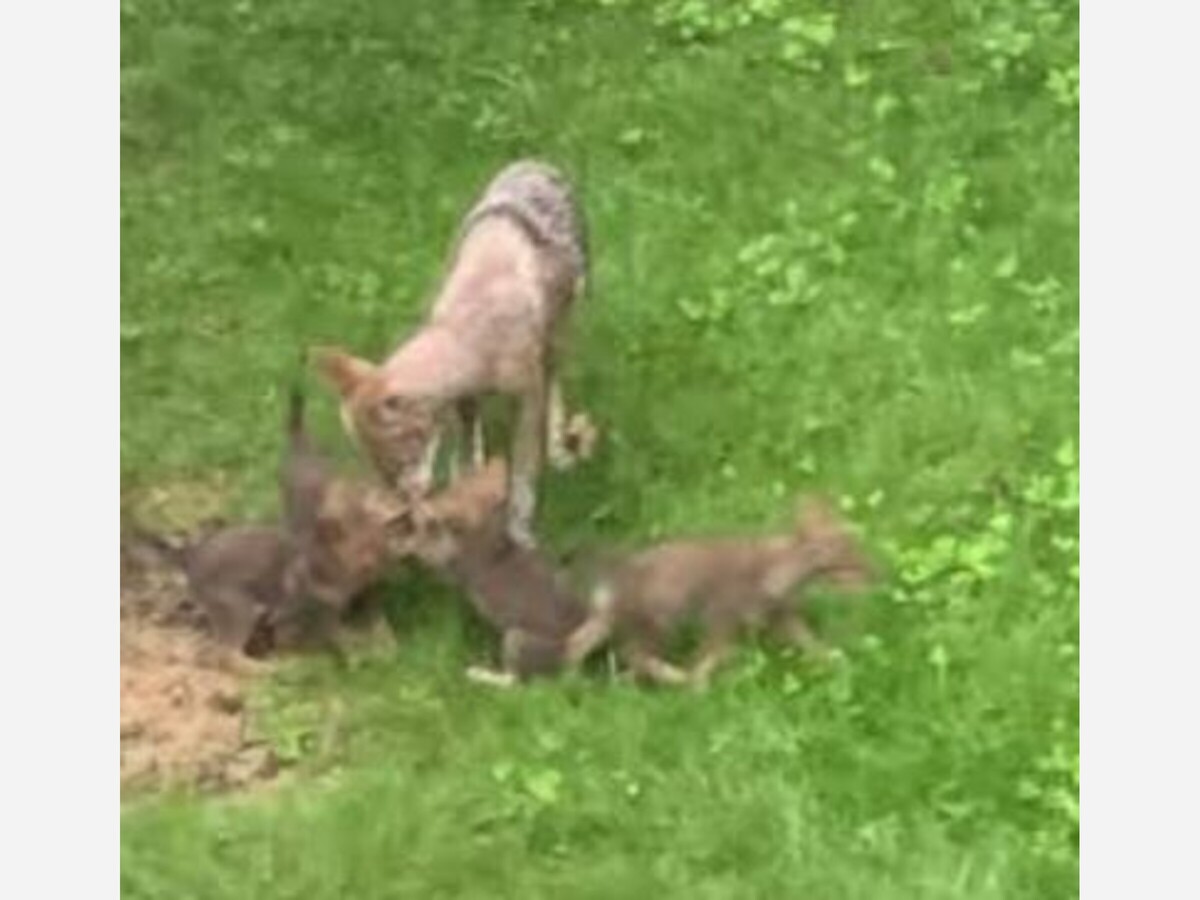
Above, a mother coyote and four of her seven pups photographed Friday morning in a downtown Franklin backyard.
The Massachusetts Division of Fisheries and Wildlife assures us that "the eastern coyote is well established throughout Massachusett"s ...and is "an important and valuable natural resource in Massachusetts.
"Coyotes are typically shy and elusive, but they can frequently be seen individually, in pairs, or in small groups where food is commonly found. They remain active year-round and do not hibernate. Coyotes communicate by vocalizing, scent marking, and through a variety of body displays. It is common to hear them howling and yipping at night, or even during the day in response to sirens and other loud noises. When one hears a family of coyotes howling, it's easy to think the area is overflowing with coyotes, but it's usually just a few coyotes with their pups. Coyotes do not howl to announce a kill; this would attract other wild animals. Coyotes howl because:
"Coyotes are opportunistic feeders, meaning they will feed on whatever is most readily available and easiest to obtain. Their omnivorous diet consists of a variety of foods including rodents, rabbits, deer, birds, insects, reptiles, fruits, and berries. They will scavenge roadkills, rodents, and birds killed by cats, as well as garbage and pet food left outdoors. In suburban areas, they have been known to prey on unprotected pets, including house cats and small dogs."



Sunny, with a high of 43 and low of 25 degrees. Sunny for the morning, overcast in the afternoon and evening, clear overnight.