55° and Clear
Image
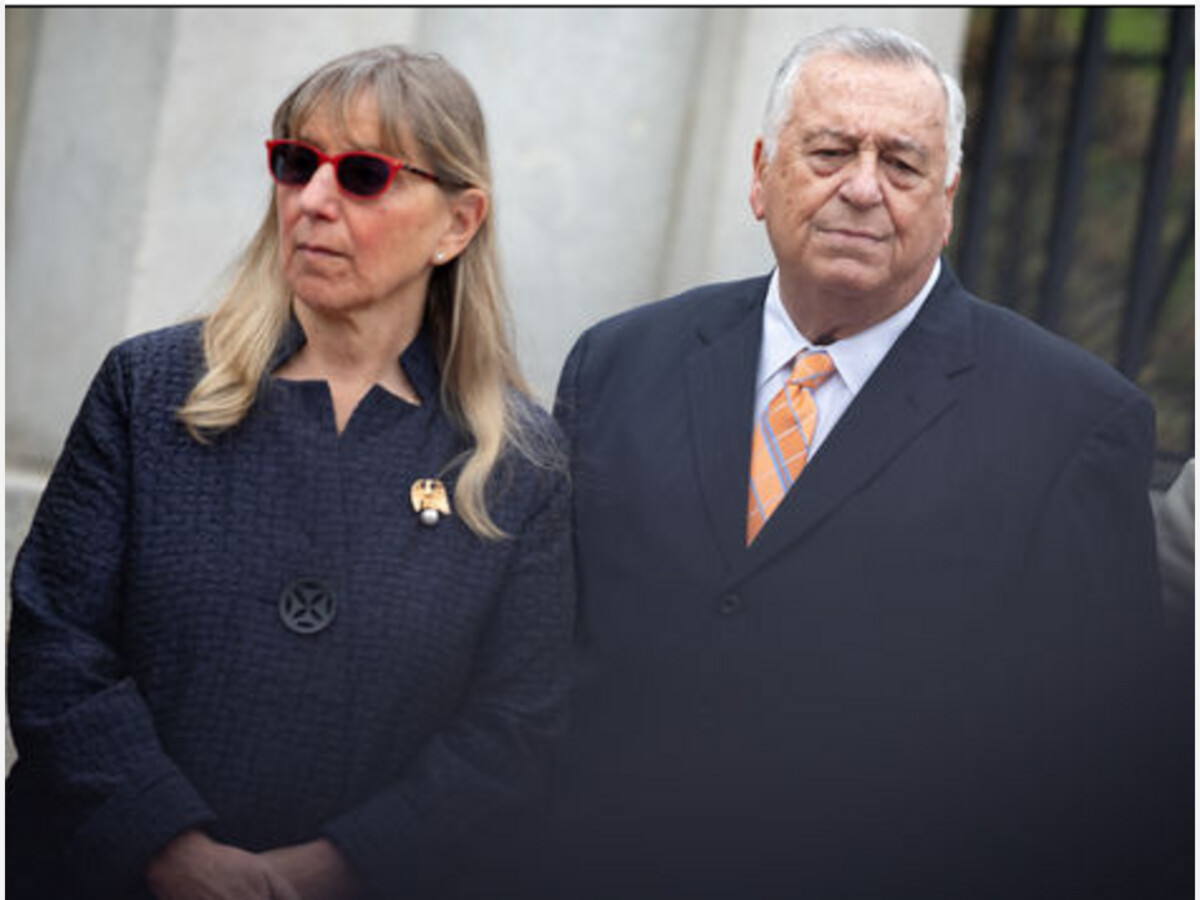



Above, Sen. President Karen Spilka and House Speaker Ron Mariano...
After long years of stonewalling and mutual eye-rolling, House and Senate Democrats suddenly appear to want to work together: passing major legislative rules reforms for the first time since before Tom Brady left the Patriots, and reaching a budget deal they plan to enact before the end of the fiscal year — something they haven't done since Barack Obama was in the White House.
The joint rules agreement (S 2545), finalized earlier this week, lays down a new roadmap for how Beacon Hill moves legislation and makes information available to the public. And on Friday afternoon, with the deadline looming, Senate and House Ways and Means Chairs Sen. Michael Rodrigues and Rep. Aaron Michlewitz announced they’d also reached a compromise on the long-overdue fiscal year 2026 budget.
"With this compromise agreement, the House and Senate are doubling down on our shared commitment to addressing the underlying budget challenges that we are collectively confronting in the face of ongoing uncertainty and federal funding impacts," the two chairs said in a joint statement.
That's subject to interpretation for the moment since they didn’t say what’s in the bill. They were sure though that votes Monday will send the deal to Gov. Maura Healey on the last day of fiscal 2025. The last time that lawmakers got an annual budget to a governor before the new fiscal year started was in 2016. That year it was also on June 30. The governor will get her 10-day review window; meaning, yes, most likely another July 1 without a signed budget.
The Legislature passed a joint rules package Thursday, something it hasn't managed to do in almost as long, since 2019. Those who negotiated the compromise say the truce in the rules war comes with transparency upgrades, reshaped committee dynamics, and a major change to the last quarter of the legislative calendar.
"This is clearly the choice of both the House and the Senate," said Senate Majority Leader Cynthia Creem, who helped negotiate the deal. "We're both pleased and happy with this report." And apparently, they were pleased enough to unanimously pass it in the Senate (40-0) while the House voted 147-2, with GOP Reps. Nicholas Boldyga and Marc Lombardo stuck to their contrarian brand.
The new rules pull back the curtain on how lawmakers vote in committee — long a black hole for public accountability — and split up joint committee decisions by chamber. That means House members vote on House bills, senators on Senate bills, with the results posted online for all to see. As Republican Sen. Ryan Fattman had put it: "How am I supposed to know how I'm represented if I don't know how my representative is voting?"
The reforms also reshape a deadline to formal lawmaking which for three decades stopped lawmakers from taking up any controversial matters during election season. That date has been baked into the DNA of Beacon Hill's rhythms, when bills either get passed or vanish into the procedural ether. But with the new joint rules in place, lawmakers will now be allowed to continue work on large bills into the fall of even-numbered years, so long as the House and Senate have already begun private negotiations on the matter. Essentially, the traditional July 31 deadline has lost some of its significance and the Legislature will be truly more "full-time."
But lest anyone mistake this for the dawn of a new age of transparency, Beacon Hill still loves its shadows. The conference committee that finalized a surtax spending bill last week technically kept both of its meetings open — the first ended with intros, the second began with signatures on a final deal, and the actual negotiations happened somewhere in the invisible middle.
Republicans were split Thursday about whether to join all 35 Democrats in the Senate to update the state's existing protections for abortion and transgender health services.
Republican Sens. Kelly Dooner, Peter Durant and Ryan Fattman were the dissenters of the "Shield Act 2.0," as the national tide continues to turn sharply against reproductive rights and gender-identity care. Republican Sen. Bruce Tarr and Patrick O'Connor joined the Democrats in approving the bill.
Senators took the vote on the heels of another rightward swerve by the U.S. Supreme Court, which ruled earlier the same day that states can block Medicaid dollars from going to Planned Parenthood. That followed a separate ruling last week upholding a Tennessee ban on transgender care for minors. And if the federal reconciliation bill pushed by congressional Republicans becomes law, Democrats warn it could all get worse — with Bay State clinics losing tens of millions of dollars, patients losing coverage, and providers and families facing more legal minefields.
Sen. Cindy Friedman, who helped write the 2022 shield law, called the bill "fundamentally about protecting our state from those outside who wish to decide how we in Massachusetts choose to deliver health care."
The bill beefs up legal protections, limits cooperation with out-of-state investigations, shields provider identities, and forces hospitals to deliver emergency care — including to those needing an emergency abortion or who are in active labor — no matter what.
House Speaker Ron Mariano said Monday his chamber may take it up "as soon as next week or the week after." But by Thursday he told reporters that "the situation is changing as we speak. The Supreme Court came in with another decision about reproductive rights and Medicaid, so it's going to be harder and harder to wind your way through this process... What we discuss today may be out the window by tomorrow."
Meanwhile, on Wednesday, attendees packed a Joint Committee on Telecommunications, Utilities and Energy hearing to standing-room-only levels for Gov. Healey’s 119-page energy affordability bill (H 4144). The bill aims to chop $10 billion off ratepayer bills over the next decade, tweak utility finance models, and open the door to new nuclear energy.
The proposal was met with admiration and some raised eyebrows.
"You guys really have canvassed ideas that are worthwhile," said Sen. Michael Barrett, who called the bill a demonstration of "sheer intelligence and ingenuity." But Barrett and Rep. Mark Cusack both questioned the long-term costs of issuing bonds to fund programs like Mass Save, instead of sticking with the usual pay-as-you-go model.
“There’s a value, presumably, in spreading costs over time to avoid spikes,” Barrett said, “but that’s a different issue than whether the all-in costs at the end of the day are higher.”
Rep. Jeff Turco had his own gripe. After installing green tech at home, he still got hit with over $2,700 in electric bills this winter. "You can’t get working-class people to go green if we’re burying them with electrical costs," he said.
Healey responded that she’s taking an "all-of-the-above" approach and is open to tweaking the bill. "People have got to be able to put food on the table," she said.
Ironic that the energy hearing came during a record-breaking heatwave, air conditioning units across the state straining and wracking up bills, and the State House at a cool 68 degrees.
One issue the governor isn’t sweating? Whether Congress should ban states from regulating artificial intelligence for the next decade — a hot-button item tucked into President Trump’s "Big Beautiful Bill."
"I haven’t focused too much on that," Healey said Wednesday, pivoting to her preferred talking point on the new technology: Massachusetts as a global hub for applied AI. She’s already rolled out a $100 million AI Hub, used ChatGPT to help write a speech, and raved about how MassDOT staff can now use AI to decode reams of regulatory text faster.
"I embrace AI, I think it’s amazing. I think it’s transformational," Healey said.
Pressed again on whether there should be state regulation, she said: "I think there’s a general acknowledgement we’ve got to have some regulation in the space ... but right now, look, I’m less focused on regulation and more focused on implementation."
On Tuesday, Healey was in Braintree pitching her $2.9 billion environmental bond bill, loaded with dollars for everything from flood control and clean water upgrades to policies designed to streamline environmental permitting for housing and infrastructure.
"We cannot count on the president or Congress," Healey said, invoking the specter of federal cuts. "In the face of that, it’s all the more important that we take action like the action that we’re taking today."
The bill proposes $401 million in borrowing for dams and flood control projects, $315 million for the Municipal Vulnerabilities Preparedness program, $304.5 million for land stewardship and conservation, $505 million for clean water and PFAS mitigation, and $764 million for Department of Conservation and Recreation upgrades.
The Nature Conservancy policy director Steve Long called it "the most holistic approach I’ve seen across four environmental bonds."
ODDS & ENDS: The governor is bringing on a new business czar: Eric Paley, venture capitalist and investor in companies like Uber and Whoop is joining her Cabinet as economic development secretary in September ... Lawmakers spiked an amendment that would have banned transgender youth from playing sports consistent with their gender identity, but members of the LGBTQ+ caucus say the procedural mechanism they used "hit a nerve" ... Healey says she has "no idea" whether Trump violated the U.S. Constitution by ordering U.S. military airstrikes against Iran ... The first school district to ever leave state receivership gains back local control on July 1 ... App-based drivers are raising alarms are driverless cars as Beacon Hill ponders their future in the state.
SONG OF THE WEEK: After six years and considering their perspectives from both sides now, lawmakers finally have a fiscal year 2026 budget resolution and joint rules compromise.


Partly Cloudy , with a high of 56 and low of 37 degrees. Sunny during the morning, partly cloudy in the afternoon, overcast during the evening, clear overnight.