25° and Clear
Image
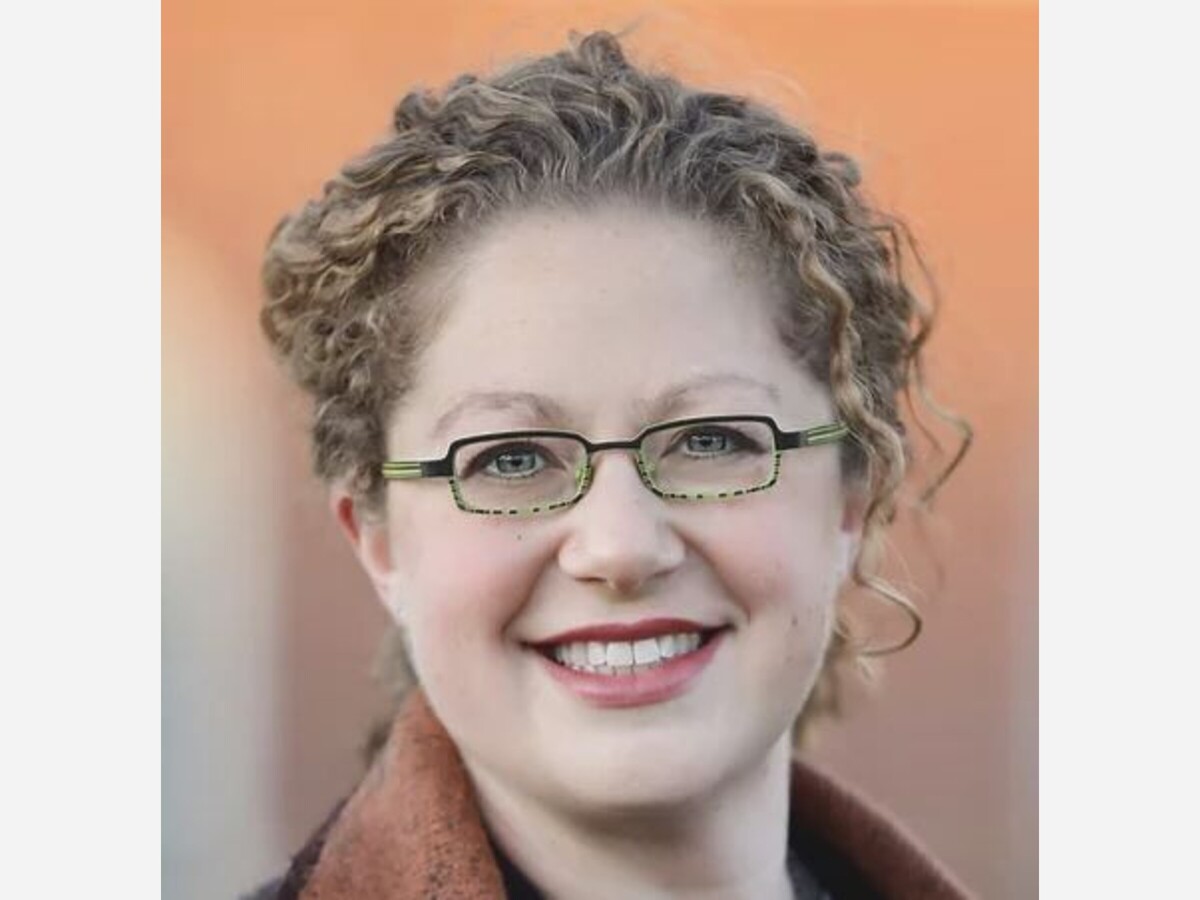



Massachusetts State Senator Becca Rausch, who represents Franklin and ten other towns stretching from Milford to Needham, found herself in the hot seat following a tense June 6th public hearing on her reintroduced “Community Immunity Act” (S.1618). What sparked the firestorm? A pointed remark reportedly made during her testimony: “You will hear lies all day long… lies about the contents of this bill.” The comment, aimed apparently at those testifying in opposition—including parents, educators, and healthcare professionals—were an indication of the atmosphere at the contentious session.
Many in the audience had taken time off work or even skipped family graduations to voice their concerns, according to Health Action MA, a statewide nonprofit advocating for parental rights. Among them were lawyers, including a Harvard Law School alum with nearly four decades of courtroom experience. Their chief worry? A controversial provision allowing minors to consent to preventive medical treatments—including but not limited to vaccinations—without involving their parents.
Opponents say the bill leaves too much to chance. With no minimum age requirement or mental competency safeguard, critics argue it opens the door for children to make medical decisions they may not fully understand—especially without access to their own medical history. Allergies, chronic conditions, and contraindications could be missed, they warn, with potentially
serious consequences. And without even a notification requirement, parents who still bear legal responsibility for adolescents are left entirely in the dark.
Opponents also point out that the same legal framework shows up in a second proposal backed by Rausch: S.1244, a bill designed to expand abortion access for minors. Its House counterpart (H.1815), sponsored by Rep. Sally Kerans, takes the same no-parental-consent approach. Some legal observers have gone so far as to say the language could leave the door open to sterilization procedures without notifying guardians.
Health Action MA is also calling out what they see as a glaring contradiction in Rausch’s legislative portfolio. On the one hand, she’s pushing S.1061, a bill to raise the age of criminal majority to 21—arguing that adolescent brains are still developing, making responsibility questionable and criminal charges inappropriate. On the other, her healthcare proposals treat preteens as capable of navigating complex and potentially life-changing medical decisions alone.
“Senator Rausch’s contradictory approach raises serious questions about consistency and child protection,” said a spokesperson from Health Action MA, who requested anonymity. “You can’t say adolescents aren’t mature enough for adult consequences, then turn around and let them make irreversible medical choices without a parent present. That’s not empowerment—it’s negligence,” the individual stated.
As the dust settles, the legislative process grinds on. The Community Immunity Act (S.1618) remains under review by the Joint Committee on Public Health, while the minor consent provisions in S.1244/H.1815 await a Judiciary Committee hearing. Meanwhile, a related budget initiative—the “Elevated Risk Community Outreach Pilot Project”—is up for debate in conference committee.
Franklin Observer reached out to the Senator’s media person, Adrian
Pforzheimer, Wednesday morning, asking whether Senator Rausch could
comment to us about the following questions:
* * * * * *
1) The bill mentions the semi-scientific phenomenon of ‘herd immunity’, which argues that if a substantial number of people in a given community have achieved immunity, there will thereafter be
little or no transmission of a given disease. But then it seems to eventually focuses on achieving universal vaccination rates without establishing that this is necessary or desirable. Why the strong
emphasis on compulsion, and why the language that states that covered programs shall provide a declaration of exemption form to a responsible adult or a participant only upon request?
2) Do not the sections of the proposed law, below, create in effect the basis for a lynch-mob atmosphere wherein all will be punished for the ‘sins’ of the few and where data gathering will potentially imply that certain groups (for example, Christian Scientists) are the source of the restrictions placed upon all? Do the public health ends justify these social engineering means?
Section
12. The department shall annually publish immunizations and exemptions data, delineated by exemption type, as applicable, for each covered program and school district on its website and may publish such data in hard copy. The department may also publish data by municipality, county,
or other geographic designation, or by other criteria in its discretion. Publication shall not be required whenever doing so would result in disclosure of personal information as defined
in section 1 of chapter 93H or otherwise violate applicable privacy laws. The department shall disseminate electronic copies of any published data directly to the school physician or nurse assigned to any public covered program pursuant to section 53 of chapter 71.
Section 13. Any covered program that has not achieved herd immunity shall be designated as an elevated risk program. Any covered program that fails to report immunization and exemption rates consistent with this chapter shall be designated an elevated risk program. Elevated risk program designations shall remain in place until the department, in its sole discretion, determines that the covered program has sufficiently improved immunity rates in the covered program
population. The department shall maintain on its website a list of elevated risk programs.
Section 14. The department shall create a notice to responsible adults about an elevated risk designation. An elevated risk program shall issue the notice to all responsible adults for participants or those seeking enrollment in the program during the period in which the designation is in place not more than 10 days after receiving an elevated risk program designation. The department may require elevated risk programs to organize and invite all responsible adults to a presentation by the department about immunization safety, immunization efficacy and herd immunity. Whenever practicable, the presentation shall be conducted within 45 days after the designation is received.
Section 15. The department shall develop and make available online an informational
pamphlet about immunization safety and immunization efficacy. The department shall distribute the informational pamphlet, either electronically or in hard copy, to every responsible adult who submits a declaration of exemption form pursuant to this chapter. All elevated risk programs shall distribute the informational pamphlet, either electronically or in hard copy, to all responsible adults for participants or those seeking enrollment in the program during the period in which the designation is in place.
Section 16. (a) The commissioner of the department may require the exclusion of participants who are not immunized in accordance with the schedule from elevated risk programs.
And, finally, what is the purpose of the language below if not to
deparentalize children?
A health care professional working in a school based health center shall keep confidential any reproductive health care information or services provided to a patient at the center, including but not
limited to contraceptive counseling and abortion-related information or care.
*
* * * * * *
Friday afternoon, Observer received an email with the following response from Adrian:
Hello
Alan,
You can find more information about the Community Immunity Act on ourwebsite: https://www.beccarauschma.com/community-immunity-act.
Sincerely,
Adrian
* * * * *
We did not find much clarity in the website. Readers are invited to
take a look for themselves.
At least as far as Health Action MA is concerned, the battle over medical consent, parental rights, and adolescent autonomy in Massachusetts is far from over.



Overcast , with a high of 34 and low of 23 degrees. Overcast in the morning, mist in the afternoon and evening, clear overnight.