

Image
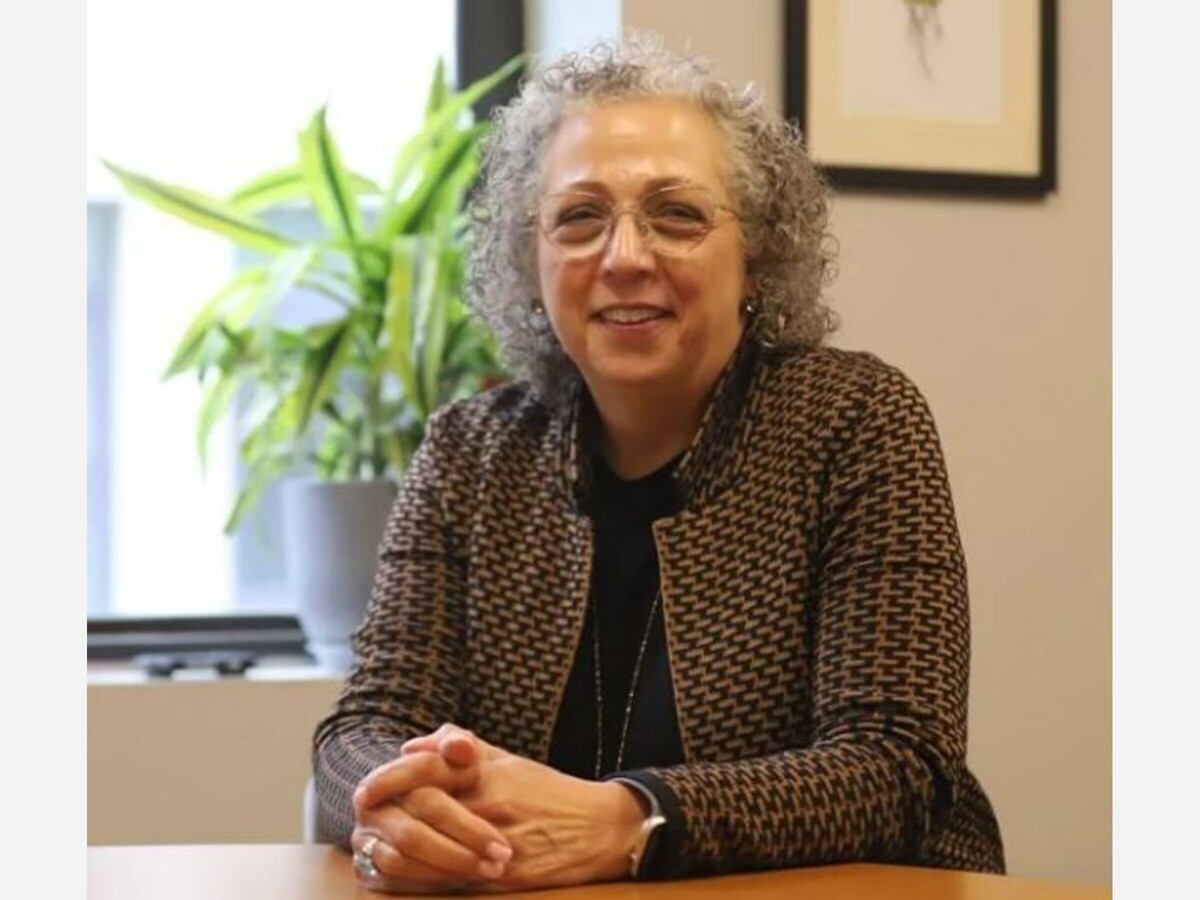
SHNS Talks With Samaritans' Kathy Marchi
Ella Adams | SHNS
The team at Samaritans answered more than 100,000 calls last year on its 24/7 crisis services helpline, and this spring hit 10,000 conversations on its youth peer-to-peer text support hotline, "Hey Sam."
Samaritans President and CEO, Kathy Marchi, is keeping her eye on how the suicide prevention service will maintain and grow its coverage as mental health continues to be a pressing issue locally and nationally. According to the organization, one person dies by suicide every 14 hours in Massachusetts. Based on national 2023 data, one American dies by suicide about every 11 minutes.
Samaritans provides other statewide services like suicide grief support and educational programs, alongside text and call hotlines. The organization is in the midst of a campaign for funding for the upcoming fiscal year and beyond, and relies heavily on individual donations that work alongside dollars from the federal 988 crisis hotline program and a state budget line item.
In a recent conversation with the News Service, Marchi talked about recent caller trends, the landscape of mental health in Massachusetts, and the future of the 988 crisis hotline in the midst of potential federal funding threats.
This interview has been edited and condensed for clarity and length.
A: One of the obvious things is that most services around mental health were in person. [The pandemic] forced us to do a lot more remotely, and the benefit of that is that we have people who are helping us from all over the country. It's allowed us to open up services for people who are not nearby. Some of the things we used to do, education and outreach, we can do remotely. If you can't get to a meeting in Boston Tuesday nights, you can join us virtually from anywhere in the country or world. I think one of the things we're seeing and hearing now is that there are concerns and worries that people have about access to services that they've come to depend on, given some of what we're hearing in the news.
A: Callers have said that they are worried about losing services — that's one of the stressors they have. And for some people who need our services, they are also seeking services from other organizations. So the idea that they worry about access to mental support from different agencies or organizations, or places that they go to where services are provided for them — folks who receive assistance around anything, could be around immigration, housing, food, if those services are uncertain for them, or if their feelings are that [they're] becoming uncertain, then their stress level is higher, right? And that puts them at higher risk for mental health concerns, whether that is ultimately suicidal ideation [or] just higher levels of stress.
A: I think we're doing better than lots of places around the country. We have a lot of good resources and a lot of folks who are working hard to meet the needs of the people in the commonwealth. I think our legislators and state agencies are doing really well to meet the needs. I think there are other parts of the country that struggle, maybe more so than we are. Some of that has to do with [the fact that] we are more densely populated, we have access to more resources in this state, so we provide more overall, and that allows us to continue to access support even when things are becoming perhaps stressful or strained. I credit both the approach of our legislators to keep funding in important areas and in the state agencies, DPH, DMH.
A: I think volume is the thing that we look at. The data lags significantly because of the way it gets reported, so we don't see it right away. We see it in call volume, or we see it in the things that people are talking to us about. We have a lot of people who call us routinely, and that is one of the things that they do to keep themselves feeling stable and safe. Some folks are struggling with something, and reach out once. But the fact that we're seeing more people, and we're getting a lot of traction and continuing to get traction on Hey Sam — we've just surpassed 10,000 text conversations — I think the evidence there is that young people are reaching out and wanting more support as well.
A: I think the answer is sort of yes, and yes. The volume of outreach for our services is the way that we know we're reaching more people and we're helping more people, and that there is a need. And that's what we hear. Sometimes people will say, 'I'm so glad I found you. I was really struggling. I needed this support.' We also hear from people who say, 'I wish I had known about you when I was struggling.' So we know that access is really important, and making sure that we're out there and speaking about what we do and the services we offer is really important. There is more stress, and that's what we're seeing in the content. We keep data around [about] the overall topic — did somebody call around stress, around religion, family, school, job? We live in a society that's really stressful. It's increasing in that level of demand — demand on young people, demand on our jobs, on the things that we do. I think it makes sense that more people are saying 'this feels like a stressful thing.'
A: Always, yes, because the work that we do, it matters that people have access to all kinds of services and supports. It's really important that we're very sensitive to those additional needs that people have. The state is doing a good job of, and thoughtful job of, maintaining services as best as possible. Am I concerned about it? Yes. But also, we are in a campaign to raise funds for this organization. We are 51 years old. We want to make sure that we're here for another 50 years, and so we're making sure that our funding sources and resources are in place so we can continue the services uninterrupted. We put a lot of time and effort into building those and allowing us to grow services like Hey Sam. We also support the calls to the legacy line — Massachusetts used to have a statewide toll-free number. We don't advertise that number anymore, since we became a 988 center, yet there are 9,000 calls a month to that line, and we're the only center in the state taking them. Our way of addressing that is making sure that we have the support we need, independent of anything else, so that we can continue to do the work we're doing.
A: The truth is, we are still worried about the line item because it has to go through the rest of the process, and we don't know what that might look like. One of the things we've done is really tried to make sure that folks in the Legislature know what we do and what we do with that money, and how important the impact of them setting aside those funds is. I'll give you a couple examples. I mentioned Hey Sam — the only youth peer-to-peer text line in the state of Massachusetts. We would like to expand the hours. We started nine-to-nine. We went nine-to-midnight. We'd like to go a little later. Young people should be asleep at a certain point, but they're going to be awake and struggling, and so we want to be there for them. We want to make sure that people know that we are available to take the calls on our legacy lines. We have started a team that will work with police departments to support people in the immediate aftermath of a suicide. We're opening that in cities where there is no other loss team like it in those cities. We have a group that is specific to folks who have attempted suicide, and that group is not being run by anybody else in the state. We have a huge waiting list of 100 people for that group. Those are the kinds of things that we want to be able to do to expand and grow.
So looking at how we expand our services, and all the things that we can do with the additional support from the state budget through 988, through the line item that we have, and then the additional fundraising we're doing, ensures that we will have what we need to be able to do these things and make sure that they happen, and if something changes on the federal or the state level, that we are secure in what we're trying to do.
A: The cut of support to the LGBTQ+ line are calls handled by the Trevor Project primarily. That cut for those services would be devastating to that community. I think 988 will continue. I don't imagine that that program would end, but I do think that it's going to be turned to the states to manage. That's what I anticipate, is that they'll turn to the states and say, 'just run this yourselves.' And that will require our Legislature to support the work, but also, whether they do a fee model or something that — you know, like 911, for instance, is funded by a tax to our phones. There are different models in different states being used to support 988, so that would happen in Massachusetts, I'm sure. The loss of support to LGBTQ+ youth is significant because really being able to talk to people who understand what an individual is going through — our model of service is peer-to-peer, and so a lot of what we do is really having peer support folks like them. On the helpline, we train people to listen and understand the struggle someone is having. What do I think we would do? We'll make sure that we continue to promote Hey Sam to young people as a resource. We will do that any way we have to. And the campaign is helping us to do that, making sure that we will be in position to do that if those cuts impact what young people are needing.
A: We have 34 positions on the team. That's more than double where we were in 2019 when I started. Growth includes things like the services that we provide, but also making sure that we're marketing and communicating about it. Making sure that people are aware of what we're doing is really important, and our campaign has helped us do that as well, so we can grow the team and the infrastructure — IT, HR, finance. The goals that we had when we wrote the last strategic plan were to reach more people, to be innovative and creative in the ways that we do the work. Hey Sam is an example of that. The SOSA program, which is the Survivors of Suicide Attempts; we're working on a project with [Mass. General Brigham] and Harvard to support folks when they come out of the emergency room.
A: The program is modeled on research that proved that even a very low-level interaction after someone's been hospitalized or been in the ER for suicidal ideation — even a very simple thing like a postcard or a letter can make a difference to someone. So this program is modeled on that concept, and goes further to say that when folks come out of hospitalization or the ER, that if we, instead of waiting for them to call us, we do outreach to them over a period of time, we believe we will substantially lower the suicide rate in that population. So it's not directly addressing the impact on the health care system, but it's really addressing this specific population at a particularly high-risk time for them. If we can have an impact there, this model could be really important for care across the country.
A: We've been doing the work to build the plan over several years. We're hoping that in the fall we're able to start training the first cohort of individuals who will work with us and folks who join the study. So it's still in a younger phase, but it takes time because it involves a high risk population and a really specific training model and in-depth supports.
A: I think where we're going right now, and certainly what we believe and what our strategic plan has suggested, is that we want to be thinking about individuals and their needs and how they differ from others. So for example, our grief support services have historically been one-size-fits-all. Folks who have lost someone to suicide are trained in our model, they support other individuals who have lost someone to suicide. We've started these different programs — for LGBTQ+ [people], for parents who lost a child, for example. The difference is that those losses are so different, that we want to meet people where they are and also give them space and specific support for that loss.


Sunny, with a high of 43 and low of 25 degrees. Sunny during the morning, overcast during the afternoon and evening, clear overnight.