25° and Clear
Image



by Bhaamati Borkhetaria, CommonWealth Beacon
July 22, 2025
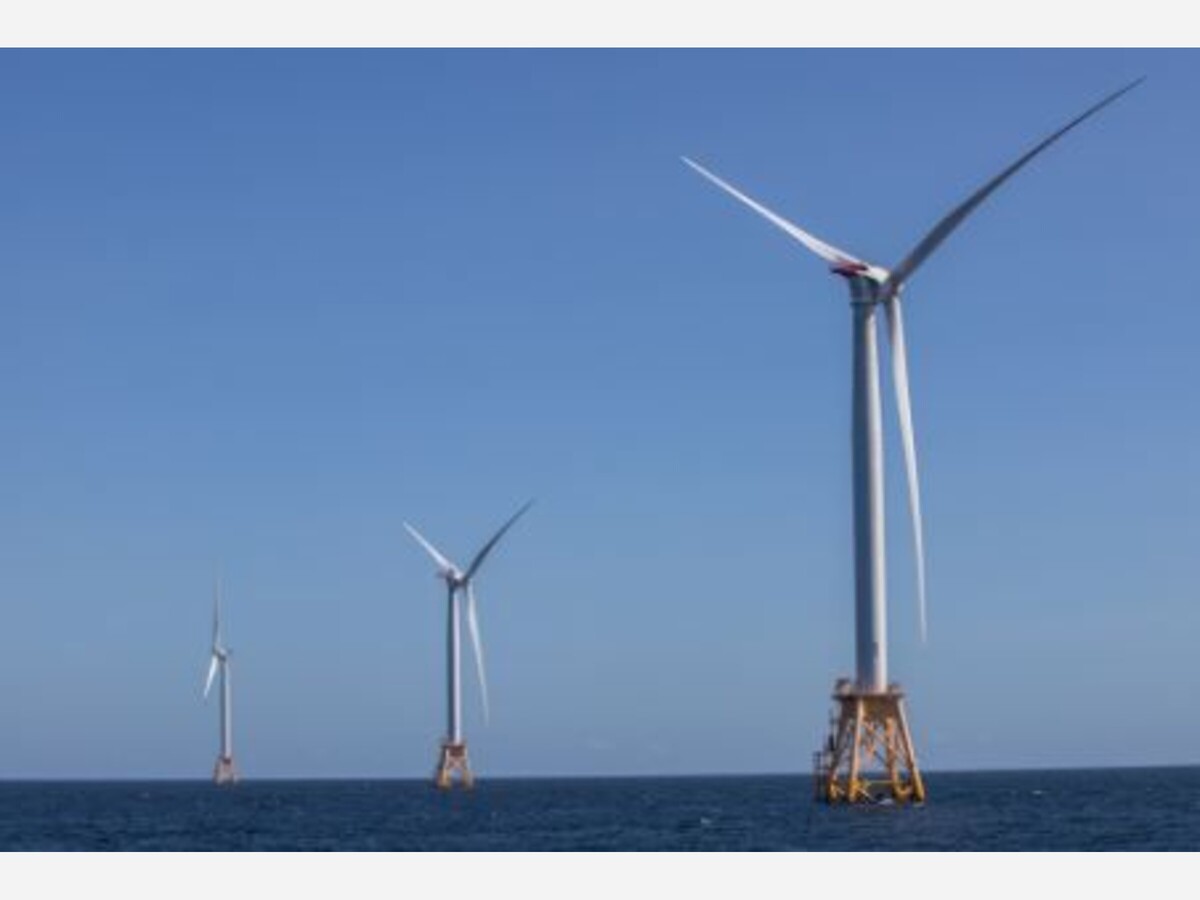
WITH THE TRUMP administration creating roadblocks to Massachusetts’s push to meet its climate goals, the Healey administration is eyeing Canadian offshore wind to bring more clean energy to the state, and a key lawmaker is looking to support that effort.
In January, President Trump hit pause on wind projects nationwide, halting all new federal permits on onshore and offshore wind. The latest federal tax bill also dealt the industry a major blow by phasing out the tax credits for offshore wind projects that aren’t in service by the end of 2027.
Massachusetts faces a self-imposed statutory deadline: It must lock in contracts for at least 5,600 megawatts of offshore wind by 2027. Currently, the state has one offshore wind project – Vineyard Wind 1 – under construction, which will is projected to bring about 800 megawatts to the grid by the end of 2025. The state has delayed finalizing pricing contracts with two other wind developers, which are expected to bring an additional 1,878 megawatts. The state was also planning on purchasing electricity from another project – Vineyard Wind 2 – but the project was shelved in December 2024.
In light of setbacks to wind energy in the US, Massachusetts’s Executive Office of Energy and Environmental Affairs is potentially looking to procure electricity from planned offshore wind farms in Canada – a development first reported by Canada’s National Observer. Massachusetts officials are exploring the possibility both to meet clean energy goals and to address energy affordability by bringing more electrons to the grid.
Switching from homegrown to Canadian offshore wind will come with challenges like installing more transmission infrastructure to carry the electricity to the state and will result in fewer construction jobs based in Massachusetts.
A spokesperson for the energy office, Maria Hardiman, said in an email that the state is in “regular communication about emerging opportunities to build new energy sources,” and that they are exploring partnerships with Canada to leverage “significant opportunities to construct new onshore and offshore wind projects across Canada and the Northeast region.”
Sen. Michael Barrett of Lexington, the chair of the Joint Committee on Telecommunications, Utilities, and Energy, said that he congratulated the governor’s team for coming up with a creative solution and that he would lead the push for laying the legislative groundwork to enable the Healey administration to seek Canadian offshore wind by extending the procurement deadline for the state.
“This becomes a serious possibility for the mid-term and the long-term,” Barrett told CommonWealth Beacon. “It isn't a short-term substitution for the damage that President Trump is doing to our current offshore wind projects, but there's a lot of promise here.”
Barrett acknowledged that getting Canadian energy to Massachusetts might pose some problems like building the extra transmission capacity to bring the offshore wind energy over to Massachusetts.
The state’s effort to procure hydropower from Canada was stalled in 2018 when a siting board in New Hampshire didn’t approve Massachusetts’s plan to build a transmission line through the state. Massachusetts pivoted to put the infrastructure in Maine, but after significant backlash there, construction on the transmission line shut down in November 2021. Nearly, two years later, the project resumed after a jury in Maine ruled in favor of the project. The line is expected to be completed and running by 2026, but building a transmission line through different states has introduced years-long delays and higher costs.
For Canadian offshore wind, it is potentially possible to avoid some of those issues by building transmission lines underwater, but that can come with its own financial difficulties, according to Dan Dolan, president of the New England Power Generators Association.
“Construction of that new transmission, and then the resulting cost from that, particularly as we now look at hundreds of miles either overland or undersea to bring that in, I think that would create real financial challenges,” said Dolan. “I'm skeptical as to whether that's something that would make sense in any sort of reasonable time frame and cost structure.”
The transmission line could also end up requiring federal permitting, which could introduce another roadblock.
“If this were a project that needed a US federal sign-off in the next three years, we would be in trouble,” said Barrett when asked about potential hurdles to transporting Canadian offshore. “But when it comes to the planning for these huge new construction activities, Trump is already yesterday's news.”
Kate Sinding Daly, senior vice president for Law and Policy at the Conservation Law Foundation, said that the fact that the state is looking at Canadian offshore wind is “music to [her] ears.” But she noted that building offshore wind in Massachusetts would bring economic development and jobs to the state.
“That comes at a cost of local jobs and local economic development, and it's why we've been such strong supporters of offshore wind development here in Massachusetts and in New England more broadly,” said Sinding Daly. “But if there's the opportunity while the federal government is hitting pause on new American offshore wind to take advantage of offshore wind from elsewhere, that would be a positive.”
Canada is in the process of building out its offshore wind sector and is projected to generate large amounts of surplus power that it would need to export, according to Aegir Insights, a Danish offshore wind consultancy company.
Signe Sørensen, Aegir Insights’s lead analyst for the Americas, said that transmission could likely be built in the water from offshore in Nova Scotia across the Gulf of Maine to transmit power. But Sørensen said that there is uncertainty about whether the Canadian government will continue to support offshore wind projects over the long term and enable large infrastructure projects – like transmission infrastructure – in the US.
“However, in a global context, we are starting to see early signs that the offshore wind sector outlook is improving, loosening many of the other restraints that have hobbled offshore wind build-out generally,” said Sørensen “The fact that this is not the case in the US currently is what causes the sector as well as policy makers to start considering the idea of building offshore wind in Canada and then sending the power to the US.”
This article first appeared on CommonWealth Beacon and is republished here under a Creative Commons Attribution-NoDerivatives 4.0 International License.

PARSELY = { autotrack: false, onload: function() { PARSELY.beacon.trackPageView({ url: "https://commonwealthbeacon.org/energy/could-canadian-offshore-wind-help…", urlref: window.location.href }); } }



Overcast , with a high of 34 and low of 23 degrees. Overcast in the morning, mist in the afternoon and evening, clear overnight.