

Image
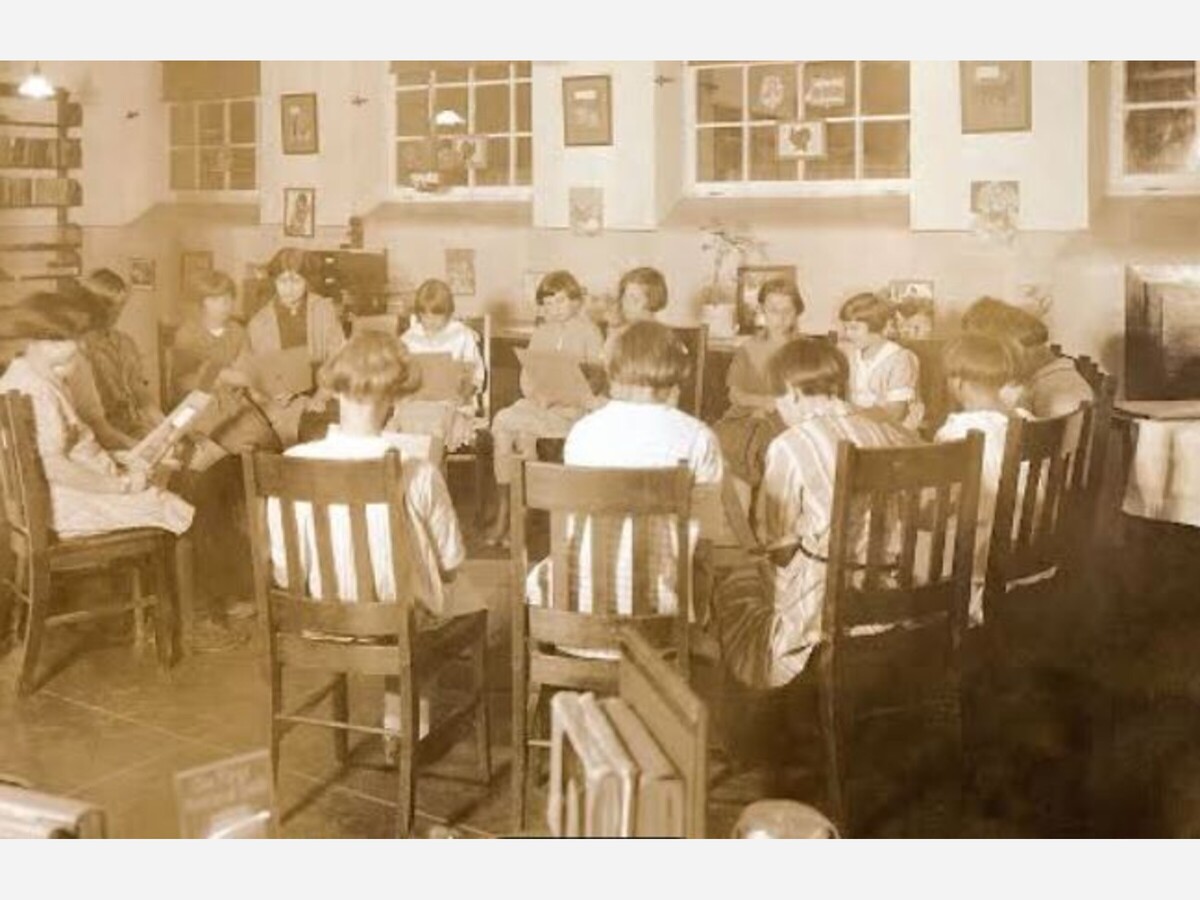
Above, a 1927 image of "Story Time" at Wrentham State School, in an era when the facility was deemed a model of caring for those with intellectual disabilities.
For more than a century, the Wrentham Developmental Center has stood amidst the rolling fields on Emerald Street, its red-brick cottages and winding drives a reminder of an era when Massachusetts built entire villages for people with intellectual and developmental disabilities. Today, that campus is again at the center of a fight—this time over whether it should survive at all.
Wrentham is now one of just two remaining state-run developmental centers in Massachusetts, alongside the Hogan Regional Center in Danvers. Since the 1990s, the state has closed four others—Monson, Glavin, Templeton, and Fernald—arguing that people with disabilities are better served in small community homes than in large institutions. A former Wrentham Development staffer, who asked to speak anonymously due to threats made to retirement benefits by officials, said even decades ago, the intent was clear; no one wanted to invest further and getting the state out of the picture always seemed to be the unstated aim.
Officially, there is no announced closure plan for Wrentham. But families, staff, and advocates say the signs are hard to miss. A 2024 public-records fight revealed that the Healey administration was drafting a new, undisclosed admissions policy for the center, raising fears that tightening access could gradually shrink the population to the point where a shutdown looks “inevitable,” according to a blog post from COFAR, an organization that advocates for families and individuals in the system. A 2025 WGBH report and local coverage framed the issue bluntly: is Massachusetts trying to close its last two facilities “by attrition”?
Families of residents counter that for people with complex needs—those who need on-site medical care, continuous staffing, and predictable routines—Wrentham is not an anachronism but a lifeline. They argue for choice: community homes for those who can thrive there, and state facilities like Wrentham for those who cannot. Advocacy groups have even pushed for legislation requiring the state to keep Wrentham and Hogan fully available as placement options, not just as last-resort beds.
Their anxiety was intensified by events in Canton. In January 2025, Gov. Maura Healey proposed closing Pappas Rehabilitation Hospital for Children, a 60-bed, state-run facility for children with severe medical and developmental needs, and relocating services to Western Massachusetts Hospital. After months of protests, legislative pushback, and a working group review, the administration paused the closure—but did not fully erase the possibility, leaving families wary.
From Beacon Hill’s perspective, shifting care to community settings and consolidating specialized hospitals is about modernizing infrastructure, improving access to technology, and directing scarce dollars where they reach the most people. Critics, however, see a pattern: first reduce admissions, then let census and staffing erode, and finally point to low occupancy and decaying buildings as justification for shutting the doors.
For now, Wrentham Developmental Center remains open, its cottages still home to some of the state’s most vulnerable residents. But as the battle over Pappas shows, the future of such institutions is no longer a slow-burn policy debate—it’s an urgent question, hanging over hundreds of families who fear that once these specialized places are gone, they will never be rebuilt.
For State Representative Marcus Vaughn, it’s an issue that requires constant vigilance. “I’ve been very vocal in opposing any closure plans and have advocated for keeping the facility open to continue serving individuals with severe and profound intellectual and developmental disabilities,” he said.

Rep. Marcus Vaughn
But even if the state were to move forward with a shutdown, there are currently no other suitable state-run facilities capable of accommodating the patients who call Wrentham home, he noted.
Beyond that, any repurposing of the property would need to go through a formal Division of Capital Asset Management and Maintenance (DCAMM) clearance process before it could ever be released to the town or private developers — meaning this is not something that could or should happen quickly, Vaughn explained.
If the state were to even consider shutting the doors, Vaughn continued, they have no realistic plan — or physical infrastructure — to absorb these individuals somewhere else. Community homes simply cannot accommodate the most complex cases, no matter how well-intentioned the model may be.
While preservation is the immediate fight, we also need to be thinking about how to strengthen families and improve quality of life around these centers, said Vaughn.
“One thing I’ve been advocating for — especially in today’s market of rising housing costs — is the idea of investing in renovations or potentially even new on-campus or near-campus housing options for parents or aging caregivers who want to remain close to their loved ones at Wrentham,” Vaughn explained.
His vision includes:
• Small, modular senior housing,
• A micro-village for parents,
• Renovated on-site cottages, or
• State-supported units prioritized for families connected to the center.
An approach like this could give families peace of mind and create a more humane, supportive environment around residents who depend on long-term, specialized care. “It also acknowledges something the state often overlooks: families age too, and distance becomes a barrier to involvement.” he said.
In other words, Vaughn said, “it’s not just about keeping Wrentham open — it’s about modernizing the broader ecosystem of support.”


Sunny, with a high of 96 and low of 63 degrees. Sunny in the morning, clear overnight.