57° and Clear
Image
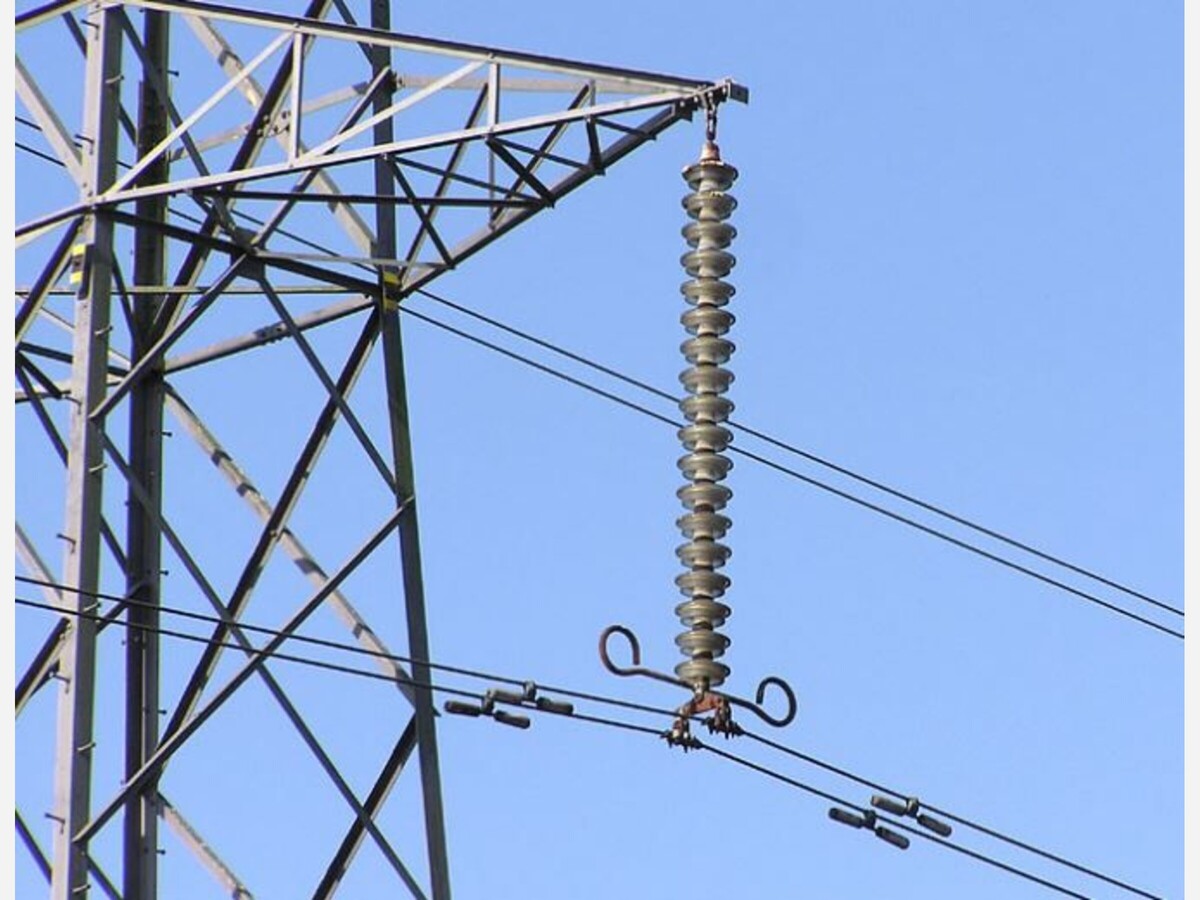



Power outages were minimal during Sunday's significant snowstorm and the New England power grid has held up during heightened demand, operating thanks to new federal government permission to prioritize reliability over air quality or other typical considerations.
U.S. Secretary of Energy Chris Wright on Sunday morning determined a "statutory emergency" existed within the six-state ISO New England grid area "due to a shortage of electric energy, a shortage of facilities for the generation of electric energy, and other causes." At ISO-NE's request, Wright issued an emergency order allowing the grid operator to tap into the maximum output of certain power generation sources through Saturday, Jan. 31 in a bid to prevent blackouts.
"While ISO-NE is not currently experiencing emergency conditions, given the forecasted long-duration extreme cold weather event, ISO-NE foresees the need to maximize the availability of all the generating resources in the New England region, i.e. all generating resources that are part of the generation resource mix are needed," the grid operator told the federal government in its application.
The grid operator said the emergency order allows it "to direct power plants and other generating resources to run in ways that keep the grid reliable, even if that temporarily overrides regulatory or emission requirements."
Daytime temperatures this week are forecast to hover in the 20s, dropping into the single digits at night.
Wright said in a press release that the "previous administration’s energy subtraction policies weakened the grid, leaving Americans more vulnerable during events like" this winter storm. "Maintaining affordable, reliable, and secure power is non-negotiable," he said.
Even before a snowstorm enveloped the region Sunday, the New England grid was relying more heavily on fuels like oil than usual. As extreme cold set in last week, oil jumped from being used to generate 0% of the grid's energy as of late Thursday to about 15% by the end of Friday, according to data from ISO-NE. By late Saturday morning, oil had overtaken natural gas as the predominant generation source for the New England grid and remained so until about 5 a.m. Monday.
As of 12:45 p.m. Monday, the power on New England's grid came mostly from oil (33%), followed by natural gas (30%), nuclear (18%), renewables (6%) and hydropower (6%). The renewables categories broke down as 39% wind, 30% wood burning, 25% refuse burning, 4% solar and 2% landfill gas, according to the grid operator. As of 9 a.m. Monday, natural gas accounted for 39% of generation compared to 28% for oil.
Oil is generally a small part of the New England grid's resource mix. But when the demand for natural gas for home heating rises during extended cold weather, so too does the price of the gas. And when natural gas is a more expensive option, some power generators choose to switch to burning cheaper oil. That choice leads to greater carbon emissions into the atmosphere, running counter to the state's mid-century net-zero emissions mandate.
The order gives ISO-NE some leeway around a specific set of generation facilities that were likely to run into air quality or other permit constraints running at full output. Most of the facilities on that list are in Connecticut, but it also includes the Fore River Energy Center natural gas and oil facility in Weymouth, the Northfield Mountain pumped water storage facility in Erving and Northfield, and a gas facility in Sandwich.
"ISO-NE does not request this authorization lightly and understands the importance of the environmental permit limits that are at issue," ISO-New England Vice President Stephen George wrote in a letter to Wright on Sunday. "Granting the authorization requested will help ISONE maximize the availability of all generating resources in New England to meet expected demand for electricity."
Wright issued similar orders this weekend for PJM Interconnection, which serves the mid-Atlantic region, and for the Electric Reliability Council of Texas.
Gov. Maura Healey alluded to the flexibilities granted to the grid operator during a storm prep press conference Sunday afternoon.
"We checked with ISO New England in terms of power coming into the region, we feel pretty good about that, OK, in terms of reliability. That's something about the whole Northeast and I've been in touch with other governors about that," she said. "And we've given the OK to power generators, do whatever you need to do to keep power flowing to people's homes during this time."
She gave an update during her noontime-hour update Monday: "The grid has proven reliable, that's good news."
ISO-NE said Monday that the regional power grid "remained reliable as consumer demand for electricity peaked" at approximately 20,182 megawatts (MW) Sunday at 2 p.m., as much of the region was settling in to watch the New England Patriots playoff game.
Sunday's peak demand exceeded the highest demand record last winter (19,607 MW on Jan. 22, 2025), but was lower than ISO-NE's November projection that this winter's demand could reach as high as 21,125 MW in extreme cold weather.
Forecasted peak demand for the next week ranges from 18,300 MW to 19,630 MW, ISO-NE said. As of 12:45 p.m. Monday, actual demand on the grid totaled 18,364 MW, in line with ISO-NE's forecast of demand for 18,390 MW and well below the 24,502 MW of available capacity.
The all-time high levels of demand on the ISO-NE grid are 28,130 MW in summer (2006) and 22,818 MW in winter (2004). By 2034, if states like Massachusetts continue to press for more widespread electric heating and transportation, ISO-NE's forecast expects summertime peaks of 26,897 MW and wintertime peaks of 26,020 MW, the grid operator said in a report last year.
Paul Craney, spokesman for the Massachusetts Fiscal Alliance and a critic of the state's decarbonization mandates, said Monday that the grid situation "was entirely predictable and directly tied to the region’s aggressive Net Zero policies."
"While families were cranking their thermostats just to stay warm, state leaders were once again forced to fall back on oil because they have spent years blocking the infrastructure built on natural gas and nuclear that would actually keep the lights on," Craney said.
Healey said Monday afternoon that "we were fortunate" in that the fluffy, dry nature of the snow that fell meant there were few power outages during Sunday's storm.
"I think we have power outages at about 300 homes, and that's sort of normal for any day," she said just before 1 p.m. Monday.



Overcast, with a high of 66 and low of 46 degrees. Overcast for the morning, patchy rain nearby in the afternoon, overcast overnight.







![Could Tesla Help Reduce the Region's Power Outage Challenges? [Updated]](https://franklinobserver.town.news/sites/default/files/styles/manual_crop_400/public/9677/2026-10/tesla_model_y.png?itok=Lu3Tmdge)