

Image
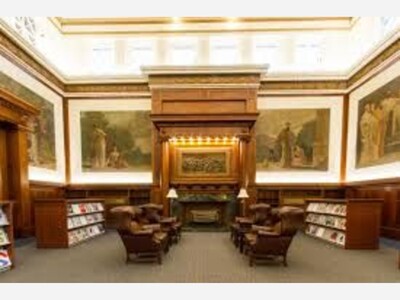
Franklinites learn the story of Ben Franklin and the founding of our Franklin Public Library almost from birth – or as soon as they come to town. Even realtors make it part of their spiel.
But, another, less-well-known library story also overlaps with Franklin’s founding years: the sheltering of what would one day become one of the region’s premier academic libraries.
The story begins with the founding of Rhode Island College at Warren in 1765, an institution that would eventually become Brown University. By the time of the American Revolution, the college had grown and relocated to Providence. But, given the exigencies of the times, it was decided to interrupt the College's course of instruction in December, 1776, more or less for the duration. The college buildings then became home to American and French troops and, sometimes also served as a hospital.
Concern that the young school’s library might suffer either at the hands of the soldiery or the marauding British (several coastal towns were burned in the course of the war), the books were prudently transported inland to the country town of Wrentham where, at the time, the separation of the North Parish as a new town, was actively being discussed.
And where did the books go?
Wrentham resident, William Williams, was one of the first graduates of the college (1769) and was running a highly regarded preparatory school, Williams Academy, on West Street, now in the Sheldonville section of Wrentham.
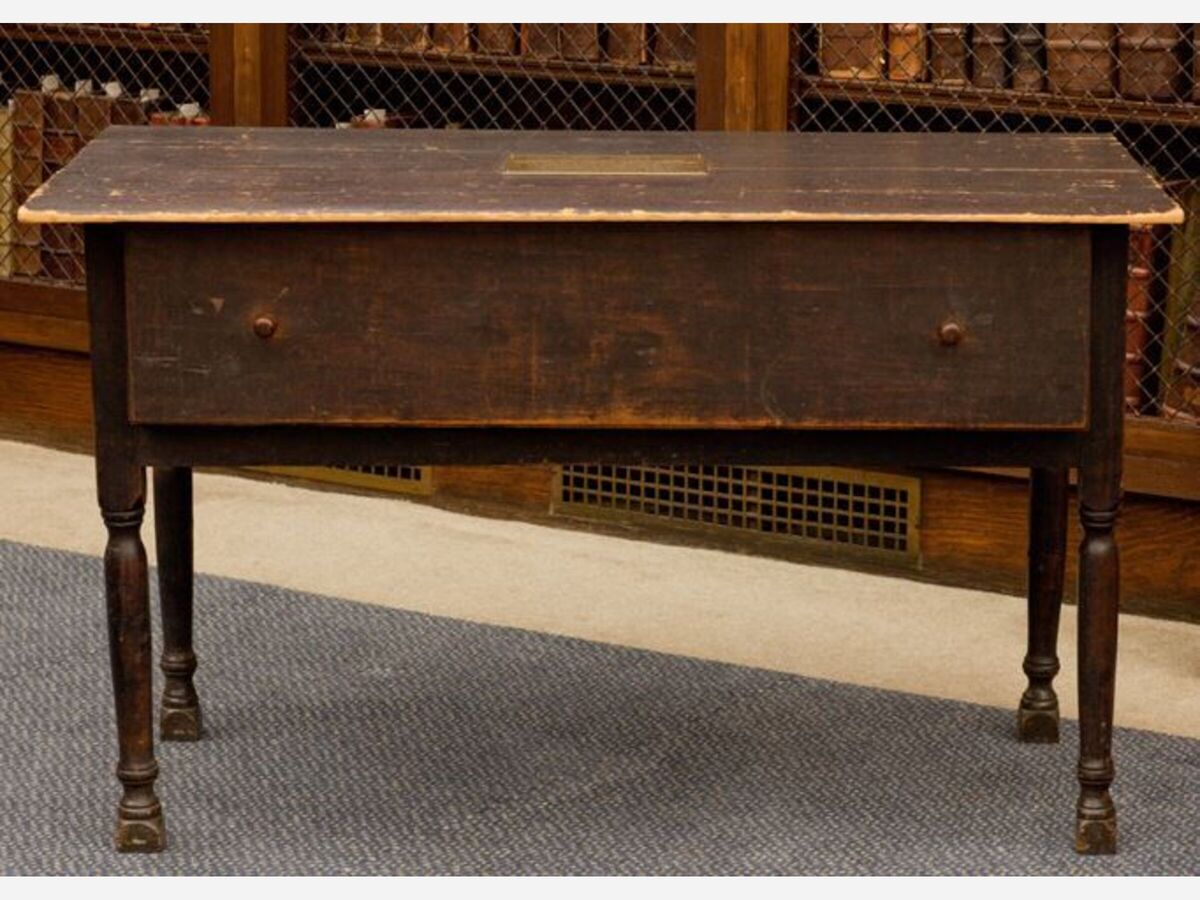
At the time, he reportedly quipped that the library collection was so small that he could hide it in the drawer of his kitchen table. In fact, the collection totaled some 600 books. And he found a safe place for it at the academy building where it safely avoided the ravages of war until it could be reclaimed and reunited with the College in 1782.
Williams’ quip has lived on, memorialized in what is now termed the Williams Table collection – the Brown University even has Williams’’ actual kitchen table, reverently preserved.
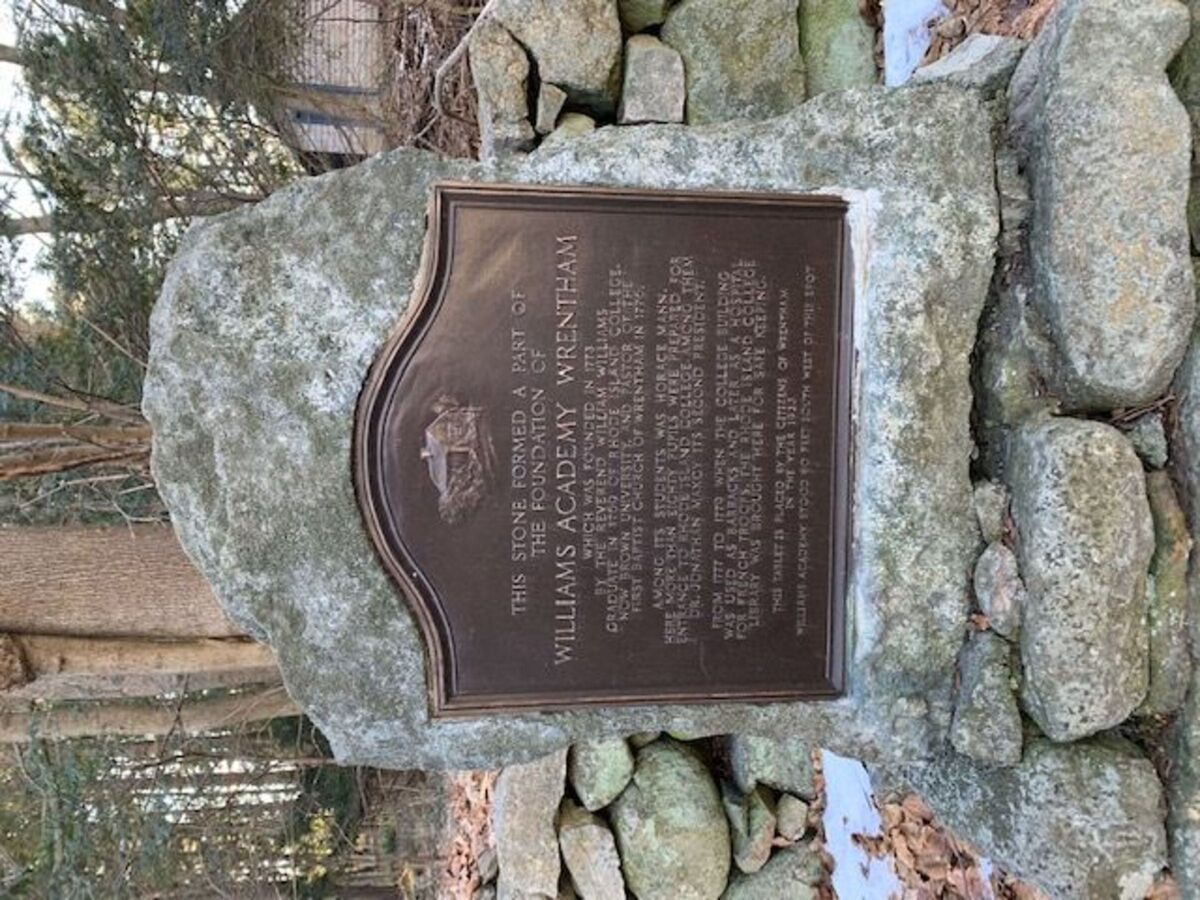
In Wrentham, a small marker, installed at the town’s 350 birthday, marks the approximate location of the school. Although the location of the Williams home at the time of the Revolution has net been discovered, his well-preserved and still-occupied 1791 home is a short distance away on Williams Street, which becomes Forest Street when it enters Franklin.
Williams Academy had a remarkable academic track record, preparing more than 80 students for entrance to Brown, including a future college president and Franklin’s famous Horace Mann. Williams was also a figure of note as the long-serving Baptist preacher in Sheldonville, at a time when that sect was just beginning to gain adherents (and acceptance) in the region.
Like the Franklin book collection, which lost some of its number over the years, some of the Williams Table collection also disappeared. But a librarian in the 1930s did his best to recreate the entire collection and it is now a treasured part of the greater John Hay library at Brown.
Incidentally, the very first book ever given to the college is also revered, though rarely referenced. It is Valentin Schindler's Lexicon Pentaglotton, Hebraicum, Chaldaicum, Syriacum...Rabbinicum & Arabicum, published in Hanover in 1612. It was a gift from Brown's first president, the Lexicon is inscribed "The gift of the Revd. James Manning to Rhode Island College June 17th, 1767."
Below, the treasured Williams Table at Brown University, a relic of early Wrentham.


Sunny, with a high of 43 and low of 25 degrees. Sunny during the morning, overcast during the afternoon and evening, clear overnight.