52° and Clear
Image
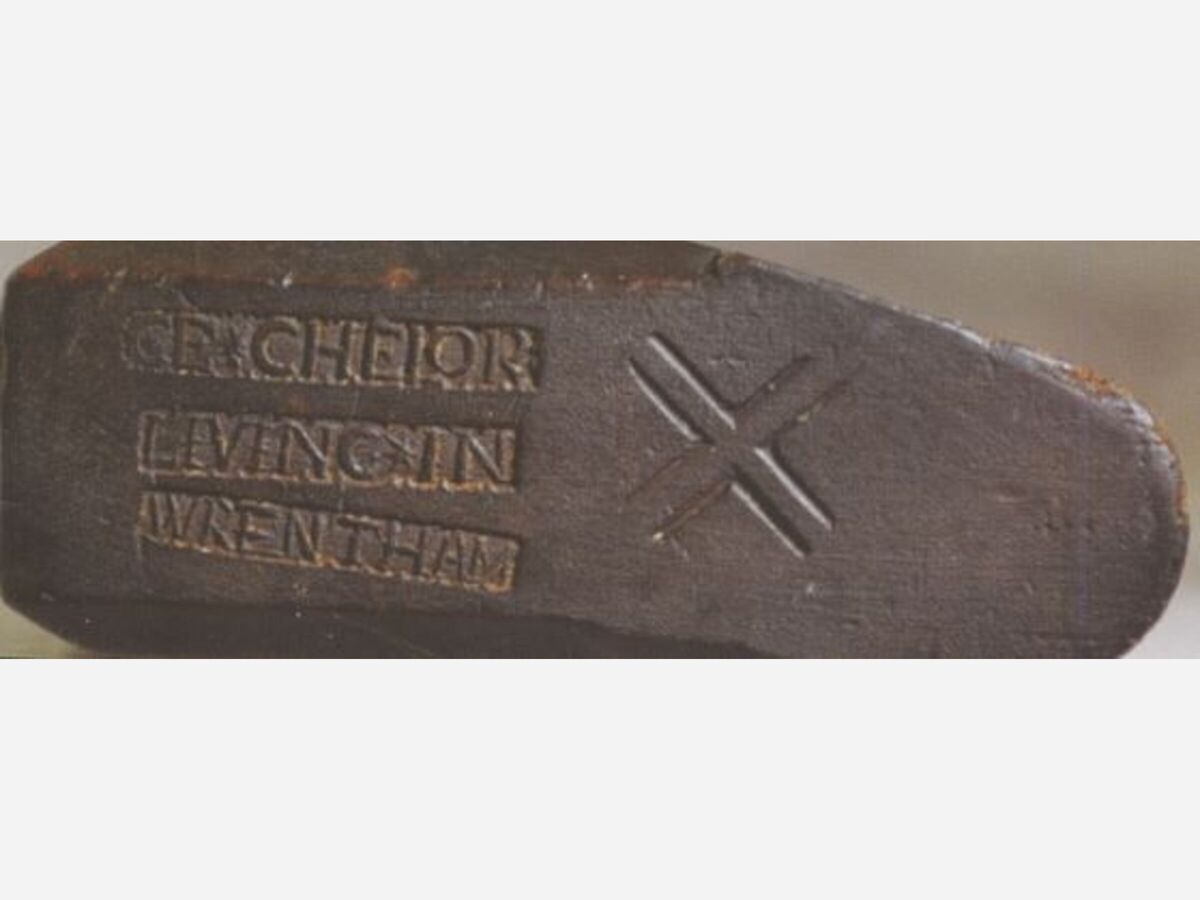



Above image courtesy of D'Elia Tool Museum
In Wrentham’s first century, when Franklin was merely a section of town with vague separatist yearnings, its location on an important road between Boston and Providence gave its farmers and artisans ready access to a much bigger market than just the immediate region.
Perhaps that was a factor in making Wrentham the starting point for the manufacture of planes in North America. For the uninitiated, though nowadays often displaced by power tools, planes were and are the best way to shape and form wood. For example, in Colonial times, trim molding would likely have been produced using a plane
It will be remembered, however, that in those years most sophisticated metalworking and tools still came from England, in part due to mercantilist policies but also because there was insufficient local talent to produce such things in New England.
But not in Wrentham. There, an outburst of excellence began with one Francis Nicholson (1683-1753), recently arrived from Rehoboth, who crafted hundreds of planes over his career, combining both a carefully shaped wooden body and a precisely sharpened metal blade. Early in his endeavors he `purchased’ a slave, named Cesar Chelor, said to have been about 16-year-old at the time.
While Nicholson was undoubtedly talented, his enslaved assistant turned out to be in every way his equal, no doubt contributing much to the output of still-collectible tools attributed to Nicholson.
What’s more Chelor seems to have become a respected part of the community, despite his status. Indeed, Chelor was welcomed as a full member of the Congregational Church in 1741.
And, in 1753, when Nicholson died, by his wishes, Chelor was granted his freedom as well as 10 acres of land, his tools, workshop, and supplies. This was by no means a compensation for a life of enslavement but, by the standards of the time, was unusually generous.
And, with his well-developed skills and those accoutrements, Chelor went on to craft his own reputation for fine workmanship. In 1758 he married Juda Russell and had eight children. When he died in 1784 (by which time, slavery had been abolished in Massachusetts), his estate was worth more than 80 pounds.
And today, aficionados highly value the handful of antique planes marked with his name, “Ce. Chelor Living In Wrentham.”
Remarkably, examples of his work and Nicholson’s along with every other kind of antique plane imaginable are preserved and displayed in a small museum in Scotland, Connecticut. Created by a local entrepreneur and collector, the D’Elia Tool Museum is collocated with the town library in that community.


Sunny, with a high of 86 and low of 60 degrees. Sunny during the morning, clear overnight.