Image
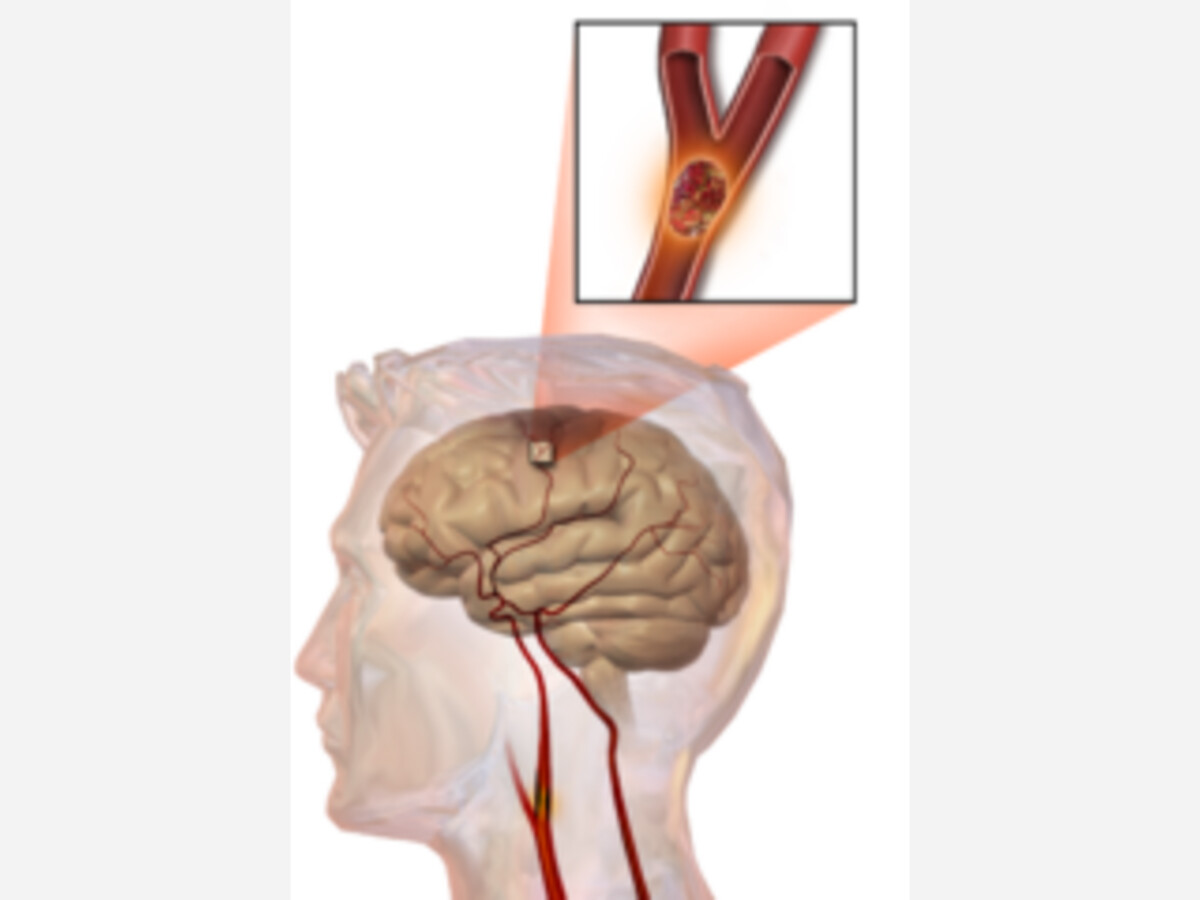



Embolytic stroke(Blausen Medical Communications, Inc., used with permission under Creative Commons)
Patients experiencing a stroke, the sixth leading cause of death in Massachusetts, could receive improved care under a new triage framework for emergency medical services.
Within 180 days, the Department of Public Health must develop a tiered system for transporting patients to hospitals that have various designations for providing stroke care, including the ability to treat the most severe strokes, under a policy provision within the $56 billion budget that Gov. Maura Healey signed into law Wednesday.
The American Stroke Association lauded the policy, which marks a departure from existing state law that requires emergency medical services to bring patients to the nearest hospital even if the facility cannot provide adequate stroke treatment. As it crafts new guidelines, DPH can consider transporting patients across state lines, determine plans for triaging and transporting suspected stroke patients, and establish other criteria to gauge "which level of care is the most appropriate destination," according to the budget language.
Dr. Lester Leung, an American Stroke Association spokesperson, said the policy will empower emergency medical service professionals to transport stroke patients "to the right place to get the right treatment at the right time."
"Every minute counts when you're having a stroke," Leung, a neurologist at Tufts Medical Center, said in a statement. "Rapid identification and treatment reduce the chances of having lasting disability from a stroke of any severity or dying from a major stroke."
Sen. Mark Montigny, who for nearly two decades has sponsored the "life-saving stroke care" legislation that's now embedded into the budget, accused "special interests" of consistently working to hamstring his bill. Meanwhile, more than 30 states have instituted similar tiered systems for stroke care, his office said.
"This policy has repeatedly won the endorsement of the Senate only to later fall victim to intense lobbying pressure from special interests more concerned with an entity's bottom line than providing patients life-saving care," Montigny said in a statement last month, without invoking specific organizations, as the budget awaited Healey's signature. "I am thankful to Senate Ways and Means Chair Michael Rodrigues for his strong support and that the House and Senate Ways and Means Committees came to an agreement during budget negotiations that ensured this policy can finally save lives. We have lost countless lives because of an ineffective bureaucracy and insidious lobbying from a few unqualified hospitals."
Montigny, a New Bedford Democrat, said he learned about the importance of timely care after his father had a "debilitating" stroke 30 years ago. But the issue appeared to gain more attention last session, after Senate President Karen Spilka had a stroke and reaffirmed support for Montigny's proposal, which was ultimately sent to study last time around.
"Time is a critical factor when seeking treatment for stroke patients and this potentially life-saving bill would better prepare our health care system and our residents so that we are doing it in the most safe and efficient way possible," Spilka, an Ashland Democrat, said last May. - Alison Kuznitz/SHNS |



Sunny, with a high of 33 and low of 21 degrees. Sunny during the morning, partly cloudy in the afternoon and evening, clear overnight.