79° and Sunny
Image
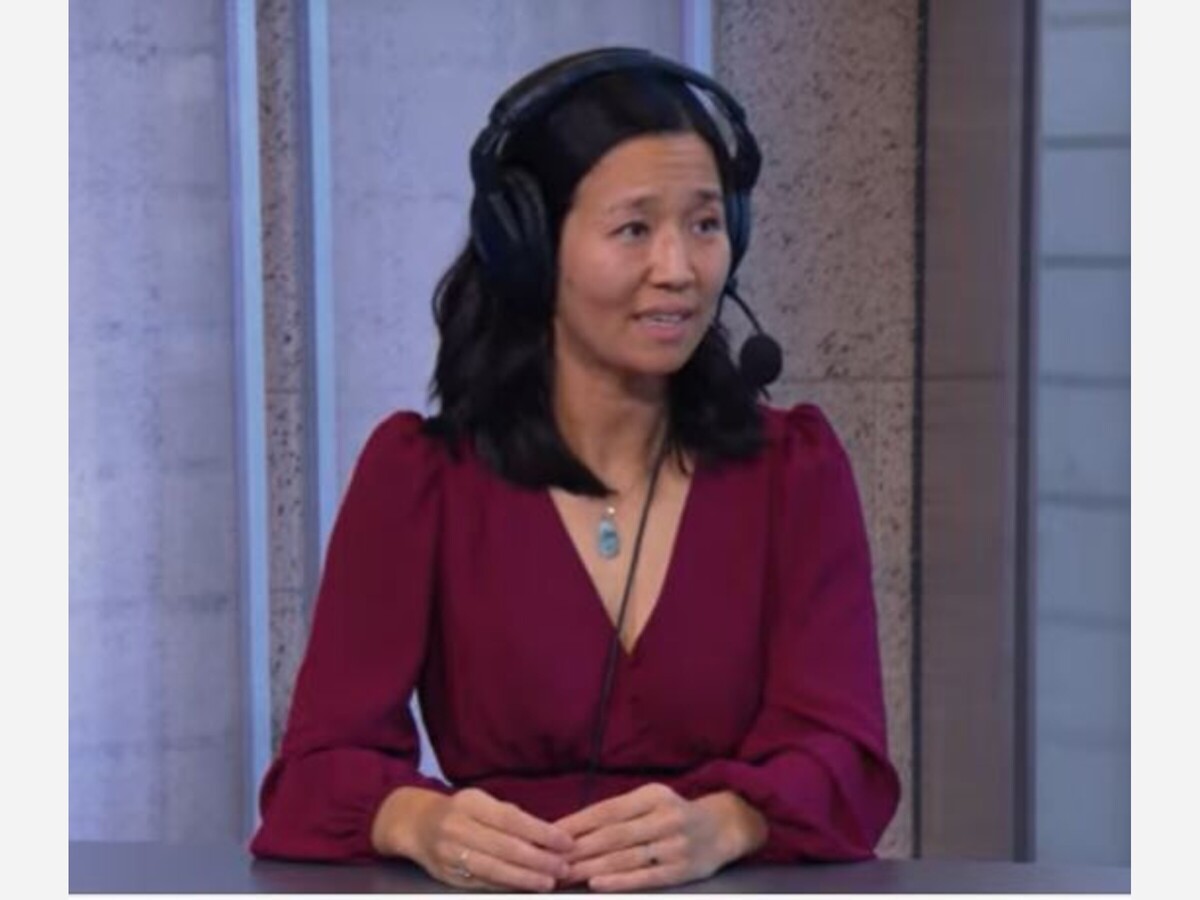



Boston Mayor Michelle Wu speaks on GBH News' "Boston Public Radio" on Dec. 16, 2025.
Ella Adams | SHNS
Boston Mayor Michelle Wu doesn't think the property tax battle is a personal one between her and the Senate's top Democrat, Medway's state Senator Karen Spilka.
Asked Tuesday by "Boston Public Radio" cohost Margery Eagan about a recent headline questioning whether the ongoing saga of Wu's Boston property tax shift proposal is "personal" between her and Senate President Spilka of Ashland, Wu said, "I don't think so. I mean, certainly not on my part."
"I will just observe this: It is such a tired narrative that whenever there are two women leaders, the first thing that people go to all the time is, 'Oh, must be personality or a cat fight, or this or that or the other," Wu said.
"There's a difference in opinion here, and there's a difference in district. There's a difference in pace and urgency to address the needs of the city of Boston," she continued. Wu said "there are a lot of cities who are in a similar crunch right now," and suggested "rigid and inflexible state tax laws" are at fault -- namely that cities and towns must ask the Legislature for tax rate shift permission past a certain point, per Proposition 2 1/2.
Senators have still not assigned to committee Wu's proposal (HD 4422) to temporarily shift more property tax burden onto commercial owners. Wu says the proposal will help relieve a 13% average increase in rates for homeowners when property tax bills are sent out in January.
"At a time when we're trying to strengthen our democracy here at home, the very least thing that should happen is — proposals that have been vetted for nearly two years should be allowed to come to the floor for a vote," Wu said of her proposal.
The Boston City Council and the Massachusetts House passed Wu's proposal twice last year, though the Senate never voted on it. In December 2024, Spilka said that based on talks with senators, "I have heard clearly that there currently is not sufficient support for this proposal."
Proposal opponents Sens. William Brownsberger and Nick Collins, who represent parts of Boston, are pushing “tax shock bills” (S 1933, S 1935) that would take a different route to address residential property tax relief.
A Spilka spokesperson has said the Brownsberger and Collins proposals would "support the most vulnerable residents without placing burdens on small businesses that will ripple throughout the state" and argued further that "the City should have engaged with the Senate on these options well before now.”
Wu said Monday she is not on board with the Boston-area senators' alternative proposals.
Asked Tuesday by cohost Jim Braude about whether she is "running" or "supporting" candidates challenging Brownsberger and Collins, Wu said, "I have not gotten involved in any of the 2026 races for those two districts."
A filing with state regulators dated Dec. 15 suggests that Wu senior policy advisor Daniel Lander is charting a 2026 challenge against Brownsberger for his Suffolk and Middlesex Senate district. Lander worked as a senior advisor for Wu's mayoral campaign in 2021 and has been working for Wu since.
Collins has drawn two potential challengers for his First Suffolk seat. Early education and child care advocate Latoya Gayle and Dorchester resident Malik Shaw both filed papers to create Senate campaign committees.
Pressed about whether she has spoken to Lander, Wu said, "Of course, I've had conversations with candidates in both of those races now. But I haven't made an endorsement, or haven't made an official step to support."
"In both cases, there are candidates who are running to challenge incumbents who are not running because I asked them to or because I had a conversation with them prior to their desire to run," Wu said. "I think there's pent up energy that something has to give, and that if we've been at it, and we see across the country that, we need to figure out affordability. And if the Democratic Party is going to be successful and keep moving in the right direction, at the very least in Massachusetts, we have to be the example of that."
Brownsberger on Sunday and Monday held evening community conversations about the property tax shift proposal, and has extensively posted about it on his website. The Belmont Democrat has suggested that "broadly shifting property tax rates across classes is not an efficient way to deliver relief."
He wrote in a weekend post that Boston's budget has grown by 26% over the last four years and that Wu's plan would give additional property tax breaks "even to our wealthiest homeowners, while increasing the burden on struggling small business owners." Raising commercial property taxes would not help revitalize downtown Boston, Brownsberger said, and employees and customers would bear much of the burden.
In conversations with her and constituents, Brownsberger "continues to say that it is because he believes Boston residents pay too little in taxes to begin with, that in Belmont and other parts of his district, people pay more taxes. I mean, I just, I don't know what to say," Wu said on the radio.
"If the goal is to ensure that we are keeping Boston and the greater Boston region competitive and trying to address housing costs and working furiously to build more housing to bring prices down — here's something that doesn't require the timeline of new cranes going up in the sky and city permitting and construction processes," Wu said.
Ella Adams is a State House reporter for the State House News Service and State Affairs Massachusetts.


Moderate rain, with a high of 82 and low of 48 degrees. Fog in the morning, sunny in the afternoon, clear in the evening, fog overnight.