36° and Overcast
Image
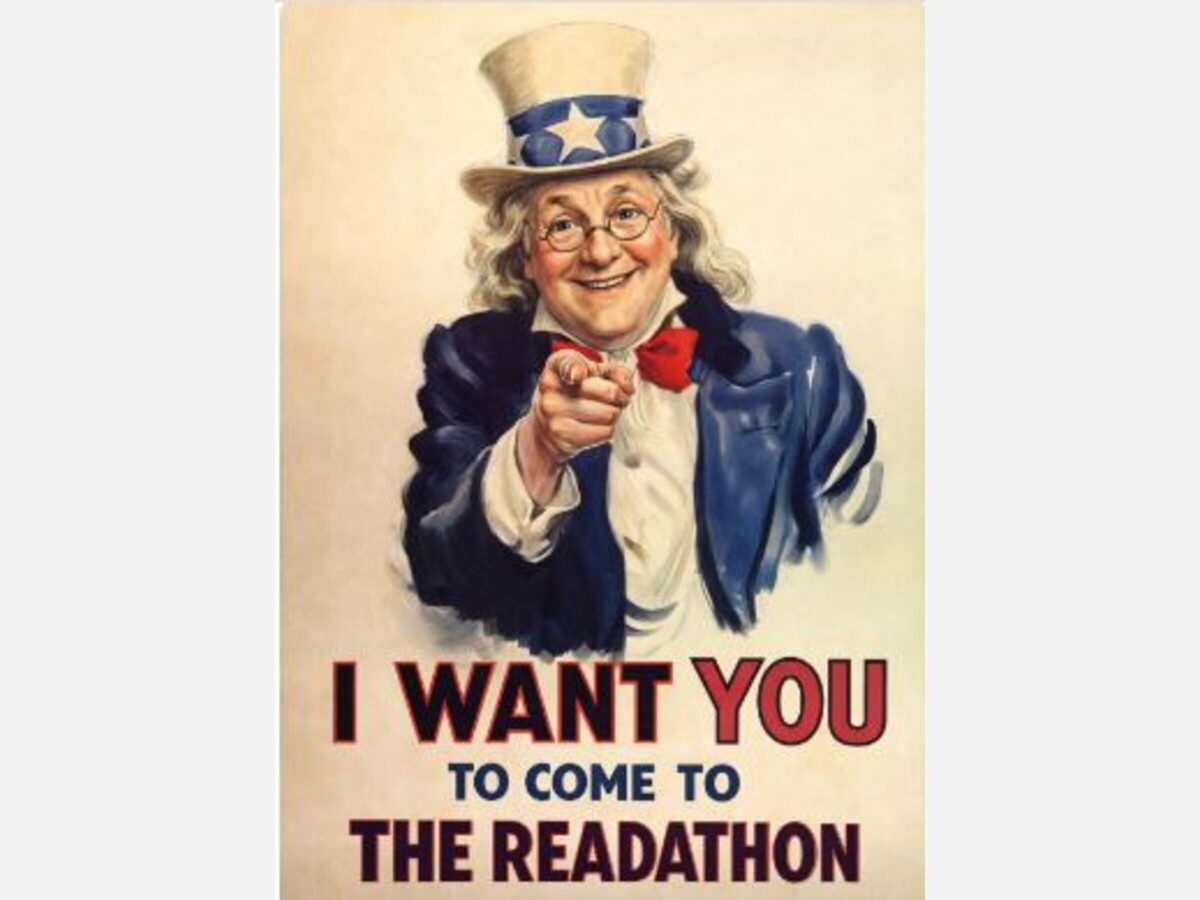



Inspired originally by the annual public, readathon of Moby Dick at the New Bedford Whaling Museum, interested locals in Franklin began participating in a reading of the autobiography of the town’s namesake, Ben Franklin, several years ago at the library, on or near Ben’s Jan. 17 birthday.
This year's reading starts at 9:30 at the Franklin Public Library, on Thursday, Jan 15, likely wrapping up by 6 or a little later. Readers (or listeners) are welcome to drop in at any point but those interested in signing up for one or two 10-minute slots should contact Alan Earls: alan.r.earls@gmail.com or text him at 508 560 3786.
While not yet quite as well attended as the Moby Dick event, which has become known internationally and often, in the past, featured reading by Sen. Ted Kennedy, the Autobiography Readathon has loyal readers who return every year. And it further underscores the historical connection between the town and America’s greatest ‘Founding Father.’
The cornerstone activity of Ben Franklin Month, the program is made possible through a grant from the Franklin Cultural District and funded by the Massachusetts Cultural Council.
Wikipedia notes that Franklin was a drafter and signer of the Declaration of Independence; and the first postmaster general as well as a diplomat, scientist, and inventor.
Ben's story begins with him as a small and very curious child in Boston, where he learned a trade and at an early age became an inventor (of swim fins) and intellectually curious beyond his years. it is a fun and lively story at every point and is modern and direct in its writing, making it easy to read.
Franklin became a successful newspaper editor and printer in Philadelphia, the leading city in the colonies, publishing the Pennsylvania Gazette at age 23. He became wealthy publishing this and Poor Richard's Almanack, which he wrote under the pseudonym "Richard Saunders". After 1767, he was associated with the Pennsylvania Chronicle, a newspaper known for its revolutionary sentiments and criticisms of the policies of the British Parliament and the Crown.
He pioneered and was the first president of the Academy and College of Philadelphia, which opened in 1751 and later became the University of Pennsylvania. He organized and was the first secretary of the American Philosophical Society and was elected its president in 1769. He was appointed deputy postmaster-general for the British colonies in 1753, which enabled him to set up the first national communications network.
He was active in community affairs and colonial and state politics, as well as national and international affairs. Franklin became a hero in America when, as an agent in London for several colonies, he spearheaded the repeal of the unpopular Stamp Act by the British Parliament. An accomplished diplomat, he was widely admired as the first U.S. ambassador to France and was a major figure in the development of positive Franco–American relations. His efforts proved vital for the American Revolution in securing French aid.
The Autobiography was written at different times during his life and was far from finished when Franklin died. Nonetheless, it is widely regarded as one of the most important documents in American history and has remained in print almost continuously.



Patchy rain nearby, with a high of 39 and low of 35 degrees. Patchy rain nearby in the morning, overcast in the afternoon, clear overnight.