63° and Overcast



Image
Ella Adams | SHNS
The House on Wednesday passed a bill restricting social media use for children and banning student cellphone use during the school day, adding language aimed at addressing addictive feeds and protecting certain vulnerable groups.
The bill (S 2581, as amended) passed on a 129-25 vote. Democratic Reps. Erika Uyterhoeven and Mike Connolly voted against the bill, along with the majority of the Republican caucus. Republican Reps. Norman Orrall and Marcus Vaughn cast votes in favor of the legislation.
"This is a matter of protecting our children with regard to public health. It's a matter of standing up to big tech, just as we stood up to big tobacco in the past," Education Committee Chair Rep. Ken Gordon said of the social media provisions, in a speech on the House floor. The bill prohibits social media use for children under 14 and requires that social media platforms obtain parental consent for users aged 14 and 15.
"When we talk about restricting social media access for children, we're responding to a growing body of evidence from trusted institutions that have carefully studied these effects," Gordon continued.
Should the law pass, Massachusetts would be the 18th state to place a ban or restriction on children's access to social media, he said, adding that eight states have passed laws "requiring various forms of age verification, parental consent, or like ours, a combination of the two."
The bill leans on the attorney general to write regulations for implementation and purposefully does not restrict any particular social media platforms, House Ways and Means Chair Aaron Michlewitz said after a closed-door Democratic caucus early in the afternoon.
Representatives Wednesday evening added language requiring platforms to prohibit a user 14 or 15 years of age from using "addictive social media feeds," which the bill defines as content provided by a platform employing algorithms that "analyze user data or information on users to select content" for them, including features like infinite scrolling, push notifications or alerts, auto-play video, and displays of personal interactive metrics.
Language was also added to require social media companies to "set default safety settings to prioritize the health and wellness" of users 14 and 15 years of age, including settings that restrict visibility, sharing and direct messaging to "connected accounts." The bill defines those accounts as being "directly connected to the user’s account, including, but not limited to, a friend, follower or similar connection with access to view the user’s content."
Under the bill, platforms can't send notifications to 14- and 15-year-olds between the hours of 12 a.m. and 6 a.m. eastern standard time.
"Research increasingly links early social media use to anxiety, depression, diminished self esteem and worse. A social media ban for children under 14 is not extreme. It is responsible. We set age limits for driving, for voting, for working, for alcohol consumption — the digital world should be no exception," Rep. Alice Peisch said. A Peisch bill (H 666) included the concepts behind the social media portion of the bill, Gordon said earlier in the day.
"The bill also establishes a transitional period from ages 14 to 16, in which children can access social media with their parents permission, and gives parents some ability to monitor that access," Peisch said.
Concerns arose early Wednesday that provisions in the bill enabling parents to request access to their children's user data could potentially harm LGBTQ youth, who often find safe spaces in online communities, Uyterhoeven said. Rep. Sam Montaño filed an amendment to the bill that would ensured no data submitted by users was made available to a parent or guardian prior to the bill's effective date.
"It's an LGBTQ safety thing — we don't want kids to get outed," Montaño told the News Service ahead of the session. "I understand the impetus of the bill, I understand the concern. Like most things, there are unintended consequences for some people if you're not the average neurotypical kid."
Reps added language Wednesday night in a consolidated amendment that "recognizes that there should be some limits on that monitoring in order to protect certain vulnerable populations," Peisch said. A section of the House bill now reads that, "No social media platform shall share any data related to a minor user and their LGBTQ+ protected status or any other protected status pursuant to chapter 151B."
A consolidated amendment also added, to provisions enabling parents to request access to data submitted by their child, that, "No social media platform shall provide data other than what was submitted for the purposes of verifying the age of the user."
Across the country, the industry has challenged social media age verification laws often on First Amendment rights concerns. Progressives Uyterhoeven and Connolly raised data privacy concerns when asked about their dissenting votes.
"It's not like, 'Oh, maybe it will leak or maybe not' – it's an inevitability. Having to prove whether you're a certain age using a government-issued ID or facial recognition, all of those methods, we know that there's been several leaks that have happened," Uyterhoeven said. "The fact that we put in no guardrails around that is a massive privacy and data security issue."
According to bill language, social media platforms would be required to "implement an age assurance or verification system to determine whether a current or prospective user on the social media platform meets the age requirement." That system would "consist of the best technology available to reasonably and accurately identify a current or prospective user’s age," per bill text.
While Connolly supports banning the use of social media for young kids, he said the legislation would require all people to verify their age, and that "big tech would be permitted to retain your government IDs or maybe even biometric data."
"This is just another area where we're really opening up the footprint of big tech," Connolly added.
Should the bill go to conference committee as anticipated, the Senate would have to determine whether to go along with the social media aspect of the proposal, which was not addressed in the version of the bill (S 2581) that cleared the chamber in July 38-2, and that would ban cellphones for students throughout the school day.
Ella Adams is a reporter for the State House News Service.
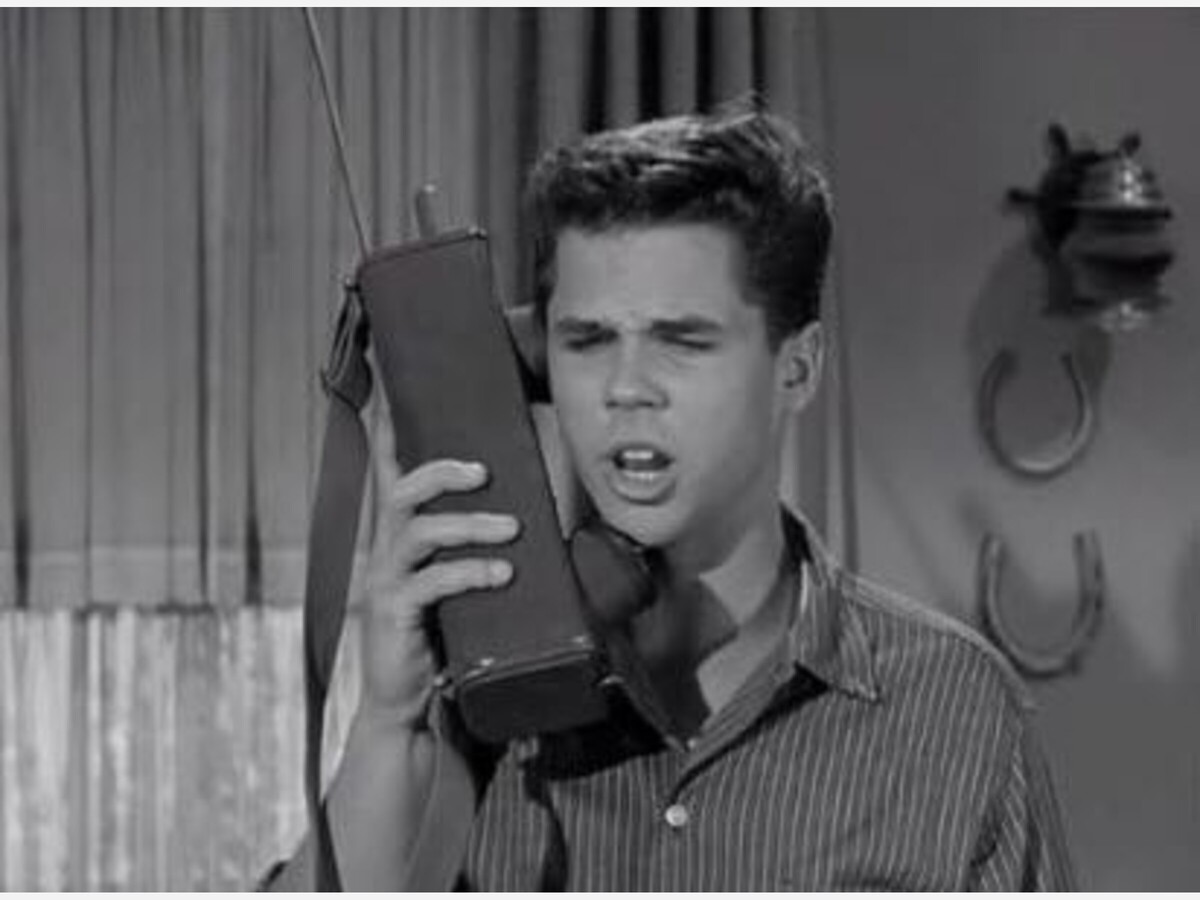
(IMAGE: "Wally" from Leave it to Beaver sitcom, 1961 -- screen shot)



Patchy rain nearby, with a high of 80 and low of 64 degrees. Overcast for the morning, cloudy in the afternoon, sunny for the evening, clear overnight.