63° and Clear
Image



A new report from the Fiscal Alliance Foundation is casting Massachusetts's safety net programs as costly, error-prone and in need of structural reform, while anti-hunger advocates say the analysis misrepresents how those programs function and the economic realities driving enrollment.
Authored by Fiscal Alliance Foundation visiting policy analyst Hayden Dublois, the report examines Medicaid, SNAP, cash assistance and housing aid, arguing that together they have "grown unchecked" and are placing increasing pressure on the state budget.
"The fiscal reality of this situation that Massachusetts is in is dire," Dublois said in a press conference Thursday, noting that nearly $30 billion was spent across the programs in 2024.
Within that broader critique, the report highlights the Supplemental Nutrition Assistance Program, or SNAP, pointing to both rising caseloads and a sharp increase in the program's payment error rate — a metric rate that has taken on added significance as federal policymakers plan strict oversight and financial penalties for states.
The report points to a roughly 40% increase in SNAP enrollment over the last decade and an error rate that climbed to 14.1% in fiscal year 2024. It says those trends are the result of policy decisions that expanded access while weakening oversight.
"Massachusetts made a series of policy choices that actively fueled this crisis," Dublois said, citing work requirement waivers and eligibility rules that allow households to qualify without asset limits.
The report also raises concerns about verification practices, arguing that policies such as longer certification periods and reliance on self-attestation have made it harder to catch ineligible cases and contributed to higher error rates.
Dublois also pointed to federal data to argue that "more than $1 billion was erroneously spent in the Massachusetts SNAP program from 2022 to 2024 alone," and warned that, under new federal rules, the state could face hundreds of millions of dollars in penalties if error rates remain elevated.
That interpretation was strongly disputed by Victoria Negus, a senior economic justice advocate at the Massachusetts Law Reform Institute, who said the report "vastly misstates some things, is incorrect about some things, and incorrectly conflates facts."
Negus said the report reflects "a fundamental misunderstanding of how SNAP operates and the critical role that it plays for families who are struggling in Massachusetts," particularly in the wake of the COVID-19 pandemic and ongoing economic pressures.
"The SNAP caseload is supposed to reflect the economic realities in our local communities," she said, pointing to increased food insecurity and policy efforts to connect eligible households to benefits. A Greater Boston Food Bank and Mass General Brigham report released this month showed food insecurity in Massachusetts reached a record high in 2025, affecting 40% of households.
She added that the report's framing of enrollment growth as inherently problematic "fundamentally misunderstands" the program's purpose.
Negus contested the meaning of the payment error rate, which the Fiscal Alliance report links to waste and fraud. Negus and state officials emphasize that the metric captures both overpayments and underpayments in a complex eligibility system.
"The payment error rate isn't fraud," Negus said. "It looks at overpayments and underpayments," often driven by fluctuating incomes and complicated reporting requirements.
In testimony to lawmakers last month, Department of Transitional Assistance Commissioner Michael Cole similarly described the error rate as "a federally defined measure of how accurately states adhere to federal rules," adding that "payment errors are, in large part, accidental misreporting by our clients due to the complex nature of the SNAP rules and regulations."
Cole said Massachusetts maintained relatively low error rates of 4-6% prior to the pandemic, and that increases followed federal policy changes that prioritized rapid benefit delivery during the COVID-19 public health emergency.
"These changes were necessary to prevent hunger and stabilize households during an unprecedented crisis," he said.
Negus also challenged one of the report's headline figures, calling the claim that more than $1 billion was erroneously spent "just wrong," and arguing it is based on a misuse of federal error rate calculations.
"You cannot extrapolate the payment error rate to the entire caseload of payments," she said, adding that the estimate also ignores how pandemic-era policies temporarily boosted benefits for eligible households, meaning many recipients "were not overpaid anything" even if the system listed it as a technical error.
She further emphasized that the report does not account for how the pandemic fundamentally reshaped the program, with federal directives requiring states to expand access, reduce administrative burdens and quickly deliver aid at an unprecedented scale. Those changes, she said, were intentional and necessary, even if they contributed to error rates that measured higher as normal verification processes were later restored.
The Fiscal Alliance Foundation contends that this statistic "is not a rounding error."
"More than a billion dollars in improper SNAP payments in just two years is not a rounding error, it is a complete failure of oversight. Taxpayers are being asked to fund a system where fraud is ignored, safeguards are weakened, and accountability is treated as optional. That is unacceptable," Paul Craney, executive director of the Fiscal Alliance Foundation, said.
Negus said that though the error rate in Massachusetts was 14.1% in fiscal year 2024, the number cited in the report, it fell in fiscal 2025 to 11% according to the DTA. That puts Massachusetts in the middle of other states.
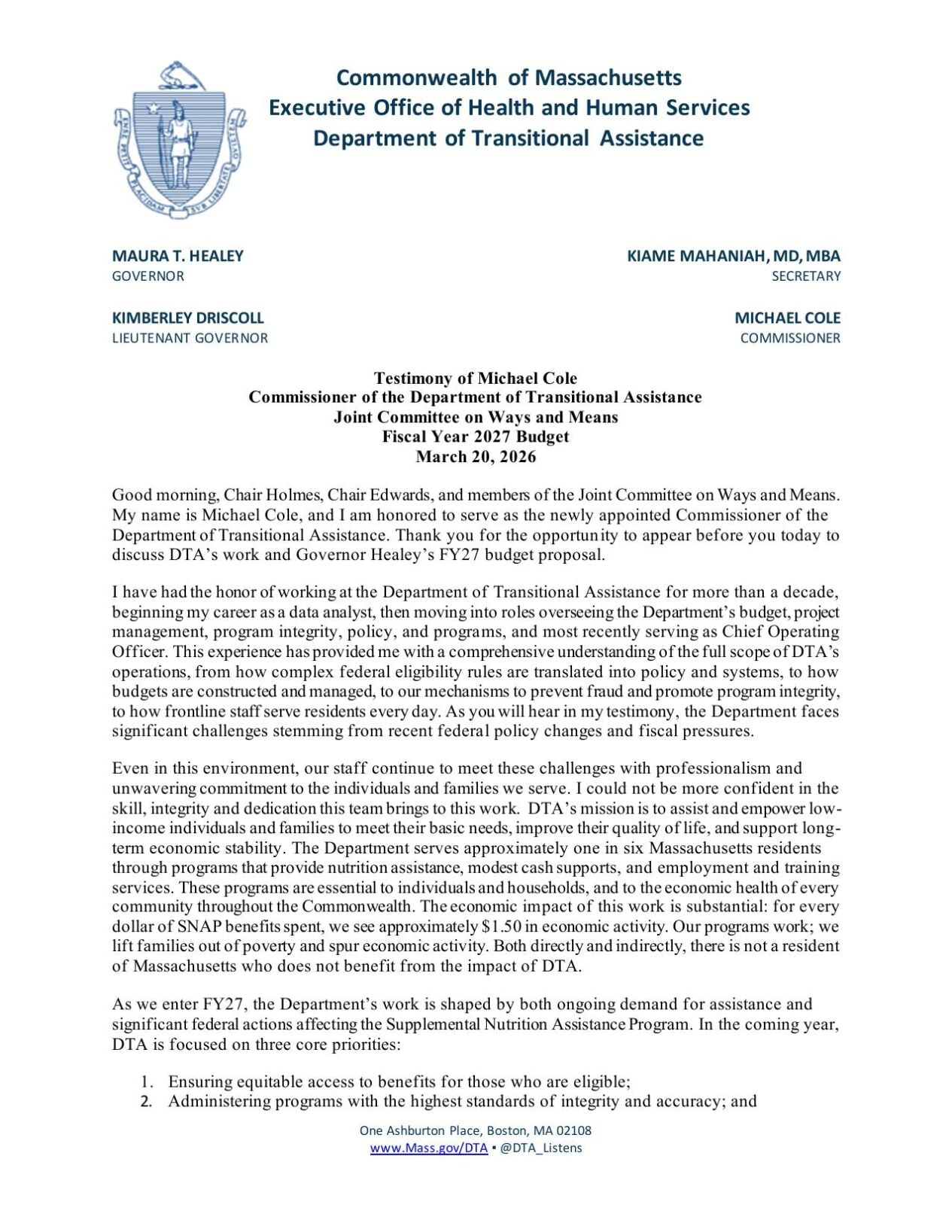
State officials are now attempting to bring that error rate down further, with Cole outlining efforts to hire additional caseworkers, strengthen training and improve data systems — steps he said are aimed at improving accuracy as Massachusetts faces potential federal penalties of up to $400 million if it fails to meet stricter thresholds under recent federal law.
The Fiscal Alliance report argues those administrative steps fall short.
Asked during the press conference about the efforts to address the error rate by staffing up the agency, Dublois said, "Adding more caseworkers without fixing the underlying policies is like mopping the floor while the faucet's still running."
"It's going to increase Massachusetts' administrative costs with a greater cost share now on states due to changes at the federal level," he said. Due to changes in the One Big Beautiful Bill Act, the program's administrative costs which are currently split 50/50 between federal and state dollars will be split 25/75 starting Oct. 1.
"So all you're going to have is more bureaucrats, more caseworkers administering a program with a broken policy framework, until you actually engage in the policy reforms, ending the waivers of the work requirements, eliminating the asset test loophole, better eligibility verification and program integrity — until you make those changes, throwing more bureaucrats at the problem is not a solution," Dublois said.
Negus, by contrast, said staffing is essential to improving accuracy in a program governed by complex federal rules.
"There is a direct correlation between sufficient staffing and improved accuracy," she said, arguing that insufficient staffing leads to both errors and barriers for eligible households.
Beyond SNAP, the report raises concerns about other programs, including Medicaid — which it describes as consuming nearly a quarter of the state budget — and cash assistance, where it argues spending has shifted away from work-related supports.
Dublois said the overall system is "drifting further away from its original purposes of helping people achieve self sufficiency," and called for policy changes including stricter work requirements, enhanced verification and limits on eligibility.
"I continue to be really aggressive when it comes to fraud," Gov. Maura Healey said Thursday afternoon when asked about the Fiscal Alliance Foundation report, citing work she did as attorney general.
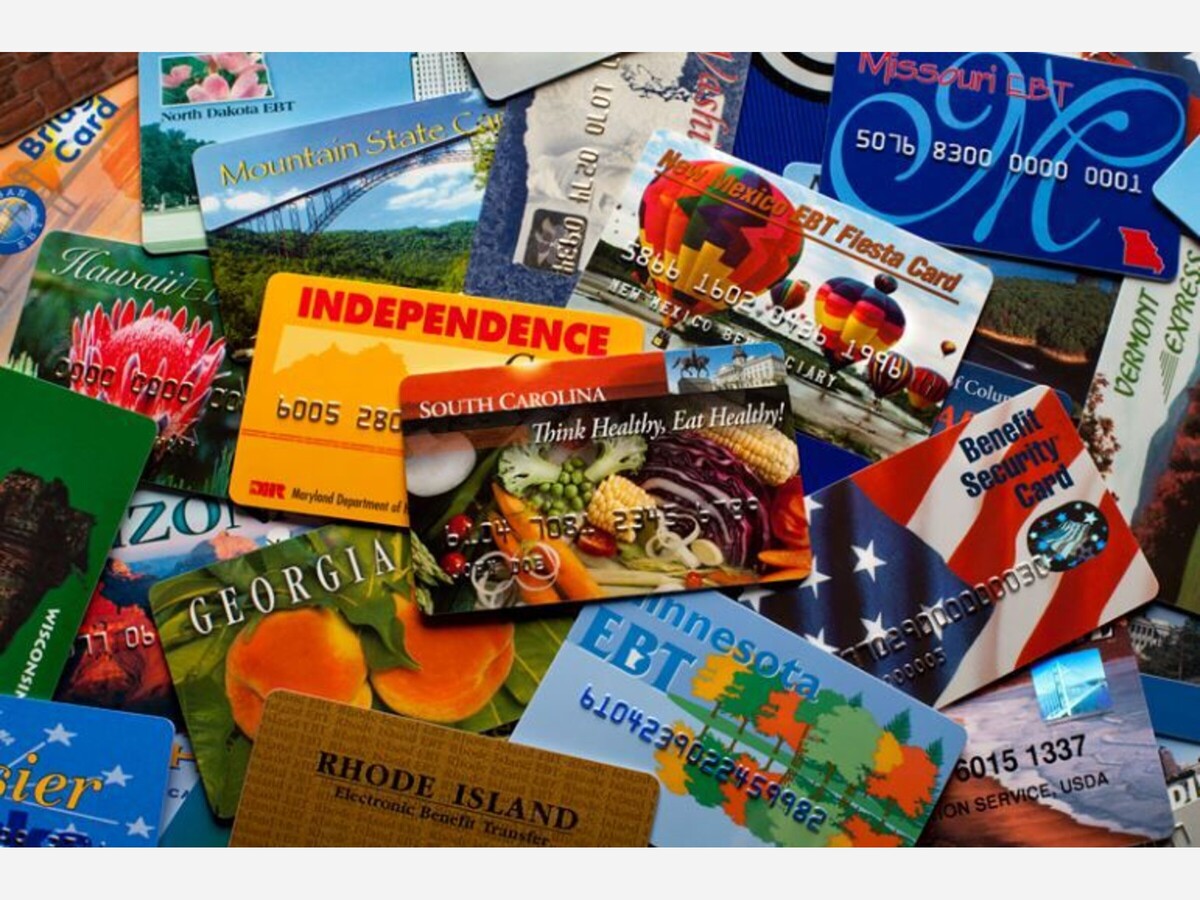
The governor also promoted a coming change to state benefit cards: the addition of chip cards and the ability to tap to pay.
"I think that's really important. Turns out, we're only the third state in the country to do this," she said. "So I think we're leading on aggressive efforts to combat fraud, because I want to make sure that every taxpayer dollar is spent well."
Sam Drysdale is a reporter for State House News Service and State Affairs Pro Massachusetts.



Sunny, with a high of 80 and low of 60 degrees. Sunny during the morning, clear in the afternoon and evening,