53° and Overcast



Image
Colin Young | SHNS
Gov. Maura Healey has the next 10 days to review and act on the $63.4 billion budget that lawmakers sent her Wednesday, the first day of the new fiscal year the budget covers.
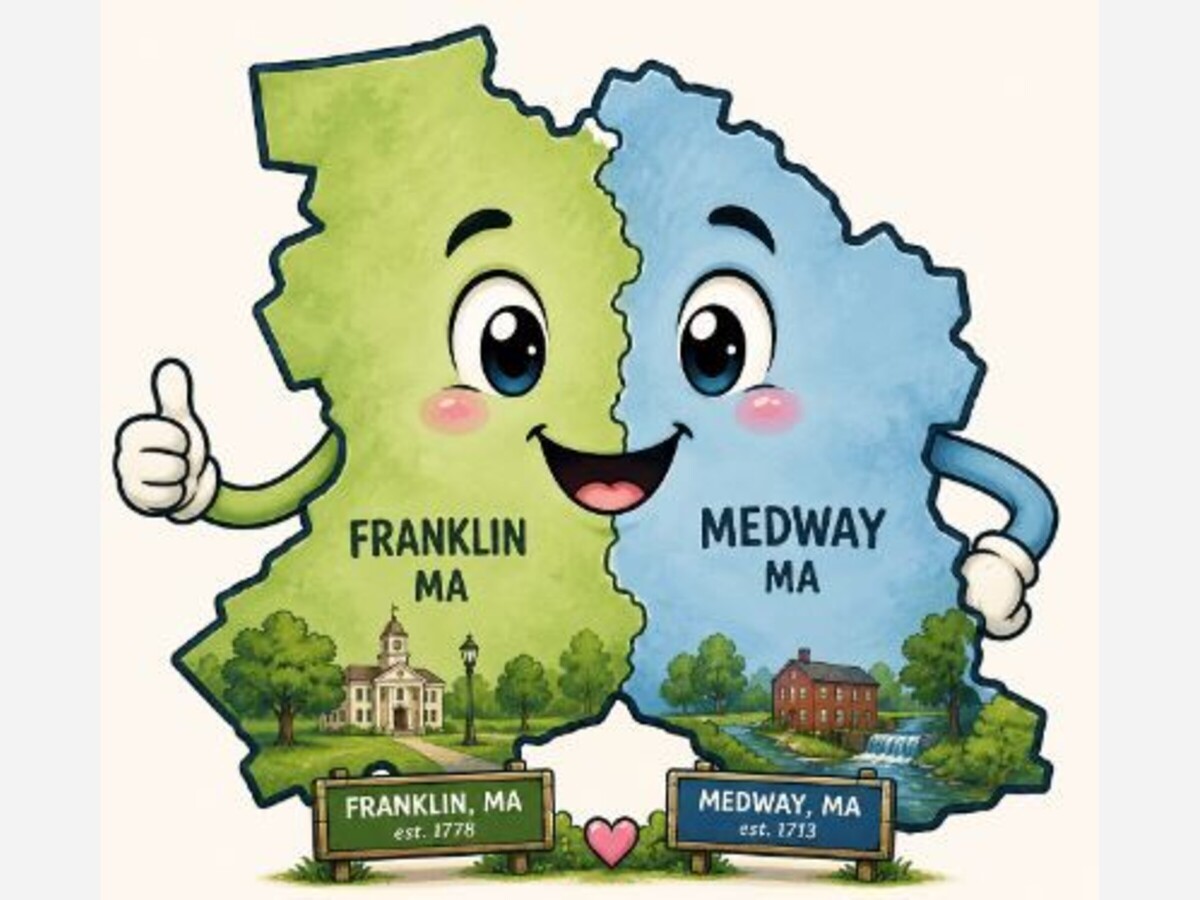
The compromise (H 5555) that cleared both branches Wednesday with just a handful of dissenting votes features $63.42 billion in line-item spending, an increase of $2.37 billion or 3.9% over the budget Healey signed last July and roughly $54.3 million larger than the fiscal year 2027 budget she proposed in January. "The boost was a $40 million increase for unrestricted government aid bringing total UGGA funding to $1.363 billion that will be distributed on a per capita basis," said State Rep. Jeff Roy. The Chapter 70 increase was $160 per student, both measures will benefit Franklin and Medway, he added.
The budget includes $2.7 billion in spending supported by revenue from the state surtax on household income above about $1.1 million, split roughly 64% for education and 36% for transportation. It includes no tax or fee increases and projects to deposit about $50 million into the state's primary savings account by the end of the budget year.
Massachusetts Taxpayers Foundation President Doug Howgate said the budget accord was "remarkably aligned" with Healey's January proposal and closes a $3.5 billion gap between projected revenues and spending. At 3.9%, MTF noted that spending growth is notably restrained compared to the four-year average increase of 6.2%.
Still, the new budget "grows spending at a healthy clip," Howgate said, and addresses the structural gap by allowing more capital gains tax revenue to be used in the budget, drawing from existing trust fund balances, redirecting some gaming revenues, delaying conformity with some federal tax relief measures, and packing in a "hodge podge" of other measures, he said.
House Ways and Means Chairman Aaron Michlewitz said he thinks the consensus budget will position Massachusetts well for the next year. Supplemental spending has become a regular activity on Beacon Hill, but Michlewitz pointed out that it has been far less common for a governor to have to trim back a budget passed by lawmakers.
"It's always hard to predict what's going to happen in the future, you know, particularly around revenues and things of that nature. But I think the budgets that we've done over the last number of years here have been pretty sustainable. I think we've only had to do one round -- and it was really like a half a round -- of 9C cuts ... over the past almost decade," he said Wednesday. "So, I think that that shows you that we've been on a pretty good, sustainable pace. And I think this budget is another step in that direction, and we'll continue to keep that momentum going."
While concerns about the federal outlook remain, the budget relies on more federal revenues than in fiscal 2026, Howgate said, with small adjustments for revenue expectations in the first half of 2027. Howgate cautioned of the potential for the state to need to pick up costs of the federal SNAP food benefit program and rising Health Safety Net Fund costs associated with people losing MassHealth coverage.
"Despite some recent good news from our own Supreme Judicial Court on a reckless ballot question that would have caused deep fiscal anxiety, the commonwealth still faces uncertain times, particularly in the healthcare sector, as last year's federal actions concerning Medicaid are being implemented," Michlewitz said when introducing the budget on the House floor. "Yet, despite the chaos and the naysayers, our economy continues to grow, our tax revenues are up, and the sky is not falling, in fact, like some continue to have you believe. That, plus ample reserves, leaves the commonwealth well prepared for what lies ahead."
The Massachusetts Fiscal Alliance said the budget itself does not hold up to the talk of fiscal restraint, and urged the Legislature "to use the coming fiscal year to pursue structural reforms that improve accountability, strengthen oversight of taxpayer-funded programs, deliver broad based tax relief, and place the Commonwealth on a more sustainable financial path rather than relying on temporary budget solutions year after year."
"Rather than confronting structural spending problems, this budget depends on one-time funding sources and accounting shifts while continuing to expand programs that will place increasing pressure on taxpayers in the years ahead," Executive Director Paul Craney said.
The compromise budget allocates $122 million for caseworkers at the Department of Transitional Assistance, which the Massachusetts Budget and Policy Center said would be a nearly $21 million drop compared to expected funding in fiscal 2026. The funding level would translate into 150 caseworkers being laid off, MassBudget said while citing an analysis from the Massachusetts Law Reform Institute.
"Instead of cutting, the state should be increasing this funding and adding even more DTA caseworkers," MassBudget said Wednesday. "Failing to address the shortage of caseworkers is also likely to have serious consequences for federal funding moving forward."
Until the annual budget is signed, state government is operating under an interim budget that Healey signed Tuesday.
Also Wednesday, the economists at MassBenchmarks issued their latest outlook. They said state GDP growth registered at 2.4% in the first quarter of the year, slightly ahead of the 2.1% national average. The economic journal published by the University of Massachusetts Amherst Donahue Institute said Massachusetts "is seeing significant activity in the development and application of AI in areas ranging from air traffic control and robotics to life sciences and machine intelligence."
"While Massachusetts does not have a 'big four' headquarters ... the state’s economic output benefits from the national surge in AI investment and development," the latest report from the group said. "A critical issue for both the U.S. and Massachusetts is how this economic growth is distributed. The economy's expansion is concentrated in business investment whose returns flow largely to equity holders rather than workers."
In the report's conclusion, MassBenchmarks said the state "economy appears to be 'hanging in there,' but this aggregate stability conceals several areas of concern."
[Michael P. Norton and Alison Kuznitz contributed to this report.]
Colin Young is the deputy editor for State House News Service and State Affairs Pro Massachusetts.
Image courtesy of a creative but geographically challenged ChatGPT



Overcast, with a high of 61 and low of 47 degrees. Patchy rain nearby during the morning, overcast in the afternoon, clear during the evening, overcast overnight.