53° and Overcast



Image
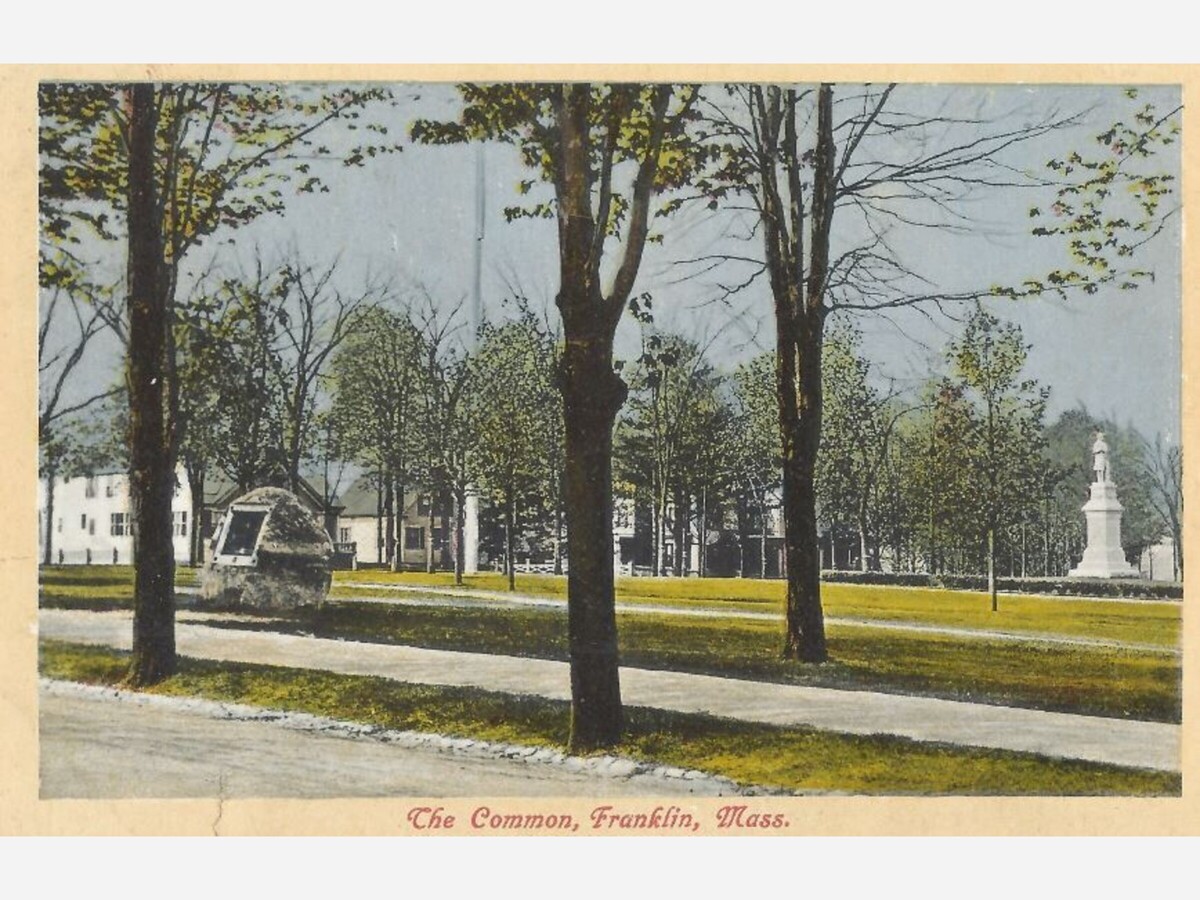
The green at the heart of Franklin is the best common in the Commonwealth. Some might call that hyperbole or hubris; I call it common sense.
It's certainly been one of the busier town commons in the last month. In addition to the regularly scheduled Friday Farmer’s Markets, we’ve hosted two World Cup Watch Parties, the Pride Festival, and the Fourth of July Carnival. Thousands, maybe tens of thousands, of feet have traversed our common ground to attend outstanding events that dozens, if not hundreds, of volunteers have made possible.
This last month has been a continuation of a tradition passed down by generations of Franklinites wherein the green at the center of Town truly has been a public good enjoyed and employed by all.
It was purchased in 1787, just nine years after our Founders struck “Exeter” from our incorporation papers and wrote “Franklin” in its place. Like in other New England towns, militia companies drilled there. Firewood was gathered nearby. Markets convened there. Religious processions crossed it on their way to the meetinghouse. The common belonged to everyone, but precisely because it belonged to everyone, it demanded something of everyone.
It shaped more than the landscape. It shaped citizenship.
Active citizenship was on the minds of our founding generation when they separated from Wrentham, enabling easier access to a meeting house during the Revolutionary 1770’s.
In many ways, Franklin’s story mirrors America’s larger narrative and serves as its microcosm. Both are the story of expanding liberty and civic access–often two steps forward, one step back– generation after generation.
Our story is the story of expanding the Common.
When the town asked Benjamin Franklin for a church bell, he famously sent books instead, noting that "sense" was preferable to "sound." In 1790, the people of Franklin voted in Town Meeting that those books should be freely available to every resident, creating what became America's first public lending library.
Knowledge became a type of common.
A generation later, a young Horace Mann walked these same streets. Raised with little formal education, he found in those books an education that would shape his life's work. His vision of the Common School—that every child, regardless of wealth, deserved an education—was not merely an educational reform. It was an extension of the same civic philosophy embodied by the Common itself. Some gifts become more valuable the more widely they are shared.
More than a century later, Lydia and Annie Ray carried that tradition forward by giving Franklin the Ray Memorial Library. They did not replace the town's first great gift; they expanded it. Like every healthy community, Franklin's history is one generation receiving an inheritance and enlarging it for the next.
A few years after the Ray Memorial Library was dedicated, a local boy who made it big as a Harvard-educated lawyer and MLB star (his record of seven consecutive hits in as many at bats still stands in the NL) enlisted to fight in the first World War. Despite being more than a decade older than those being drafted, Captain Eddie Grant reminded us that, in order to have common civic access and liberty, our sacrifices, too, must be held in common.
Two generations after Grant gave the last full measure of devotion in the deadliest campaign in US military history, Ms. Palma Johnson had a message for her second grade students: civic participation is not limited to adulthood; the Common is not 18+. Her “ladybug lobbyists” continue to inspire educators and young people today.
As with our nation’s, Franklin’s path toward progress has not been linear. The Common can contract as well as expand. Franklin has never been immune to racism, sexism, ableism, or homophobia. We’ve experienced bitter political disagreements, contentious teacher strikes, even acts of hatred and violence that tested our community. Every generation has confronted its own challenges.
Yet every generation has also left Franklin a little better than it found it.
My kids enjoy the shade on the Town Common because someone planted trees whose branches they would never sit beneath.
That is the work of a common.
So as we celebrate America's 250th anniversary today, and prepare to celebrate Franklin's 250th anniversary in just two years, let us recommit ourselves to expanding the Common—not simply the place, but the idea.
Join a civic or fraternal organization, like Franklin Fathers, SHE Leads, the Franklin Lions Club, or the Knights of Columbus.
Volunteer at the Franklin Food Pantry or SAFE Coalition or one of the many nonprofits that strengthen our community every day..
Coach a youth sports team, mentor a student, or serve as a Scout leader.
Attend a Town Council meeting—or stream one from home—and learn how your town works.
Support the Franklin Public Library, the Franklin Historical Museum, or visit one of our public parks.
And if you'd like to help shape Franklin's 250th anniversary, we'd love your support. Email chair.250@franklinma.gov and join the Franklin 250 Anniversary Committee as we plan the celebrations ahead.
Plant a tree.
Serve a neighbor.
Share an idea.
Show up.
Expand the Common.
Jayson Joyce,
Franklin, MA

Overcast, with a high of 61 and low of 47 degrees. Patchy rain nearby during the morning, overcast in the afternoon, clear during the evening, overcast overnight.