53° and Overcast



Image
Tech companies are cutting off support for many so-called "smart" appliances, phones and other connected devices, leaving consumers no choice but to trash products and fuel the growth in electronic waste.
According to MASSPIRG Education Fund's "Electronic Waste Graveyard," an interactive online database launched Tuesday, these no-longer usable products are adding at least 1.7 billion pounds in potential e-waste each year.
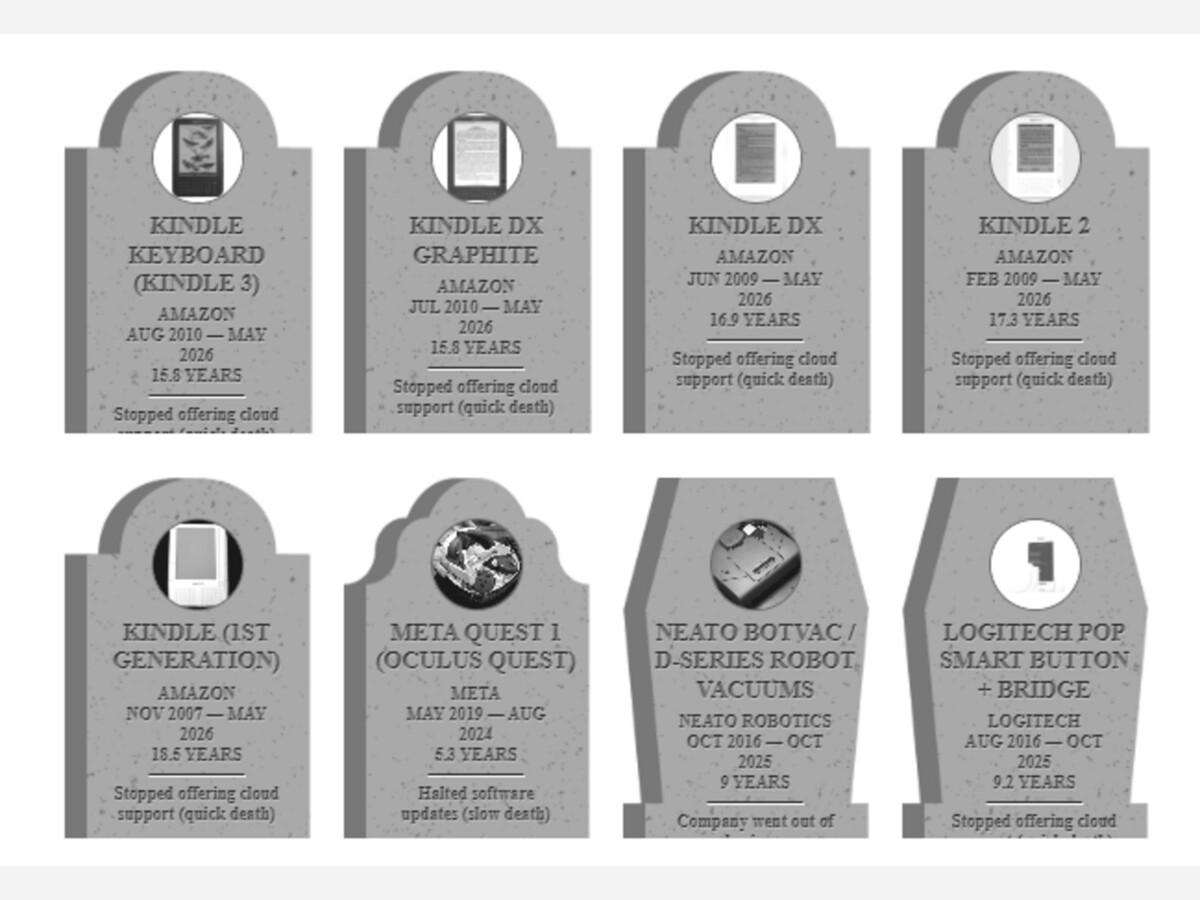
Researchers gave each device its own gravestone in the database, helping to raise awareness of the growing problems around short device lifespans and toxic electronic waste.
“Tech should be made to last, but all too often, devices that should keep working are forced into the junk pile,” said Janet Domenitz of the MASSPIRG Education Fund. “When we have to replace devices that we should be able to keep using, update or fix, it fuels our massive and growing electronic waste problem.”
Most internet-connected electronics require server access or security updates to keep working, but manufacturers have no obligation to provide that necessary support. When a device gets cut off from support, it can lose key features, become less secure, or it may even stop working entirely. The new database details new product shutdowns over the past year. While some affect a handful of niche gadgets, one, Microsoft's end of support for Windows 10, is affecting hundreds of millions of computers at once.
Beyond Windows 10, the past year brought a steady drumbeat of smaller but no less frustrating shutdowns. Each of the products below still works as hardware – batteries hold a charge, motors spin, screens light up – but each lost some or all of its function when a company flipped a switch on their server. The new entries to the Electronic Waste Graveyard include:
|
Product |
Date of Death |
Cause |
Why It Should Still Work |
|
Windows 10 (PCs) |
Oct. 14, 2025 |
Software support ended |
Up to 400 million PCs are hardware-incapable of running Windows 11 but otherwise fully functional. |
|
Kindle (13 older models, 2007–2012) |
May 20, 2026 |
Cloud/store access shut off |
E-readers still display and hold a charge, but can no longer buy, download, or sync books, including from public libraries. |
|
Google Nest Learning Thermostat (1st & 2nd gen) |
Oct. 25, 2025 |
Partial cloud shutdown |
Hardware still heats and cools homes, but loses remote control and scheduling features. |
|
Belkin Wemo smart home line (dozens of models, 2015–2023) |
Jan. 31, 2026 |
App and cloud service shutdown |
Switches, plugs, and sensors still function physically but lose app control and automations. |
|
Logitech POP smart button and bridge |
2025 (2-week notice) |
Total cloud shutdown |
Buttons still press, but with no cloud to talk to, they do nothing. |
|
Neato robot vacuums |
Oct. 2025 |
Cloud shutdown |
Robots still run and clean but lose mapping, scheduling, and app control. |
|
Meta Quest 1 |
May 2, 2025 |
Developer updates ended |
Headset hardware still works, but the software ecosystem will steadily shrink. |
|
Samsung Galaxy Note 20 family, S20 FE. |
March 2, 2026 |
Major update support ended |
Phones remain functional but will stop receiving security updates. |
“The goal of our Right to Repair campaign is to challenge the trend toward throwaway tech. That means standing up to manufacturers when their actions leave our devices unworking or unfixable,” commented Domenitz. “Consumers, and the planet, deserve better.”
The full online database of products can be found here.



Overcast, with a high of 61 and low of 47 degrees. Patchy rain nearby during the morning, overcast in the afternoon, clear during the evening, overcast overnight.