52° and Light rain



Image
If you have any questions about this week's report, e-mail us at bob@beaconhillrollcall.com or call us at (617) 720-1562.
Beacon Hill Roll Call
Volume 51-Report No. 32
August 3-7, 2026
Copyright © 2026 Beacon Hill Roll Call. All Rights Reserved.
By Bob Katzen
GET A FREE SUBSCRIPTION TO MASSTERLIST – Join more than 30,000 people, from movers and shakers to political junkies and interested citizens, who start their weekday and Saturday mornings with MASSterList—the popular newsletter that chronicles news and informed analysis about what’s going on up on Beacon Hill, in Massachusetts politics, policy, media and influence. The stories are drawn from major news organizations as well as specialized publications.
MASSterList will be e-mailed to you FREE every Monday through Saturday morning and will give you a leg up on what’s happening in the blood sport of Bay State politics. For more information and to get your free subscription, go to: www.massterlist.com
THE HOUSE AND SENATE: Beacon Hill Roll Call reports local representatives' votes on roll calls from recent sessions. There were no roll calls in the House or Senate last week.
ALZHEIMER’S DISEASE AND OTHER DEMENTIAS (H 5613)
House 155-0, approved and sent to the Senate legislation that supporters say would strengthen dementia care, improve support for families and caregivers, expand workforce training and enhance public health efforts to address Alzheimer's disease and other dementias. They noted the bill takes a comprehensive approach to improving care for individuals living with dementia while equipping health care providers, first responders, hospitals and state agencies with the tools and resources needed to better serve patients.
The legislation establishes mandatory dementia training programs for municipal and state law enforcement officers, firefighters and emergency medical services personnel including a minimum of two hours of initial instruction followed by biennial continuing education; expands notification requirements so that families or legal representatives are informed of an initial diagnosis of any dementia; enhances protections for patients and families by requiring acute care hospitals to allow medically appropriate visitation for patients living with Alzheimer's disease or other dementias, as well as those exhibiting symptoms of cognitive impairment; expands the state's Health Care Workforce Loan Repayment Program to provide loan repayment assistance for professionals specializing in geriatrics and geriatric psychiatry, in order to help recruit and retain clinicians with expertise in caring for older adults; and requires the Department of Public Health to expand public awareness efforts on brain health and dementia through culturally relevant education campaigns.
“Alzheimer's disease and other forms of dementia are devastating illnesses that profoundly affect not only those diagnosed, but also the families and caregivers faced with the challenges of caring for their loved one,” said House Speaker Ron Mariano (D-Quincy). “This legislation is about ensuring that the commonwealth is doing all that it can to care for individuals living with Alzheimer’s disease and other dementias by strengthening training, by improving coordination across the health care system and by investing in a workforce that is better prepared to provide the care that diagnosed individuals need.”
"While the commonwealth is a global pioneer in advancing Alzheimer's Disease and related dementia treatment and prevention, we can't rest on our laurels," said Rep. Tom Stanley (D-Waltham), House Chair of the Committee on Aging and Independence. “The prevalence of Alzheimer's and related dementia is expected to increase substantially over the next decade and at the same time we are experiencing workforce challenges and a shrinking pool of family caregivers.”
"With passage of this legislation, we demonstrate our continued commitment to Massachusetts residents living with Alzheimer's or a related dementia, as well as to their caregivers and healthcare providers,” said Rep. Danielle Gregoire (D-Marlborough) the sponsor of an earlier version of the measure. “This work began eight years ago with the passage of landmark Alzheimer's legislation that made Massachusetts a national leader. Despite that work, dementia diagnoses are becoming more frequent, and patients and their caregivers need more help. As scientific advances continue to improve treatment options and make headway on a cure, so too must we in government adapt and implement policy such as the one we voted on today that will change lives for the better.”
(A “Yes” vote is for the bill.)
Rep. Jeffrey Roy Yes
PRIMARY CARE AND HEALTH CARE AFFORDABILITY (H 5630)
House 158-0, approved a bill that supporters say would expand access to primary care, shift the health care system toward prevention, invest in the health care workforce, support hospitals and community health centers, improve affordability by lowering prescription drug costs and increase accountability across the health care system. They noted the measure establishes historic primary care investment targets; creates advanced primary care payment models that reward prevention and coordinated care; expands access to innovative models of care; creates an expedited determination of need process to expand equitable care access; and strengthens oversight to ensure primary care investments actually improve access, lower costs and support a sustainable, patient-centered health care system.
The Senate has already approved a different version of the proposal and a House-Senate conference committee has been appointed to hammer out a compromise version.
Provisions of the House bill include $25 million to ensure there are a sufficient number of health care professionals by funding scholarships, student loan repayment, primary care career pathways and workforce recruitment and retention; establishment of statewide primary care investment targets that gradually increase spending to 9% by 2030, 12% by 2033 and 15% by 2036; expanding the allowable uses of the Commonwealth Federal Matching and Debt Reduction Fund to help the state respond to an estimated $3.5 billion loss of federal funding; expanding access to health care by strengthening community-based providers and allowing more patients to receive care where they live; establishing safeguards for AI in health insurance utilization review to ensure technology supports, not replaces, clinical decision-making; and reducing out-of-pocket prescription drug costs by requiring most manufacturer rebates to be applied at the pharmacy counter.
“When primary care leads the way on patient wellness, the entire system benefits,” said Rep. Kathy LaNatra (D–Kingston), the chair of House Committee on Federal Funding, Policy and Accountability. “This legislation will help move more of our health dollar toward high-value primary care that delivers better outcomes for patients at a lower cost. It invests in the care that keeps people healthy and prevents disease, it strengthens our primary care workforce to make sure every resident of the commonwealth can access a primary care provider and it ensures that pharmaceuticals remain accessible and affordable.”
“For many Massachusetts residents, an unsustainable rise in health care costs has made it increasingly difficult to access and afford basic health care services,” said House Speaker Ron Mariano (D-Quincy). “That’s why this legislation is so important, as it makes critical investments in primary care and lowers out-of-pocket costs for prescription drugs.”
(A “Yes” vote is for the bill.)
Rep. Jeffrey Roy Yes
CANCER SCREENINGS FOR FIREFIGHTERS (H 5631)
House 153-0, approved and sent to the Senate a bill mandating free insurance coverage of cancer screenings for firefighters. The firefighters would not be subject to co-payment, deductible, coinsurance or any out-of-pocket expenses.
The screenings would cover colon, lung, bladder, oral, thyroid, skin, blood, breast, cervical, testicular and prostate cancers. The measure provides that the first screening would be conducted no later than three years after the firefighter starts the job, with subsequent screenings happening every three years.
Supporters said that firefighters are more likely to get cancer than the general public and argued that these heroes need and must have early and regular access to life-saving cancer screenings. They noted that the Occupational Cancer Research Centre attributes higher rates of sickness to greater exposure to cancer-causing hazards through inhalation of smoke, combustion by-productions and forever chemicals (PFAS) used in fire protection gear.
Rep. John Lawn (D-Watertown), House chair of the Committee on Health Care Financing and the sponsor of the original version of the proposal, did not respond to repeated requests from Beacon Hill Roll Call asking him why he sponsored the measure.
(A “Yes” vote is for the bill.)
Rep. Jeffrey Roy Yes
ALSO UP ON BEACON HILL
IMMIGRANTS (H5620) - Gov. Healey signed into law the PROTECT Act that supporters said would establish statewide standards governing interactions between state and local law enforcement and federal immigration enforcement. They said the measure would create among the strongest protections in the nation for residents who have immigrated to their communities; strengthen due process protections; limit civil immigration enforcement in courthouses, public school grounds, hospitals and other sensitive locations; expand protections for victims of crime; and increase transparency, accountability and clarity for correctional facilities and law enforcement relative to civil immigration enforcement.
Provisions bar Massachusetts law enforcement agencies from signing new deputization agreements with federal immigration authorities, except in narrow, criminal-law-focused arrangements that meet additional safeguards; prohibit civil immigration arrests without a judicial warrant at schools, childcare centers, medical facilities and courthouses; establish a civil cause of action against federal officers who violate a resident's constitutional rights, putting them under the same accountability standards as state and local police; keep state and local police out of federal civil immigration enforcement, barring the use of local resources for that purpose, or detention, based solely on a civil immigration detainer; and protect immigrant crime victims, including trafficking survivors, who assist law enforcement as witnesses.
“Today, Massachusetts is standing up for what’s right and taking action to keep our people and our communities safe,” said Gov. Healey. “The PROTECT Act is the strongest law in the country to protect people from ICE, because no one should be afraid to send their child to school, seek medical care or fear reporting a crime or appearing in court. It makes us all less safe. So, we are getting ICE out of our courthouses, schools and hospitals. This bill is a testament to the hard work and advocacy of so many people across our state. We’re going to keep working together to make Massachusetts and this country the place we all want it to be.”
“Strong public safety requires strong partnerships with the communities we serve,” said Public Safety and Security Secretary Gina Kwon. “The PROTECT Act helps preserve the trust that law enforcement, prosecutors and community organizations rely on to protect victims, investigate crimes and keep neighborhoods safe. When people feel safe, our commonwealth is stronger.”
The bill was not without its opponents. During House debate on the measure several days ago, Rep. Joe McKenna (R-Sutton) said, “I voted ‘No’ because I feel like this bill inappropriately ties the hands of the police officers and sheriffs who put themselves in danger every day to keep our communities safe. Restricting basic communication and with federal authorities and limiting advance notice when violent offenders, including those convicted of serious crimes, are being released back into our neighborhoods is not sound public service strategy and further drives a wedge between states and the federal government. Additionally, I am concerned that much of the bill is simply unenforceable as written given the Supremacy clause. Ultimately, I feel that a cooperative and communicative position with ICE is more productive than deepening the mistrust and adversarial relationship we have. Massachusetts families deserve police who can work for public safety, which unfortunately this unworkable law does not do.”
“I voted against the PROTECT Act because the bill is prioritizing illegal immigrants in our communities over lawful residents,” said Rep. Kelly Pease (R-Westfield).
CHILD WELFARE (H 5629)- Gov. Healey signed into law legislation that supporters say would guarantee certain basic rights for children in foster care related to their safety, education and health care. They argued that the measure safeguards the wellbeing of children, especially those in state care and foster care; increases access to community support for children at risk of court involvement; and strengthens the Office of the Child Advocate to support robust investigations into reports of harm or abuse to a child.
A key provision would expand the diversion of children dealing with behavior or attendance problems to Family Resource Centers (FRCs) instead of the court system. Supporters note that FRCs provide accessible, confidential support to children and families in crisis close to home. They noted this has proven successful in helping kids and teens stay in school, and connecting families with services such as mental health or substance use treatment, housing aid and legal help.
Other provisions include creating a Foster Child Bill of Rights to clarify and protect the basic rights and services foster children need to live healthy, safe and fulfilled lives; codifying a Youth Engagement program to ensure the voices of youth are included to inform relevant policy, oversight and programs; allowing a child the same ability as an adult to petition the court to extend any abuse or harassment protection order made on behalf of the child; tasking the Office of the Child Advocate with supporting families and caregivers by providing training materials to mandated reporters and individuals who frequently work with children; and creating and maintaining a list of resources for grieving parents who have experienced a sudden unexplained pediatric death.
"Every child deserves the opportunity to grow up safe, supported and set up to succeed, and every family deserves somewhere to turn before a challenge becomes a crisis," Healey said. "We're building one of the strongest child and family support systems in the country by strengthening protections for children, expanding community-based support for families and making our child welfare system more transparent and accountable."
"This law reflects our shared responsibility to the children of the commonwealth — especially those who have experienced abuse, entered foster care or are navigating crises,” said Sen. Jo Comerford (D-Northampton), vice chair of the Senate Ways and Means Committee. "It affirms that every child deserves not only protection, but support, stability, dignity and the opportunity to build the future they deserve.”
HOME CARE (H 5627) - Gov. Healey signed into law a bill that would establish a licensure process for home care agencies that supporters say will ensure that consumers receive quality non-medical services and that home care workers are protected.
The Executive Office of Health and Human Services would implement the licensure process and have the authority to approve licenses, survey and investigate home care agencies and impose fines. Home care agencies would be required to disclose anyone with at least a 5 percent ownership interest in the agency, carry workers’ compensation and liability insurance and provide appropriate levels of training for their employees.
“Massachusetts families deserve peace of mind when they hire someone to care for their loved ones at home,” said Gov. Healey. “This law strengthens the safety, quality and accountability of home care across Massachusetts, giving families confidence in the care their loved ones receive and supporting the dedicated workers who make independent living possible.”
“We want people to have options as they age so that they can make the choices that work best for them,” said Lt. Gov. Kim Driscoll. “By establishing statewide safety and quality standards for home care agencies and strengthening protections for workers and consumers, we're making it easier for more people to safely receive high-quality care at home while giving families greater peace of mind.”
PROHIBIT NUCLEAR WEAPONS – The Senate, on a voice vote without a roll call, adopted a bi-partisan resolution calling on the Bay State Congressional delegation to support the federal treaty on the prohibition of nuclear weapons. Twenty-one cities and towns in the Bay State have individually adopted similar resolutions.
“The Massachusetts Senate passed this resolution just days before the 81st anniversaries of the U.S. bombings of Hiroshima and Nagasaki,” said cosponsor Sen. Jo Comerford (D-Northampton). “States can and should issue calls to action to federal lawmakers when the well-being of their residents is threatened. I am mindful that, in the 1980s, the commonwealth played a leading role in ending the nuclear arms race with the then Soviet Union by adopting a nuclear freeze resolution and encouraging other states to follow its example. Once again … Massachusetts has come forward to help propel a high-stakes national movement.”
“The risk of nuclear conflict transcends politics,” said co-sponsor Sen. Patrick O’Connor (R-Weymouth). “While there are different views on the best path forward, we can all agree that reducing the risk of nuclear war and promoting global stability is a priority in the Legislature … These efforts strengthen both our national security and our collective future. Massachusetts has a long tradition of being a leader on important national conversations, and I am so proud that the Senate has been involved in this one.”
“It is extremely important that the Massachusetts Senate has added its voice to the national call for a fundamental change in U.S. nuclear policy.” said Dr. Ira Helfand, co-founder of Back from the Brink, whose website says it is “bringing communities together to prevent the growing threat that nuclear weapons pose to our health, environment and all we hold dear.”
“If we don't change course, we are sleepwalking towards a nuclear disaster. The United States must actively pursue the security of a world free of nuclear weapons, not as some distant goal, but as an urgent national security priority,” continued Halfand. “The current moment is particularly dangerous. In the last 15 months, five of the nine nuclear armed states have been actively engaged in warfare with Russia, with the United States threatening their use. This is not a theoretical threat, but a real and present danger.”
$5.9 MILLION TO HELP PEOPLE FIND JOBS – Gov. Maura Healey announced the awarding of $5.9 million in workforce development grant funding for 12 initiatives across Massachusetts, representing partnerships with employers, training providers and regional collaborators to train, upskill and provide job placement for 951 workers for in-demand occupations in health care, logistics, education, information technology and more.
“Across Massachusetts, employers are looking for skilled workers and residents are looking for opportunities to build successful careers,” said Healey. “These grants help us do both by connecting people with the training they need to fill in-demand jobs and helping businesses grow with the workforce they need.”
“Workforce Success Grants offer an effective and proven tool for training providers to prepare skilled talent and for employers to access a skilled talent pool,” said Secretary of Labor and Workforce Development Lauren Jones. “By partnering with industry, training providers and regional organizations, we're creating talent pipelines for occupations that are essential to Massachusetts' economy. From health care to education to technology and beyond, these investments will help employers fill critical positions and enable more residents to build rewarding careers in regions across Massachusetts."
$8 MILLION FOR ENERGY EFFICIENCY AND CLEAN ENERGY PROJECTS – Gov. Healey announced $8 million in grants to 57 cities and towns across Massachusetts to fund energy efficiency and clean energy projects.
Eligible projects include installing high-efficiency lighting and building weatherization, upgrading to energy management systems, insulating pipes and attic spaces and transitioning HVAC systems away from fossil fuels by installing air- or ground-source heat pumps.
“Communities across Massachusetts are finding innovative ways to reduce energy use and lower costs,” said Lt. Gov. Kim Driscoll. “These grants will help local leaders make practical upgrades that improve public buildings and deliver long-term energy savings.”
“Energy efficiency is one of the smartest investments a community can make,” said Energy and Environmental Affairs Secretary Rebecca Tepper. “These grants will help cities and towns lower energy costs, upgrade municipal and school buildings and fleets and reduce pollution, all while saving dollars that can be put toward other critical projects.”
QUOTABLE QUOTES
"Improving literacy outcomes takes more than a one-time investment. It requires sustained commitment to high-quality instruction. By helping districts strengthen curriculum, build educator capacity and support effective implementation, these grants will create lasting improvements for students across the commonwealth."
---Education Secretary Steve Zrike announcing $24.7 million in grants to 71 school districts to strengthen literacy instruction and improve reading outcomes for students across the state.
“As a millennial, I’ve seen firsthand how Massachusetts’ dire housing shortage is harming our families, our workforce and our future prosperity. The Affordable Homes Act demonstrates what we can accomplish with bold investments and new approaches to this persistent but solvable problem. Because of the Affordable Homes Act, we’re finally putting a real dent in a decades-in-the-making housing crisis with a sweeping array of tools and resources to construct and preserve housing across the commonwealth.”
---Sen. Julian Cyr (D-Truro), Senate chair of the Committee on Housing, on the 2-year anniversary of the Legislature approving the landmark Affordable Homes Act which supporters say continues to deliver measurable progress toward increasing housing production, lowering barriers to building and helping more Massachusetts residents find homes they can afford.
“Every worker in Massachusetts is entitled to be paid the wages they rightfully earn, and when employers violate our labor laws, my office will hold them accountable. These cases put employers on notice that we will not tolerate exploitative and illegal actions that harm our workforce. I’m grateful to my office’s Fair Labor Division for securing more than $800,000, the majority of which will be returned to workers as restitution.”
---Attorney General Andrea Campbell announcing that she has secured $875,234 in citations against four staffing agencies and a client company for failing to comply with various state employment laws pertaining to minimum wage, overtime, sick leave and employee classification.
“Massachusetts taxpayers are about to be penalized because of Massachusetts state government's failure to properly administer the SNAP program. When state government fails to prioritize welfare spending, waste, errors and fraud become more common. Taxpayers are ultimately left paying the price. Every taxpaying Massachusetts household could soon be paying roughly $90 a year in penalties until meaningful SNAP reforms are implemented at the state level."
---Paul Craney, Executive Director of the Fiscal Alliance Foundation, on the U.S. Department of Agriculture’s report showing Massachusetts has both the highest SNAP enrollment and expenditures per capita and the highest SNAP payment error rate in New England.
HOW LONG WAS LAST WEEK’S SESSION?
Beacon Hill Roll Call tracks the length of time that the House and Senate were in session each week. Many legislators say that legislative sessions are only one aspect of the Legislature’s job and that a lot of important work is done outside of the House and Senate chambers. They note that their jobs also involve committee work, research, constituent work and other matters that are important to their districts.
Critics say that the Legislature does not meet regularly or long enough to debate and vote in public view on the thousands of pieces of legislation that have been filed. They note that the infrequency and brief length of sessions are misguided and lead to irresponsible late-night sessions and a mad rush to act on dozens of bills in the days immediately preceding the end of an annual session,
During the week of August 3-7, the House met for a total of nine minutes and the Senate met for a total of 26 minutes.
Mon. August 3 No House session.
No Senate session.
Tues. August 4 House 11:00 a.m. to 11:03 a.m.
Senate 11:06 a.m. to 11:20 a.m.
Wed. August 5 No House session.
No Senate session.
Thurs. August 6 House 11:00 a.m. to 11:06 a.m.
Senate 11:08 a.m. to 11:20 a.m.
Fri. August 7 No House session.
No Senate session.
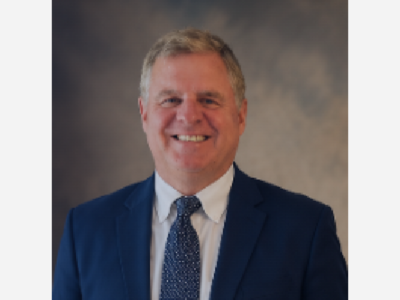
Bob Katzen welcomes feedback at bob@beaconhillrollcall.com
Bob founded Beacon Hill Roll Call in 1975 and was inducted into the New England Newspaper and Press Association (NENPA) Hall of Fame in 2019.



Overcast, with a high of 71 and low of 53 degrees. Fog for the morning, sunny for the afternoon, overcast in the evening, light drizzle overnight.