42° and Partly Cloudy



Image
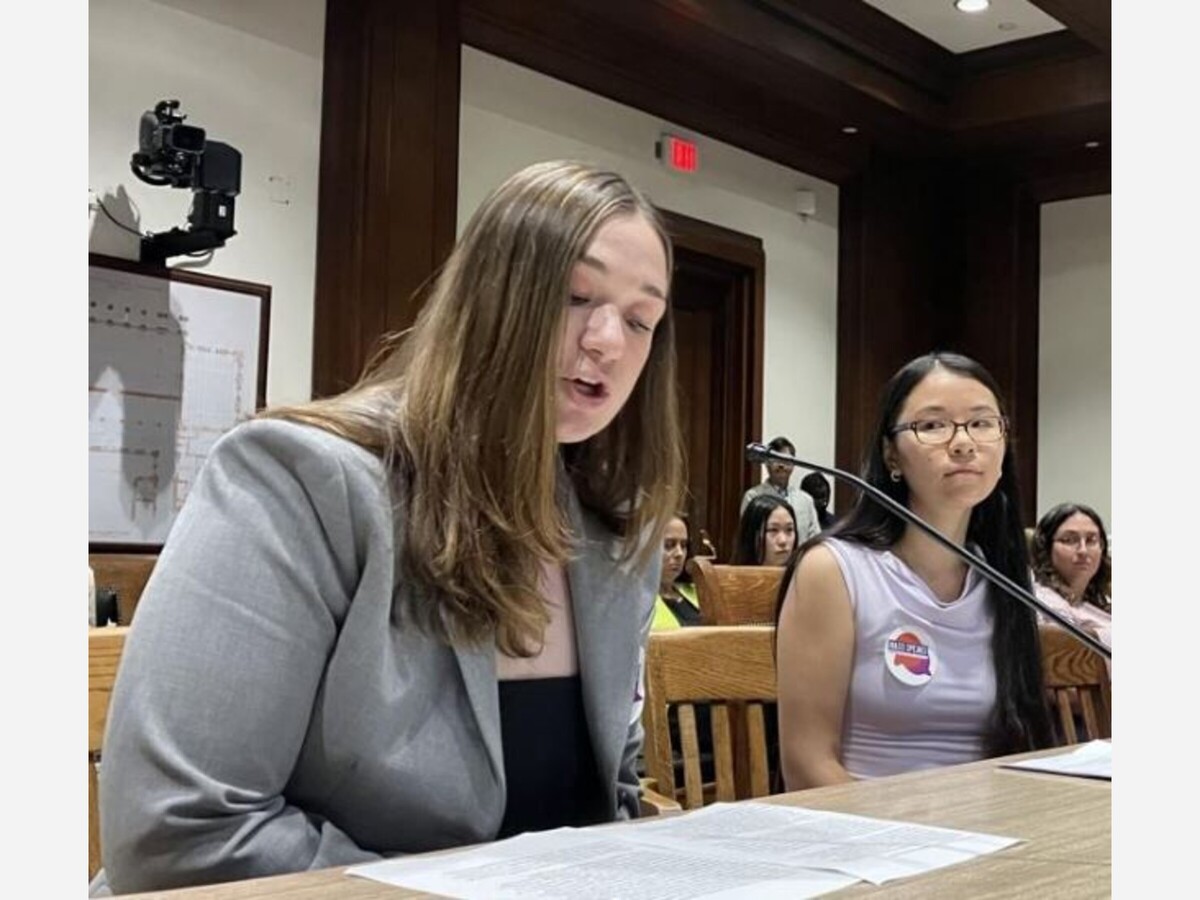
Kate Cressey and Nadia Romanazzi, advocates with the Mass Speaks Coalition, testify on language access bills before the Joint Committee on State Administration and Regulatory Oversight on Tuesday, July 22, 2025.
Alison Kuznitz/SHNS
Even before a parade of advocates encouraged lawmakers to bolster language interpretation and translation services at state agencies, a committee co-chair divulged the panel's plan Tuesday to once again advance the legislation.
"This bill was reported out favorably last session, and we intend to do so again," Sen. Nick Collins, co-chair of the Joint Committee on State Administration and Regulatory Oversight, said after the first advocate kicked off discussion on refiled proposals from Reps. Adrian Madaro and Carlos González and Sen. Sal DiDomenico (H 3384 / S 2125).
Public-facing agencies would be required to offer interpretation services and translate vital documents under the legislation, plus hire language access coordinators. Agencies would also need to develop language access plans and conduct a community needs assessment every two years. Residents would gain the right to private action should agencies fail to provide language access services, according to the bills.
The proposals last session died in the House and Senate Ways and Means committees.
In their messaging this term, advocates with the Mass Speaks Coalition -- which represents more than 75 advocacy, research and legal service organizations -- are placing a heightened onus on state leaders to boost language inclusion for immigrants and individuals with limited English proficiency to counteract steps taken by the Trump administration.
"Recent federal actions have begun to erode the protections afforded to individuals with limited English proficiency, or LEP," Kate Cressey, a legal intern at the Massachusetts Law Reform Institute.
Cressey pointed specifically to President Donald Trump's executive order in March that designated English as the official language of the United States.
Last week, the U.S. Department of Justice issued guidance on its effort across federal agencies to "minimize non-essential multilingual services, redirect resources toward English-language education and assimilation, and ensure legal compliance with the Executive Order through targeted measures where necessary." Attorney General Pamela Bondi said the DOJ is working to "eliminate wasteful virtue-signaling policies."
"These developments make it clear that the federal administration is, at best, deprioritizing the rights of LEP persons," Cressey continued. "Therefore, it is imperative that our Legislature act to ensure that all residents of Massachusetts have meaningful access to state services and benefits, regardless of the language they speak."
Dawn Sauma, co-executive director of the Asian Task Force Against Domestic Violence, said the federal actions send a "chilling message to LEP victims and residents that they are not worth being understood."
"At a time when civil rights are being dismantled, this is an opportunity for Massachusetts to affirm the value of language and protect a basic right," Sauma said.
The legislation would build upon Gov. Maura Healey's executive order from September 2023, which directed executive department agencies to tap language access coordinators and develop language access plans, Cressey said. Besides English, the Healey administration also published the order in Spanish and Portuguese.
One in four Bay State residents speak a language other than English at home, said Nadia Romanazzi, director of legal education and policy at the Massachusetts Appleseed Center for Law and Justice.
"Despite this, many state residents are confronted with English-only websites, applications and other communications when trying to access the services and information they need to do things like apply for unemployment assistance, keep food on the table and navigate the complexities of the child welfare system," said Romanazzi, who's also co-chair of the Mass Speaks Coalition.
Under the legislation, public-facing agency websites must provide language options of Arabic, Cape Verdean Creole, Chinese, French, Haitian Creole, Khmer, Korean, Portuguese, Russian, Spanish, Vietnamese and others "deemed necessary."
The legislation outlines a phased-in implementation across state agencies. MassHealth, the Department of Children and Families, the Department of Transitional Assistance and agencies contained within the Executive Office of Housing and Livable Communities would be among the first subject to language access provisions should the bills become law.
Katrina Lin, now a case manager at the Asian Task Force Against Domestic Violence, recalled research she conducted about the MassHealth call center while previously working at MLRI. Lin said she learned that callers are automatically connected to English-speaking representatives, even if they had selected a different language option.
"Although the MassHealth system displays which language is selected by callers on the representative side of the phone call, I learned that they only call an interpreter after the member states they need an interpreter and the language they want in English," Lin said. "This poses a problem because it is jarring for limited English proficiency, also called LEP, members to unexpectedly hear an English speaker when they requested their native language. And some individuals are even unable to make the request in English."


Moderate rain, with a high of 43 and low of 31 degrees. Mist in the morning, overcast during the afternoon, clear during the evening, light rain overnight.